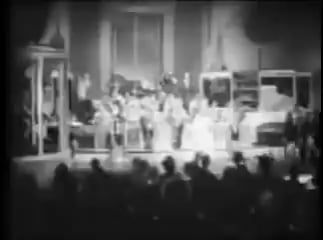
1940s “autotune” done using a sonarbox, an early example of processed vocals in music
Title: The 1940s “Autotune”: How the Sonovox Paved the Way for Processed Vocals in Music
Introduction
Long before the digital precision of Auto-Tune dominated modern music, the 1940s brought us a quirky yet revolutionary device called the Sonovox—a mechanical tool that allowed instruments to “talk” and vocals to be manipulated in unprecedented ways. Often dubbed the “original autotune,” the Sonovox predates digital pitch correction by decades, laying the groundwork for vocal manipulation and processed sounds in popular music. In this deep dive, we’ll uncover the history, mechanics, and legacy of this forgotten gem of music technology.
What Was the Sonovox?
The Sonovox (sometimes called the “sonarbox”) was a vocal processing device invented in the late 1930s by Gilbert Wright and later commercialized in the early 1940s. Unlike today’s software-based tools, the Sonovox was entirely analog, using physical vibrations to alter sound. Here’s how it worked:
- Two small metal transducers were placed against a performer’s throat.
- These transducers connected to an external sound source (e.g., an instrument or oscillator).
- As the performer hummed or spoke into a microphone, the vibrations from the transducers merged with their vocal cords, creating a surreal “talking instrument” effect.
YouTuber Techmoan once described it as “the grandfather of the Vocoder”—and he wasn’t wrong. The effect sounded eerily robotic for its era, like a ghostly voice emerging from a violin or trumpet.
The Sonovox in 1940s Music
While the Sonovox wasn’t used for pitch correction (like Auto-Tune), it pioneered the idea of altering vocals or instruments creatively. Its earliest adopters were radio producers and film studios, but musicians soon saw its potential:
- Glenn Miller’s Orchestra famously used the Sonovox in their 1942 hit “The Thing That Couldn’t Die,” giving a muted trombone a creepy, spoken-word quality.
- The device also appeared in Disney’s 1940 animated classic Dumbo, where it made train whistles “chant” the phrase “Casey Jr.”
- In 1948, singer-songwriter Slim Gaillard performed a novelty song “Atomic Cocktail” featuring Sonovox-processed vocals, blending jazz with sci-fi flair.
These applications were novelty-driven, but they sparked fascination with altering the human voice—a concept that would later define genres from psychedelia to electronic pop.
How the Sonovox Foreshadowed Modern Autotune
Though Auto-Tune (invented in 1997) serves a fundamentally different purpose—correcting off-key vocals—the Sonovox shares its DNA in reimagining vocal expression through technology:
- Human-Machine Collaboration: Both tools blur the line between organic vocals and artificial manipulation.
- Creative Possibilities: Artists like Daft Punk or T-Pain use Auto-Tune for stylistic flair, much like 1940s musicians used the Sonovox for surrealism.
- Cultural Impact: Both inventions sparked debate (the Sonovox as a gimmick, Auto-Tune as “cheating”), yet both became iconic in their eras.
The Sonovox also predated later analog processors like the Vocoder (1970s) and talk box, proving that engineers were tinkering with vocal effects long before the digital age.
Why the Sonovox Vanished (and Why It Matters Today)
By the 1950s, the Sonovox faded into obscurity, overshadowed by magnetic tape experiments and early synthesizers. Yet its legacy lives on:
- Film & Advertising: Its eerie effect became a staple in sci-fi radio dramas and commercials (e.g., cereal boxes “talking” to kids).
- Sampling Culture: Modern producers resurrect Sonovox-like effects in plugins like Output’s “Exhale” or Spectrasonics’ “Omnisphere.”
- Historical Footprint: Artists like The Avalanches and DJ Shadow have referenced its lo-fi charm in sample-based music.
Today, the Sonovox reminds us that vocal processing isn’t new—it’s been evolving for over 80 years. It challenges purists to embrace tech as a tool for creativity, not just correction.
Conclusion: The Sonovox’s Echo in Modern Music
The Sonovox may seem primitive now—a clunky relic of tubes and vibrations—but it represents a pivotal moment in music history: the first time vocals could be bent, twisted, and merged with machines. Without it, we might never have had the psychedelic experiments of the Beatles, the robotic hooks of Daft Punk, or even the distorted voices of hyperpop.
So, the next time you hear a T-Pain track or Cher’s “Believe,” remember: the spirit of the Sonovox is still speaking to us, one processed note at a time.
Keywords for SEO:
1940s autotune, Sonovox vocal processing, early vocal effects in music, history of pitch correction, talking instrument technology, Auto-Tune predecessor, 1940s music innovation, electronic voice modulation, Gilbert Wright invention, robotic vocals history.
Meta Description: Discover the 1940s “autotune” device—the Sonovox! Learn how this analog gadget manipulated vocals decades before Auto-Tune, shaping music history with eerie talking instruments and processed vocals.