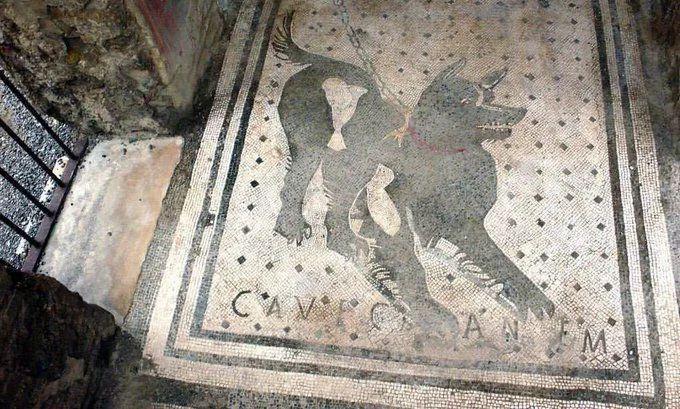
2000 year-old “Beware of Dog” sign in the ruins of Pompeii, Italy
Title: Unleashing History: The 2,000-Year-Old “Beware of Dog” Mosaic of Pompeii
Meta Description: Discover the story behind Pompeii’s 2,000-year-old “Beware of Dog” mosaic—a timeless symbol of ancient Roman life, security, and even humor preserved by volcanic ash.
Introduction: A Warning Frozen in Time
When Mount Vesuvius erupted in 79 AD, it buried the vibrant Roman city of Pompeii under layers of ash, freezing life in a tragic yet remarkably preserved snapshot of antiquity. Among the ruins, archaeologists have uncovered intricate artworks, everyday objects, and even graffiti. One of the most relatable finds? A 2,000-year-old mosaic bearing the Latin equivalent of a modern-day “Beware of Dog” sign—proof that some human concerns never change.
The Discovery: Cave Canem in the House of the Tragic Poet
The iconic mosaic was unearthed in 1874 during excavations at the House of the Tragic Poet (Casa del Poeta Tragico), a well-preserved Pompeian villa named for its dramatic frescoes. Just inside the entrance, visitors are greeted by a striking black-and-white floor mosaic featuring a chained dog mid-bark, poised as if to leap. Below the canine, the Latin words “CAVE CANEM” (“Beware of the Dog”) are spelled out in bold tiles.
Crafted from tiny pieces of volcanic stone and glass (tesserae), the mosaic dates to the 2nd century BCE and reflects the craftsmanship of wealthy Roman homeowners. The dog—likely a Molossian breed, an ancestor of today’s Mastiffs—served a dual purpose: a literal warning to intruders and a symbol of the owner’s status.
Why a “Beware of Dog” Sign? Ancient Security Meets Status
In ancient Rome, guard dogs were common in households, especially among the elite. The Molossian dog was prized for its size, loyalty, and protective instincts, making it the ancient equivalent of a high-end security system. The “Cave Canem” mosaic wasn’t just functional; it was a display of wealth and sophistication, signaling that the homeowner could afford both a fierce guard dog and an artist to immortalize it.
The design also highlights a universal truth: as long as humans have owned property, they’ve sought ways to protect it. The mosaic’s survival bridges a 2,000-year gap, reminding us that the ancients shared our practical anxieties—and perhaps our sense of humor. (Imagine a weary Roman coucher rolling their eyes at the sign!)
Pompeii’s Time Capsule: Why This Artifact Matters
The “Cave Canem” mosaic is more than a quirky footnote in history. It offers insights into daily life in ancient Rome:
- Domestic Security: Homes rarely had locks, so dogs acted as deterrents.
- Artistic Trends: Floor mosaics like this were status symbols in affluent households.
- Language & Culture: Written in Latin, the phrase shows how language evolved—or didn’t. Italians today still say “attenti al cane!”
Pompeii’s volcanic burial preserved such details with uncanny clarity. While other Roman-era “beware of dog” signs exist (including a famed one in Herculaneum), Pompeii’s version remains the most iconic, thanks to its artistry and the city’s fame.
Visiting the “Beware of Dog” Mosaic Today
While the House of the Tragic Poet isn’t always open to the public due to preservation efforts, replicas and photos of the mosaic are displayed in Pompeii’s archaeological park. Visitors can explore nearby villas with similar mosaics and frescoes, painting a vivid picture of pre-eruption life.
Conclusion: A Timeless Tale of Humans and Their Hounds
Pompeii’s “Cave Canem” mosaic transcends time, revealing how people in ancient Rome navigated the same daily concerns as we do: protecting their homes, showcasing their status, and maybe even sharing a laugh with neighbors. As Vesuvius looms in the distance, this 2,000-year-old warning stands as a humbling reminder of history’s echoes—and humanity’s enduring connection to its four-legged guardians.
SEO Keywords & Phrases:
- Beware of Dog sign Pompeii
- Cave Canem mosaic
- House of the Tragic Poet
- Ancient Roman guard dogs
- Pompeii archaeological finds
- Roman mosaics in Pompeii
- Mount Vesuvius artifacts
- Molossian dog history
- Pompeii ruins Italy
- Ancient home security
Call to Action:
Planning a trip to Pompeii? Don’t miss the chance to walk in the footsteps of ancient Romans—and keep an eye out for their guard dogs! For more insights into history’s hidden gems, subscribe to our newsletter or explore [related topic, e.g., “Pompeii’s Most Bizarre Discoveries”].