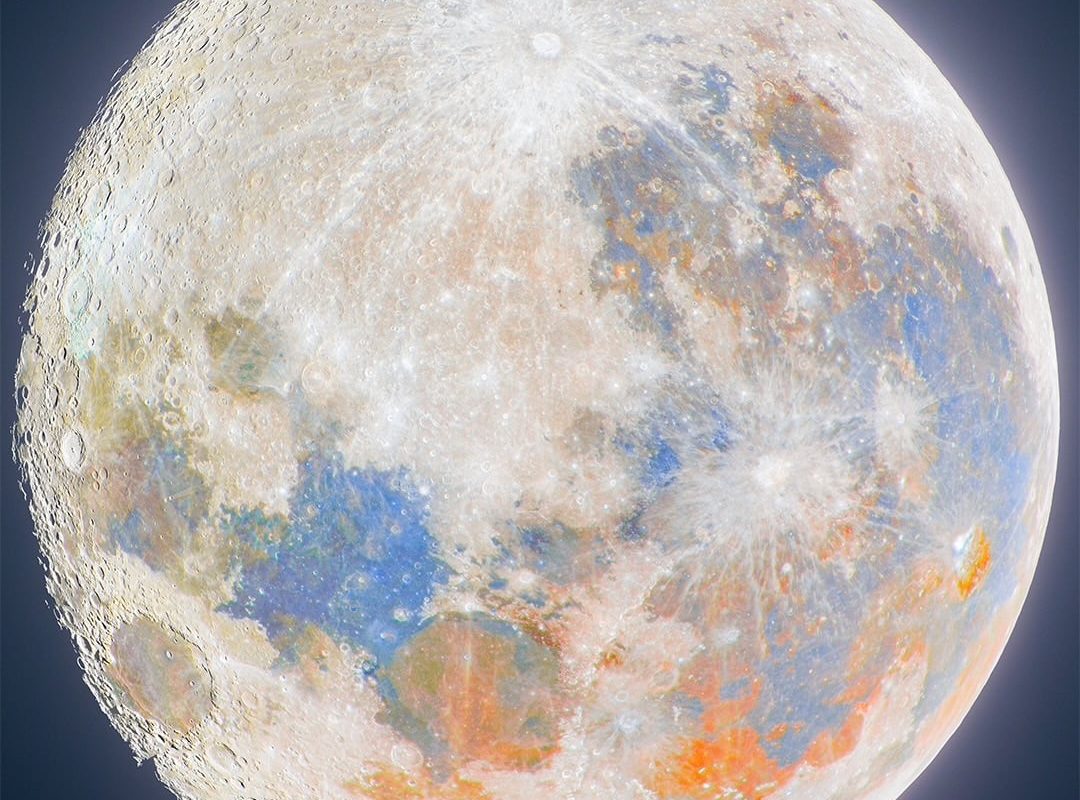
450GB of data and thousands of stacked images reveal the Moon’s mineral composition.
Unlocking Lunar Secrets: 450GB of Data and Stacked Images Reveal the Moon’s Hidden Mineral Treasures
For centuries, the Moon has captivated humanity with its enigmatic presence. Now, a groundbreaking analysis of 450GB of data and thousands of stacked images has unveiled unprecedented details about our celestial neighbor’s mineral composition, shedding light on its formation, evolution, and potential as a resource hub for future exploration.
The Mission: Mapping the Moon’s Hidden Geology
Advanced telescopes, lunar orbiters, and AI-driven analytics have enabled scientists to stitch together thousands of high-resolution images of the Moon’s surface. By “stacking” these images—layering multiple exposures to eliminate noise and enhance clarity—researchers have created the most detailed mineralogical map of the Moon to date. This colossal 450GB dataset captures subtle variations in reflected light, revealing minerals invisible to the naked eye.
Key Technologies Behind the Discovery
- Hyperspectral Imaging: Devices measured wavelengths of reflected sunlight to identify mineral signatures.
- AI-Powered Analysis: Machine learning algorithms processed petabytes of raw data to detect patterns.
- Photometric Stacking: Combining thousands of images reduced distortions and highlighted surface details at a pixel level.
What the Data Revealed: A Mineralogical Goldmine
The study confirmed the presence of critical minerals, including:
- Ilmenite (FeTiO₃): A titanium-iron oxide abundant in lunar maria (dark plains), crucial for extracting oxygen and building materials.
- Anorthosite: A magnesium-rich mineral dominating the lunar highlands, pointing to the Moon’s molten past.
- Pyroxene & Olivine: Indicators of ancient volcanic activity, scattered across impact basins.
- Potential Water Ice: Hydrogen signatures in permanently shadowed craters suggest lunar water reservoirs—vital for sustaining human colonies.
The data also hints at rare-earth elements (e.g., neodymium, europium), which could revolutionize space manufacturing and clean-energy technologies.
Why Does the Moon’s Mineral Composition Matter?
- Origin Story: The distribution of minerals supports the theory that the Moon formed from Earth’s debris after a cataclysmic collision ~4.5 billion years ago.
- Resource Utilization: Water ice and metal deposits could sustain future Artemis missions or lunar bases, reducing Earth-bound supply needs.
- Deep-Space Exploration: The Moon may serve as a launchpad for Mars missions, with minerals fuelable into rocket propellant.
Implications for the Future of Space Exploration
NASA’s Artemis Program, China’s lunar station ambitions, and private ventures like SpaceX all stand to benefit. This mineral map could guide:
- Landing site selection for crewed missions.
- Mining operations to harvest oxygen, water, and metals.
- Long-term studies of lunar geology and space weathering.
Challenges Ahead
Despite the breakthrough, gaps remain:
- Resolution Limits: Some regions, like polar craters, need closer inspection.
- Sample Verification: Physical samples from upcoming missions (e.g., Artemis III) will validate remote findings.
- Ethical Governance: Global policies must ensure sustainable lunar resource use.
Conclusion: A New Era of Lunar Science
This 450GB treasure trove of data—and the relentless imaging work behind it—has rewritten our understanding of the Moon’s composition. As technology advances, each pixel and byte brings us closer to unlocking the Solar System’s secrets, turning science fiction into reality.
Meta Description: Discover how 450GB of lunar data and stacked images reveal the Moon’s mineral makeup, reshaping space exploration and future colonization plans.
Keywords: Moon mineral composition, lunar data 450GB, stacked lunar images, Artemis Program resources, ilmenite Moon, lunar water ice, space mining, Moon geology.
For more space science insights, subscribe to our newsletter. The stars are closer than you think! 🌕✨