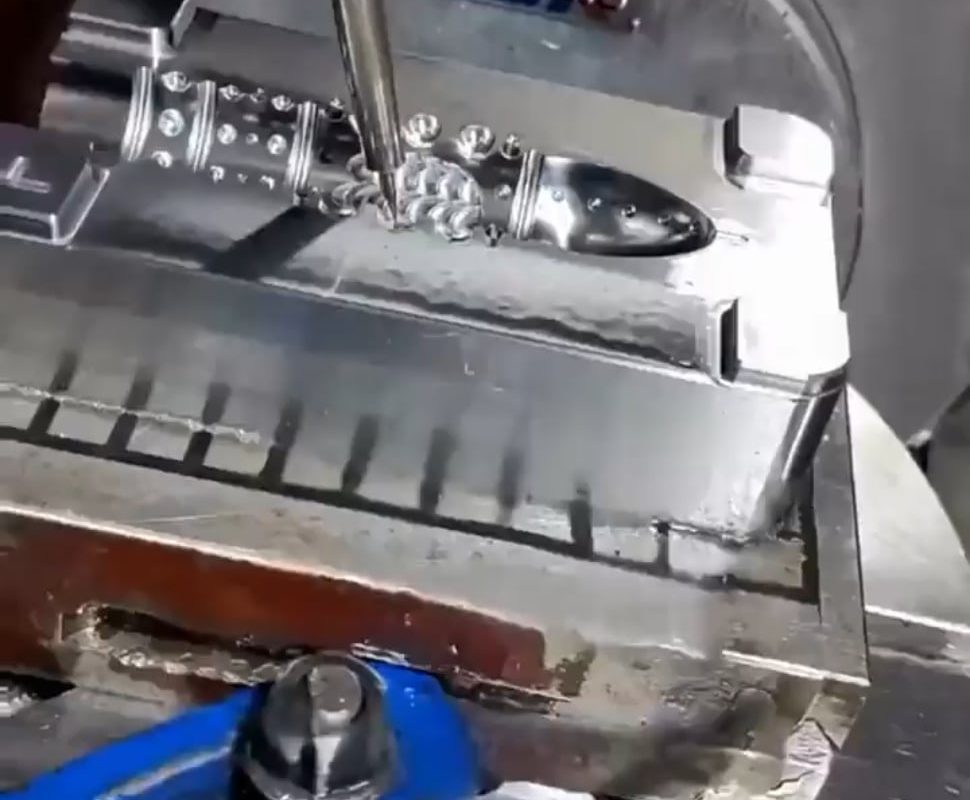
5 Axis CNC milling machine
Unlocking Precision and Complexity: The Ultimate Guide to 5-Axis CNC Milling Machines
In modern manufacturing, precision, efficiency, and versatility are non-negotiable. Enter the 5-axis CNC milling machine, a revolutionary tool that transforms complex designs into tangible, high-precision parts with unprecedented speed and accuracy. Whether you’re in aerospace, automotive, medical, or prototyping, mastering this technology could redefine how you approach production.
This guide dives deep into what a 5-axis CNC milling machine is, how it works, its advantages, and why industries worldwide are adopting it for premium results.
What is a 5-Axis CNC Milling Machine?
A 5-axis CNC mill is a computer-controlled machining system capable of moving a tool or workpiece across five different axes simultaneously. Unlike 3-axis machines (X, Y, Z), it adds two rotational axes (A and B, or A and C), allowing the cutting tool to approach the workpiece from nearly any angle.
Axes Breakdown:
- X, Y, Z: Linear motions (left-right, front-back, up-down).
- A: Rotation around the X-axis (tilting forward/backward).
- B or C: Rotation around the Y or Z-axis (swiveling left/right).
This multi-directional movement eliminates the need for repositioning the workpiece, enabling the creation of intricate geometries in a single setup.
How Does 5-Axis Machining Work?
5-axis machines use sophisticated software (like CAD/CAM) to interpret 3D models and generate toolpaths. Here’s the process:
- Design: Create a digital 3D model.
- Programming: CAM software converts the design into machine instructions (G-code).
- Setup: The workpiece is mounted once, minimizing human intervention.
- Machining: The spindle and table rotate dynamically, cutting material from all angles with ultra-fine precision.
Top 6 Advantages of 5-Axis CNC Milling
-
Complex Geometries Made Simple
Machine curved surfaces, undercuts, deep cavities, and organic shapes that are impossible with 3-axis machines. -
Single-Setup Efficiency
Reduced repositioning cuts setup time by up to 70%, speeding up project completion and reducing labor costs. -
Superior Surface Finish
Continuous tool contact and optimal cutting angles minimize the need for secondary finishing. -
Enhanced Tool Life & Speed
Shorter toolpaths and consistent chip loads reduce wear, while faster feed rates boost productivity. -
Tighter Tolerances (±0.001” or less)
Ideal for mission-critical industries like aerospace (turbine blades) and medical (implants). -
Material Versatility
Works with metals (aluminum, titanium, steel), plastics, composites, and ceramics.
Key Applications of 5-Axis CNC Machines
- Aerospace: Engine components, airframe structures, and lightweight assemblies.
- Automotive: Prototyping, transmission parts, and custom performance components.
- Medical: Orthopedic implants, surgical tools, and dental prosthetics.
- Energy: Turbine blades, heat exchangers, and oil/gas valves.
- Art & Design: Sculptures, molds, and architectural elements.
Types of 5-Axis Machines: Which is Right for You?
- Table/Table Configuration
- Both rotary axes are on the table. Perfect for smaller, lighter parts.
- Head/Head Configuration
- Rotary axes are on the spindle head. Ideal for large, heavy workpieces.
- Table/Head Hybrid
- Combines rotary table and tilting spindle. Balances versatility and rigidity.
Choosing a 5-Axis CNC Mill: 5 Critical Considerations
- Budget: Entry-level models start at $100k+; high-end industrial systems exceed $500k.
- Workspace Size: Match the machine’s envelope to your part dimensions.
- Controller & Software: Opt for user-friendly interfaces like Fanuc, Siemens, or Heidenhain.
- Accuracy vs. Speed: Prioritize dynamic accuracy for complex jobs or high RPMs for volume.
- Post-Sales Support: Training, maintenance, and spare parts availability are crucial.
Pro Tip: Invest in simulation software to detect collisions before machining, saving costly errors.
Future Trends in 5-Axis Machining
- Automation Integration: Pairing with robots for 24/7 lights-out production.
- IoT & AI: Real-time monitoring and predictive maintenance to minimize downtime.
- Hybrid Additive/Subtractive Machines: Combine 3D printing and milling for unmatched flexibility.
FAQ: 5-Axis CNC Milling Machines
Q: Can a 5-axis machine replace a 3-axis mill?
A: Not always—3-axis machines are cost-effective for simpler jobs. 5-axis excels in complex, high-value work.
Q: How long does it take to learn 5-axis programming?
A: Skilled machinists can transition in weeks with advanced CAM training.
Q: Do I need coolant for 5-axis milling?
A: Yes, especially for heat-sensitive metals. Many machines use through-tool coolant for deep cavities.
Conclusion: Why 5-Axis CNC is a Game-Changer
For manufacturers pushing the boundaries of innovation, the 5-axis CNC milling machine is no longer a luxury—it’s a necessity. It slashes lead times, elevates quality, and broadens design possibilities while cutting operational costs.
Ready to Explore 5-Axis Machining? Consult with an industry expert to assess your needs, or request a demo to see this powerhouse technology in action.
Keywords: 5-axis CNC milling machine, 5-axis CNC machining, multi-axis CNC, CNC milling advantages, aerospace machining, precision manufacturing, CNC machine applications.
Optimize your production today—upgrade to precision without limits!