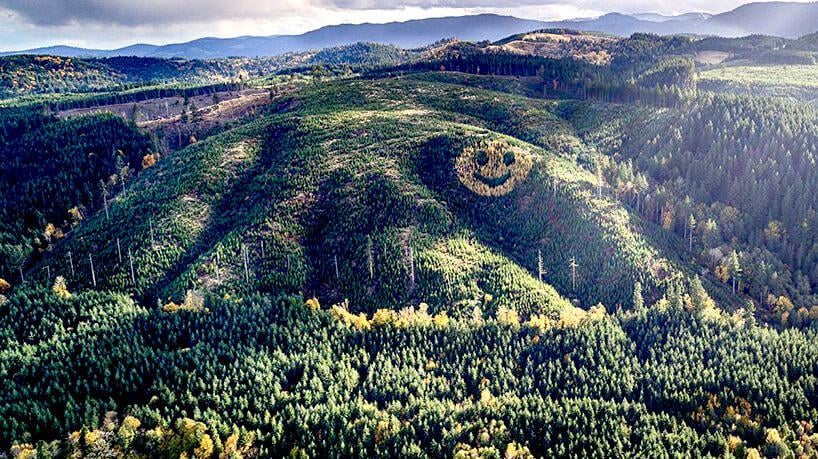
David Hampton a lumberyard manager in 2011, planted a mix of douglas fir and larch trees to depict a smiley face along an Oregon mountain side during a reforestation project of the area. Location is Sheridan, Oregon.
Title: David Hampton’s Sustainable Art: The Oregon Mountainside Smiley Face Reforestation Project
Introduction
In 2011, an unusual but heartwarming sight began taking shape in Oregon’s lush landscape. David Hampton, a lumberyard manager from Sheridan, Oregon, combined environmental stewardship with whimsical creativity during a reforestation effort by planting a massive, living smiley face on a mountainside. Using a strategic mix of Douglas fir and larch trees, Hampton turned a practical reforestation project into an enduring symbol of hope and sustainability. This unique story, set in Oregon’s verdant Coastal Range, highlights how ecological restoration can intersect with art—and leave a legacy that’s both functional and joyful.
The Vision Behind the Smiley Face
David Hampton managed a family-owned lumberyard in Sheridan, a small town in the heart of Oregon’s timber country. When tasked with reforesting a cleared mountainside in 2011, he saw an opportunity to inject positivity into the community. Inspired by Oregon’s commitment to sustainable forestry, Hampton devised a plan: planting a smiley face visible from afar using two contrasting tree species.
The design required precision. Douglas fir (Pseudotsuga menziesii), Oregon’s iconic evergreen conifer, provided the “face” backdrop with its deep green hue. For the smile and eyes, Hampton opted for larch trees (Larix occidentalis), known for their vibrant golden-yellow needles in autumn. Over time, this careful pairing would create a natural, seasonal mosaic—a cheerful symbol that would “emerge” each fall as the larches changed color.
Why Douglas Fir and Larch?
- Douglas Fir: A Pacific Northwest staple, Douglas fir grows quickly, thrives in Oregon’s climate, and provides essential habitat for wildlife. Its year-round greenery ensured the smiley face’s base would remain visible even in winter.
- Western Larch: Unlike most conifers, larch trees are deciduous, shedding needles after turning a brilliant gold. This seasonal transformation created the perfect contrast against the fir’s evergreen canvas, making the smiley face a “hidden” spectacle visible only during autumn.
Hampton’s species selection wasn’t just artistic—it was ecologically strategic. Both trees are well-suited to Sheridan’s mountainous terrain, ensuring the project supported biodiversity and soil stability alongside its visual appeal.
Location Spotlight: Sheridan, Oregon
Sheridan sits in Yamhill County, nestled in Oregon’s Coastal Range—a region historically shaped by forestry. The smiley face was planted on a hillside near Hampton’s lumberyard, an area likely cleared due to logging or wildfire recovery. While the exact coordinates remain a local secret, aerial views (or tools like Google Earth) reveal the design as the larch trees mature.
The town’s deep ties to sustainable timber practices made Hampton’s project a fitting tribute. Sheridan residents have long balanced economic reliance on forestry with environmental responsibility, a theme echoed in the smiley face’s dual purpose: advancing reforestation while inspiring joy.
Legacy of the Living Artwork
Over a decade after planting, Hampton’s smiley face has grown into a testament to patience and ecological ingenuity. As the larches cycle through their annual color change, the design gains clarity, captivating hikers, pilots, and forestry enthusiasts. The project also serves as a conversation starter about innovative land management—proof that sustainability can be both practical and playful.
Hampton’s story has garnered attention from regional media and environmental blogs, highlighting how small-town creativity can resonate globally. It’s a reminder that reforestation isn’t just about planting trees; it’s about sowing connections between people and nature.
Visit and Explore
While the smiley face is best viewed from above (or via drone), visitors to Sheridan can immerse themselves in Oregon’s rich forestry heritage by exploring nearby trails, state parks, and educational centers like the Oregon Forest Resources Institute. For those inspired by Hampton’s vision, the project reinforces a simple truth: environmental care and human joy often grow from the same roots.
Keywords for SEO:
David Hampton Oregon, Sheridan reforestation project, smiley face trees Oregon, Douglas fir and larch, sustainable forestry Sheridan, Oregon forestry art, Yamhill County landmarks, living smiley face mountainside, Oregon Coastal Range reforestation, unique Oregon attractions.
Meta Description:
Discover how David Hampton, an Oregon lumberyard manager, planted a living smiley face with Douglas fir and larch trees in 2011—a creative reforestation project near Sheridan that blends art, ecology, and hope.
This story celebrates the unexpected intersections of human ingenuity and nature—a smiley face that keeps on growing. 🌲😊