Behind the Scenes of the Iconic Agent Smith Clone Fight in The Matrix.
Behind the Scenes of the Iconic Agent Smith Clone Fight in The Matrix
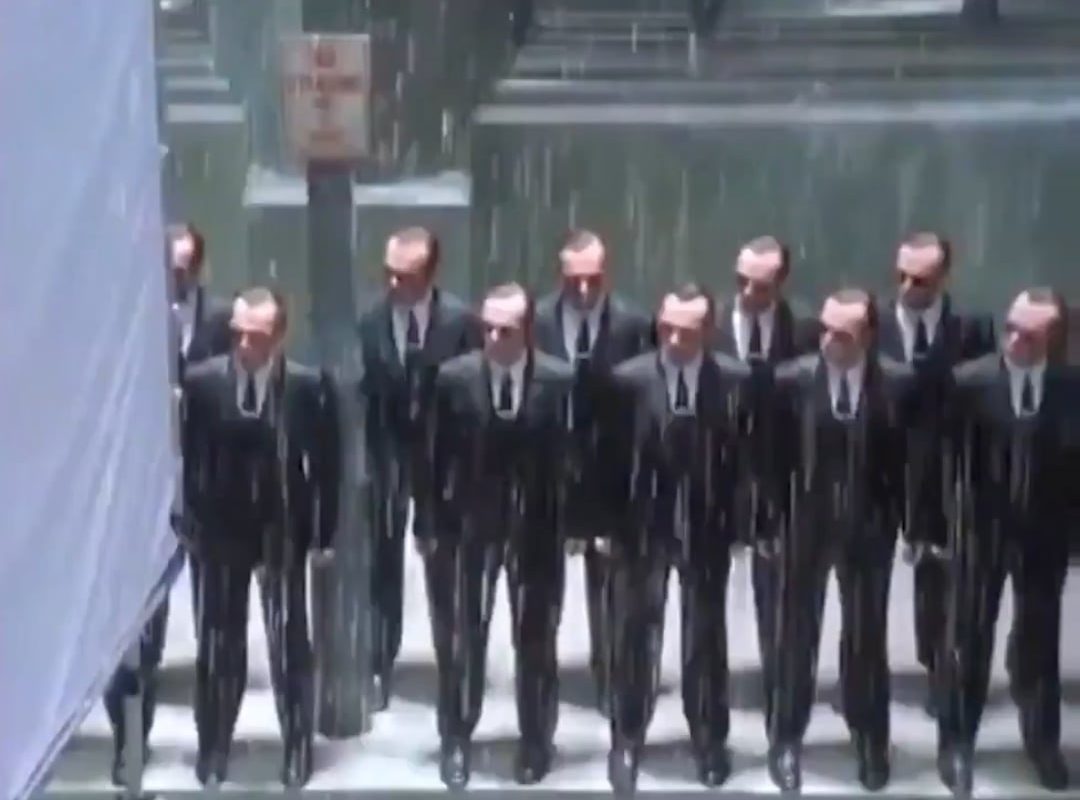
In The Matrix (1999), few scenes are as visually arresting and technically groundbreaking as the “Agent Smith clone fight,” where Neo (Keanu Reeves) battles an ever-multiplying army of Hugo Weaving’s relentless AI antagonists in a rain-drenched courtyard. Widely regarded as one of cinema’s most innovative action sequences, this showdown redefined digital filmmaking and martial arts choreography. But how did the Wachowskis and their team pull off such a revolutionary feat in the pre-4K era? Let’s dive into the behind-the-scenes magic.
The Vision: One Hero vs. 100 Clone Agents
The Wachowskis envisioned the Agent Smith fight as a kinetic metaphor for Neo’s evolution from human to messiah—one man against a hive-mind system. Originally scripted to involve just five Agents, the scene expanded drastically when visual effects supervisor John Gaeta proposed using CGI to create “virtual clones.” The goal? To make Neo face off against 100 identical foes, blending martial arts with digital sorcery.
Key Challenge:
Creating realistic human clones required more than copy-pasted visuals. Each Agent needed weight, texture, and individual movement, while interactivity with Reeves’ physical stunts had to feel seamless.
“Bullet Time” 2.0: Capturing the Impossible
The fight leveraged the film’s signature “bullet time” effect—a technique involving still cameras arranged in a 360-degree arc—but pushed it further. To freeze time while the camera swirled around Neo mid-kick, the crew used:
- 120 Nikon still cameras triggered in sequence.
- Custom-built rigs to dolly cameras through the set.
- Green-screen cloaks for stunt actors, later replaced with CGI clones.
For the cloning effect, Hugo Weaving’s likeness was digitized using photogrammetry, a process involving hundreds of photos to create a 3D model. Stunt actors in Agent Smith costumes performed choreographed moves, which were then duplicated digitally.
Fight Choreography: Wire Fu Meets Digital Clones
Legendary martial arts director Yuen Woo-ping (of Crouching Tiger, Hidden Dragon fame) designed the fight to blend Hong Kong-style wirework with digital innovation.
- Practical Stunts: Keanu Reeves trained for months to perform moves himself. Wires attached to harnesses enabled superhuman leaps and flips.
- Clone Synchronization: Multiple stunt performers wore latex masks resembling Weaving. Their movements were synced to create the illusion of a single entity splitting into clones.
- The “Speed Ramping” Trick: Editors adjusted the frame rate mid-action—slowing Neo’s movements while speeding up Agents—to emphasize his growing power.
The Sound of Chaos
Sound designer Dane Davis faced a unique problem: How do you create distinct audio for 100 identical characters? His solution:
- Record Hugo Weaving’s voice, then layer it into a “clone chorus” using pitch-shifting.
- Add visceral punches and rain sounds to ground the CGI in reality.
- Use silence strategically to punctuate key hits.
The result? A symphony of crunching bones and AI malice that amplified the scene’s intensity.
Post-Production: A Digital Army Takes Shape
While filming provided raw footage, the real wizardry happened in post:
- Massive Software: Industrial Light & Magic (ILM) used proprietary crowd-simulation tools to animate clone movements, ensuring no two Agents behaved identically.
- Rain Enhancement: Practical rain was enhanced digitally to avoid obscuring actors, with droplets painstakingly added to each clone’s coat.
- Lighting Consistency: CG artists matched the gloomy, green-tinted lighting of the physical set to blend real and digital elements.
The scene ultimately required over 2 years of R&D and 4 months of rendering—a staggering effort for 1999’s hardware.
Cultural Legacy: How the Fight Changed Filmmaking
The Agent Smith brawl’s impact echoes through modern cinema:
- Paved the Way for CGI Crowds: The Lord of the Rings’ Battle of Helm’s Deep and Avengers: Endgame’s final battle owe debts to The Matrix’s clone tech.
- Elevated Action Choreography: Films like John Wick (starring Reeves) adopted Woo-ping’s philosophy of actor-led physicality.
- Inspired Video Games: Slow-motion “bullet time” became a staple in titles like Max Payne and Red Dead Redemption.
Fun Facts & Trivia
- Hugo Weaving wore a plastic mold of his own face during close-ups to maintain consistency with CG clones.
- Keanu Reeves performed 98% of his stunts, despite breaking vertebrae during training.
- A wind machine was used to blow rain horizontally—a visual nod to dystopian unease.
Conclusion: Why the Scene Still Resonates
The Agent Smith clone fight isn’t just a technical marvel—it’s storytelling through spectacle. By merging philosophy (“There is no spoon”) with bleeding-edge VFX, the Wachowskis crafted a scene that embodied The Matrix’s core theme: defying a dehumanizing system. Decades later, it remains a masterclass in ambition, proving that innovation thrives where art and technology collide.
Keywords for SEO:
Agent Smith fight scene, Matrix clone fight behind the scenes, bullet time effect, Wachowskis film techniques, Hugo Weaving CGI, Matrix courtyard fight, Yuen Woo-ping choreography, John Gaeta visual effects, Keanu Reeves stunts, Massive software ILM.
For more deep dives into iconic film moments, subscribe to our newsletter!