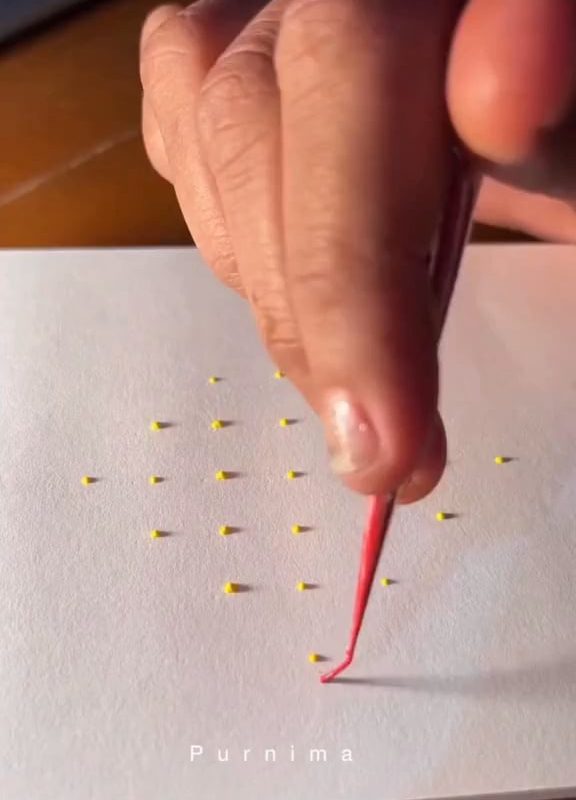
completing a symmetrical pattern in one stroke
Mastering Symmetry: How to Complete a Symmetrical Pattern in One Stroke
Are you fascinated by the elegance of symmetrical patterns but struggle to recreate them in a single, continuous stroke? Whether you’re tackling puzzles like the Nine Dots Challenge, designing minimalist logos, or simply enjoying meditative doodling, mastering single-stroke symmetry is a skill that combines creativity, logic, and practice. In this guide, we’ll break down the techniques to help you draw flawless symmetrical patterns without lifting your pen.
Why Draw Symmetrical Patterns in One Stroke?
Symmetrical patterns appear in art, architecture, nature, and even brain-teasing puzzles. Completing them in one fluid stroke offers unique benefits:
- Efficiency & Flow: Reduces interruptions, fostering focus and precision.
- Aesthetic Appeal: Creates cleaner, more cohesive designs.
- Cognitive Boost: Sharpens problem-solving and spatial reasoning skills.
Types of Symmetry to Consider
First, identify your pattern’s symmetry type to strategize your stroke:
- Reflectional Symmetry (Mirror Image):
- Split by a vertical, horizontal, or diagonal axis.
- Example: A butterfly or heart shape.
- Rotational Symmetry (Radial Balance):
- Repeats when rotated around a central point.
- Example: A snowflake or mandala.
- Translational Symmetry (Repeating Units):
- Copies shift along a straight line without rotation.
- Example: A zigzag or wave pattern.
Step-by-Step Guide: Drawing Symmetry in One Stroke
1. Analyze the Pattern’s Structure
Break the pattern into symmetry “units.” For example:
- If working with reflectional symmetry, outline the mirrored halves.
- For rotational symmetry, divide the design into pie-like wedges.
Key Insight:
Symmetry simplifies complexity. Draw one unit’s path, then mirror it logically instead of plotting every detail.
2. Find the Optimal Starting Point
- For Mirror Symmetry: Begin at the central axis or a point shared by both halves (e.g., the bottom tip of a heart).
- For Radial Symmetry: Start at the center and spiral outward, or begin at the periphery and loop inward.
3. Follow Graph Theory Principles
A pattern is single-stroke feasible if it adheres to Eulerian path rules:
- Eulerian Path: A continuous line that traverses every edge exactly once.
- Check Nodes: All vertices (intersection points) must have an even degree (even number of connected lines) except for exactly two odd-degree nodes (start and end points).
Pro Tip:
Simplify complex patterns by treating symmetrical segments as “nodes” to balance your path.
4. Physicstraining Techniques
- Back-and-Forth Motion: For horizontal/vertical symmetry, draw mirrored lines simultaneously in a zigzag or wave pattern.
- Looping: For radial designs, use overlapping circular motions to connect wedges seamlessly.
- Pivot Points: Rotate your paper or tablet to maintain momentum in curved sections.
Examples to Practice
-
The Symmetrical Square Lattice
- Goal: Connect 4×4 grid dots in one stroke, mirroring horizontally/vertically.
- Solution: Start at the center, weave outward in figure-eight loops.
-
Radial Sunburst
- Goal: Draw 8 rays from a central circle without lifting your pen.
- Solution: Begin at the center, draw one ray outward, arc back through the circle to the next ray, and repeat.
Troubleshooting Common Mistakes
- Line Overlaps: If unintentional overlaps occur, adjust your path to avoid retracing.
- Odd Nodes: If stuck, add a small “bridge” line to create an Eulerian path or revisit node analysis.
- Complexity Overload: Break large designs into smaller symmetrical blocks and link them.
Applications Beyond Art
- Logo Design: Brands like Target or Starbucks use radial symmetry for memorable, balanced logos.
- Puzzle Solving: Escape rooms and IQ tests often feature single-stroke symmetry challenges.
- Mindfulness: Repetitive symmetric drawing aids relaxation and focus.
Final Tips for Mastery
- Practice with Dotted Grids: Use graph paper to visualize symmetry axes.
- Digital Tools: Apps like Procreate or Adobe Fresco offer symmetry guides for experimentation.
- Study Famous Patterns: Analyze Islamic geometric art or Celtic knots for inspiration.
Conclusion
Completing a symmetrical pattern in one stroke marries artistry with analytical thinking. With patience and an understanding of symmetry’s mathematical foundations, you’ll soon create captivating designs effortlessly. Start simple, embrace mistakes as learning steps, and watch your skill—and creativity—soar!
Keywords: symmetrical pattern one stroke, continuous line symmetry, Eulerian path in art, single stroke drawing techniques, solve symmetry puzzles, reflectional symmetry tutorial.
Meta Description: Learn how to draw flawless symmetrical patterns without lifting your pen! This guide breaks down Eulerian paths, nodal analysis, and creative techniques for designers, artists, and puzzle enthusiasts.
Internal Linking Suggestion: For more symmetry challenges, check out our article “5 Brain-Teasing Symmetry Puzzles to Solve.”
External Linking Suggestion: Explore the history of symmetry in Islamic geometric patterns at [The Metropolitan Museum of Art].
With this technique mastered, you’re ready to impress—or just unwind with a pen and paper! 🎨✨