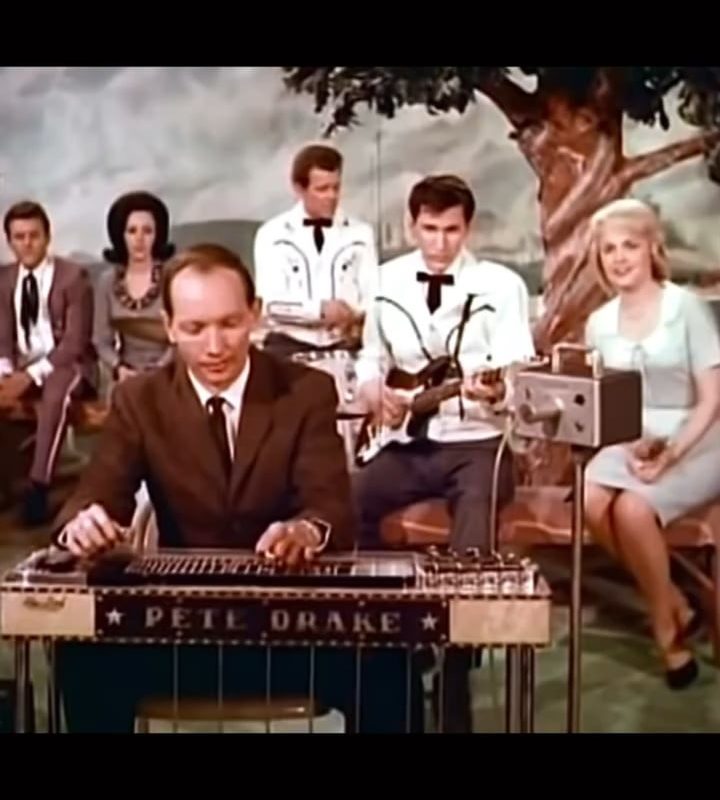
Before autotune, Pete Drake pioneered vocal-like effects in his 1964 song “Forever.” Using a talk box on pedal steel guitar, he fed the sound through a tube into his mouth, shaping notes into words like “hold me” and “love me,” creating an otherworldly effect.
Title: Before Autotune: The Groundbreaking Talk Box Innovation of Pete Drake’s 1964 Hit “Forever”
Meta Description: Discover how Pete Drake, a Nashville session legend, revolutionized vocal-like effects in 1964 using a talk box on his pedal steel guitar—years before autotune changed music forever.
The Birth of Robotic Vocals: Pete Drake’s “Forever” and the Talk Box Revolution
Long before autotune dominated pop music, an unassuming pedal steel guitarist named Pete Drake etched his name into music history with a haunting, futuristic sound. In his 1964 instrumental-turned-vocal experiment, “Forever,” Drake pioneered the use of a talk box to morph his steel guitar into a ghostly, word-spewing instrument. This innovation not only stunned listeners but laid the groundwork for later icons like Peter Frampton, Bon Jovi, and even robotic vocal effects in hip-hop and EDM.
Who Was Pete Drake?
Pete Drake was a prolific Nashville session musician in the 1960s, known for his virtuosic pedal steel guitar work on records by legends like Bob Dylan, Elvis Presley, and George Harrison. But Drake wasn’t content with tradition—he craved innovation. Inspired by radio DJs who manipulated their voices through makeshift effects, he sought to translate that concept to his instrument.
The Talk Box: How It Worked
The talk box was a surreal piece of analog tech. Here’s the science:
- Drake plugged his pedal steel guitar into the talk box, a device housing a small amplifier and a plastic tube.
- The tube fed the guitar’s sound directly into his mouth, bypassing speakers.
- By shaping the vibrations with his lips, tongue, and throat—while silently mouthing words—he could turn melodies into eerie, synthesized “speech.”
In “Forever,” listeners heard Drake’s guitar “sing” phrases like “hold me” and “love me” in a warbly, humanoid croon. The result was otherworldly—a robotic serenade decades before Daft Punk or T-Pain made electronic vocals mainstream.
Why “Forever” Shocked the Music World
Released as a novelty single, “Forever” climbed to No. 2 on the Billboard Country chart in 1964, defying expectations. Critics and fans were equal parts fascinated and unsettled:
- The Nashville Sound meets sci-fi: Drake merged country’s twang with futuristic textures, predating “cosmic country” by 50 years.
- A vocal effect without vocals: No singer was needed—the guitar itself became the voice.
- DIY ingenuity: Early talk boxes were crude (some players used garden hoses!), yet Drake’s artistry made it hauntingly expressive.
Legacy: From Steel Guitar to Autotune
While autotune (invented in 1997) digitally corrects pitch, Drake’s talk box was analog innovation at its rawest. Its impact echoes through music history:
- Peter Frampton: His 1976 hit “Do You Feel Like We Do” used Drake’s blueprint to define rock’s talk box era.
- Bon Jovi, Stevie Wonder, and Beyond: From “Livin’ on a Prayer” to funk and hip-hop, the talk box became a staple for ethereal, human-machine hybrids.
- The Autotune Connection: Though different tech, both autotune and the talk box share a goal—blurring the line between human and synthetic expression.
Pete Drake’s Lasting Influence
Drake passed away in 1988, but “Forever” remains a cult classic and a milestone in studio experimentation. Modern artists like St. Vincent and Tame Impala cite such early sound manipulation as inspiration for their own boundary-pushing work.
In an era obsessed with futuristic tech, Drake’s genius was proving that innovation starts with curiosity—and a plastic tube.
Final Thoughts
Next time you hear a talk box wail in a modern track, or even autotune’s glossy sheen, remember the Nashville steel guitarist who dared to make his guitar “speak” in 1964. Pete Drake’s “Forever” wasn’t just a hit—it was a prophecy of music’s cyborg future.
Keywords: Pete Drake, talk box, “Forever,” 1964 song, pedal steel guitar, vocal effects, autotune predecessor, Nashville session musicians, music history, Peter Frampton, robotic vocals.