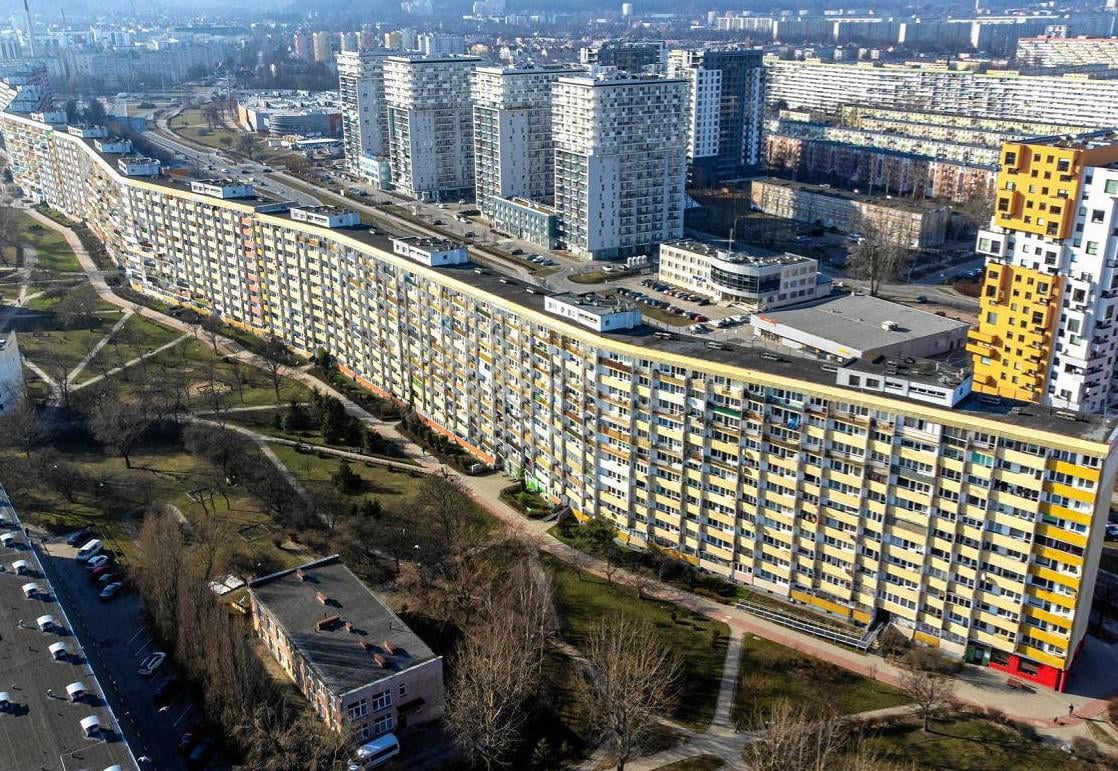
Falowiec (“The Waveform”) is one of Europe’s longest buildings. Gdańsk, Poland.
Falowiec (The Waveform): Europe’s Longest Building and Gdańsk’s Architectural Icon
Nestled in the heart of Gdańsk, Poland, Falowiec — nicknamed “The Waveform” — stands as one of Europe’s most extraordinary architectural feats. Stretching nearly 860 meters (2,821 feet), this serpentine residential colossus dominates the Przymorze district, blending socialist-era efficiency with a striking modernist design. Dive into the history, quirks, and enduring legacy of this legendary address.
What is Falowiec? Key Facts & Significance
- Location: Przymorze Wielkie, Gdańsk, Poland.
- Length: 860 meters (11 stories high).
- Residents: Houses ~6,000 people across 1,792 apartments.
- Architect: Designed by Tadeusz Różanski (1960s–1970s).
- Nickname: “The Waveform” (Fala means “wave” in Polish).
Falowiec ranks among the longest residential buildings worldwide — outpacing Vienna’s Karl Marx-Hof and even London’s brutalist Park Hill — earning it cult status as a symbol of Poland’s communist-era urban planning.
A Glimpse into History: Why Was Falowiec Built?
Constructed between 1967–1973, Falowiec emerged during Poland’s communist regime, which prioritized mass housing to ease post-war shortages. Its undulating, wave-like shape (a series of connected, curved blocks) was revolutionary:
- Maximized Space: Allowed sunlight to reach all apartments while clustering homes efficiently.
- Communal Living: Featured shared laundries, courtyards, and shops to foster collective living.
- Brutalist Aesthetics: Raw concrete and repetitive balconies typify Eastern Bloc modernism.
Despite initial criticism (“a gray monster”), it became a beloved home for generations of working-class families.
Architectural Wonders: The Science Behind the Wave
Falowiec’s design isn’t just artistic — it’s smart urban engineering:
- Light Optimization: The curved structure ensures no unit is permanently shaded.
- Wind Resistance: Its orientation minimizes gusts from the Baltic Sea.
- Green Integration: Inner courtyards include parks and playgrounds, softening its imposing scale.
Though stark externally, its pastel-painted balconies and murals (like Rafał Roskowiński’s 2015 “Przymorze Wielkie” fresco) add vibrancy today.
Daily Life in Europe’s Longest Building
Imagine a vertical village:
- Micro-Apartments: Most units are 40–60 m², designed for practicality.
- Community Vibes: Long corridors host impromptu chats; shared spaces nurture neighborly bonds.
- Amenities: Originally included schools, clinics, and stores — a self-contained ecosystem.
Longtime resident Maria Kowalska shares: “It’s like a small town. You never feel alone here.”
Cultural Impact: From Relic to Landmark
Initially scorned as a socialist eyesore, Falowiec has been reevaluated as a modernist treasure:
- Pop Culture Star: Featured in films, music videos, and the crime series The Wave (Fala).
- Artistic Muse: Inspires photographers and urban explorers drawn to its dystopian allure.
- Symbol of Resilience: Reflects Gdańsk’s evolution — from WWII ruins to a vibrant maritime hub.
In 2021, it earned protection as a heritage site, safeguarding its legacy.
Visiting Falowiec: Tips for Travelers
Want to witness this marvel firsthand? Here’s how:
- Best Vantage Points:
- Ul. Obrońców Wybrzeża (north facade).
- Reja Tram Stop (panoramic views).
- Guided Tours: Limited access, but local guides offer exterior walkabouts.
- Nearby Gems: Combine with the Oliwa Cathedral or Gdańsk’s Old Town (15 mins by tram).
❗ Respect Privacy: Remember, Falowiec is a home — avoid trespassing in residential areas.
Why Falowiec Matters Today
At a time when cities debate affordable housing and sustainable design, Falowiec’s efficient use of space and community focus remains relevant. It’s more than a relic — it’s proof that even utilitarian architecture can foster belonging.
As architect Różanski once mused: “We built nests, not just walls.”
Plan Your Gdańsk Trip
- Getting There: Fly into Gdańsk Lech Wałęsa Airport; take tram #6 or #11 to Falowiec.
- Stay: Explore the nearby Olivia Star skyscraper for Baltic Sea views.
Unlock the secrets of Falowiec — where history, innovation, and everyday life converge in Poland’s most unforgettable address.
Meta Description: Discover Falowiec (“The Waveform”), Europe’s longest building in Gdańsk, Poland. Uncover its socialist-era architecture, cultural legacy, and why this 860-meter marvel is a must-see.