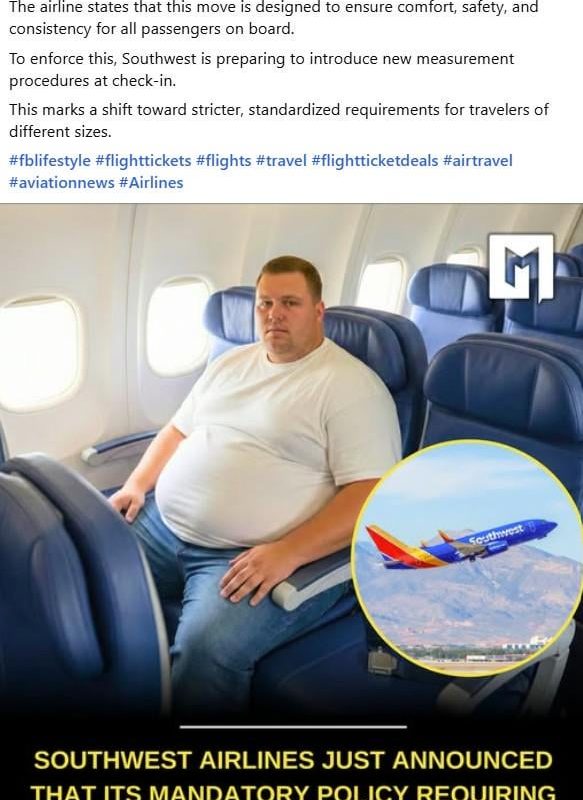
Southwest Airlines Requiring Plus-Sized Passengers to Buy Extra Seat, Starting 1/2026
Title: Southwest Airlines Announces New Policy: Plus-Sized Passengers Must Purchase Extra Seat Starting January 2026
Meta Description: Starting in 2026, Southwest Airlines will require plus-size passengers to buy an extra seat. Learn how this policy works, why it was implemented, and tips for travelers.
Southwest Airlines’ New Policy: Extra Seat Requirement for Plus-Sized Passengers Effective January 2026
Southwest Airlines has announced a significant update to its seating policy that will take effect on January 1, 2026. The airline will now require passengers who cannot comfortably fit within a single seat or lower the armrests to purchase an additional seat. This shift marks a departure from the airline’s previous “Customer of Size” policy, which allowed plus-size travelers to request a complimentary extra seat.
In this article, we break down the key details, reactions, and practical advice for passengers navigating this change.
What’s Changing?
Southwest Airlines’ new policy states:
- Passengers who cannot safely and comfortably occupy one seat must purchase a second seat at the time of booking.
- The policy applies to passengers whose body size extends beyond the 17.5-inch-wide seat or prevents the armrest from lowering.
- Staff may enforce the policy at the gate if a passenger’s size poses safety or comfort issues for themselves or others.
- Refunds for the extra seat will only be issued if the flight has unsold seats.
The airline cites safety, comfort, and operational efficiency as driving factors. Southwest’s existing policy (which offers free extra seats upon request) will remain in place until December 31, 2025.
Why Did Southwest Make This Decision?
- Safety Compliance: The FAA emphasizes proper seat belt use and unobstructed evacuation routes.
- Passenger Comfort: Rising complaints from travelers about cramped seating and encroachment.
- Financial Pressures: Airlines face higher fuel and operational costs, making “free” extra seats unsustainable.
- Alignment with Industry Standards: Airlines like Air Canada, Delta, and United already require oversized passengers to buy extra seats.
Southwest stated in a press release:
“This update ensures all customers have a safe and comfortable experience while balancing fairness for all travelers.”
Public Reaction: Support and Backlash
The policy has sparked intense debate:
Supporters Argue:
- Fairness for passengers who pay for their seat space.
- Reduced discomfort during flights.
- Clear guidelines for staff and flyers.
Critics Counter:
- Discrimination Concerns: Advocacy groups argue the policy targets plus-sized individuals unfairly.
- Financial Burden: Extra seats could add hundreds to travel costs, limiting accessibility.
- Inconsistent Enforcement: Fears of subjective assessments at check-in or boarding.
The National Association to Advance Fat Acceptance (NAAFA) condemned the move, calling it “a step backward for inclusivity.”
How to Navigate the Policy (Tips for Travelers)
- Measure Before You Fly: Use Southwest’s seat dimensions (17.5 inches wide) to self-assess.
- Book Early: Purchase the extra seat online to avoid last-minute fees or stress.
- Request Refunds Promptly: If the flight has open seats, submit a refund request post-travel.
- Consider Alternatives: Compare airline policies—JetBlue and Alaska still offer complimentary extra seats in certain cases.
FAQs: Southwest Airlines’ 2026 Seat Policy
Q: Can I get a refund for the extra seat?
A: Yes, but only if the flight isn’t full. Submit a refund request after your trip.
Q: What if I don’t buy the extra seat in advance?
A: You may be charged at the gate or rebooked on a later flight with available seats.
Q: Does this apply to children or passengers with disabilities?
A: No. The policy excludes children under age 2 and disability-related accommodations covered under the ACAA.
Q: Will flight attendants measure passengers?
A: Southwest says enforcement will rely on “visual assessment” and armrest functionality.
The Bigger Picture: Airline Industry Trends
Southwest’s move reflects broader shifts in aviation:
- Shrinking seat sizes (down nearly 5 inches since the 1980s).
- Rising obesity rates (42% of U.S. adults), increasing friction over space.
- Airlines prioritizing revenue amid inflation.
Passengers are urged to review policies before booking and voice concerns to airlines or regulators like the DOT.
Final Thoughts
Southwest Airlines’ 2026 policy underscores the tension between inclusivity, safety, and profitability in air travel. While the change aims to standardize comfort for all flyers, it raises questions about equity and accessibility. Passengers affected by this policy should plan ahead, explore alternatives, and advocate for transparent enforcement.
Stay informed by visiting Southwest Airlines’ official policy page and regulatory resources like the DOT.
Keywords: Southwest Airlines plus-size policy, extra seat requirement 2026, Southwest customer of size, airline seating rules, passenger size policy, flight comfort guidelines.