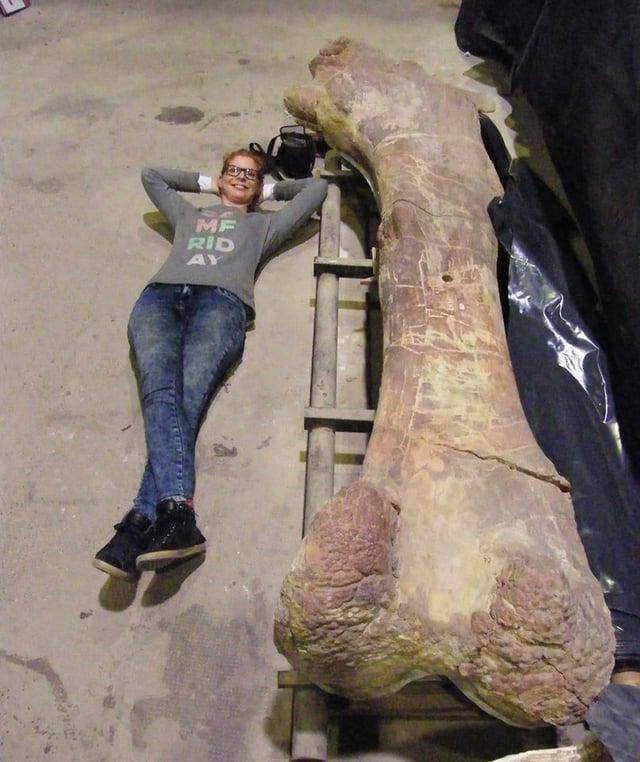
Femur of a patagotitan, a close relative of the more famous argentinosaurus.
Unlocking the Giants: The Patagotitan’s Femur and Its Colossal Secrets
(Meta Description: Discover the fascinating story behind the Patagotitan’s femur—a titanic bone revealing secrets of one of Earth’s largest dinosaurs. Explore its size, science, and connection to Argentinosaurus.)
The Colossal Femur of Patagotitan: A Titan’s Legacy
Move over, Argentinosaurus—there’s another prehistoric giant dominating the fossil record. Meet Patagotitan mayorum, a titanosaur so enormous that its femur (thigh bone) alone stretches longer than most humans are tall. Discovered in Argentina’s Patagonia region in 2014, Patagotitan shook the paleontology world with its staggering size, rivaling even its famed cousin, Argentinosaurus. But it’s the femur—the largest bone in its body—that holds the key to understanding how these dinosaurs became Earth’s largest land animals.
What Makes the Patagotitan Femur So Special?
The femur is a critical piece of the puzzle for estimating dinosaur size, weight, and biomechanics. For Patagotitan, a single femur measures over 8 feet (2.4 meters) long—comparable to a small car! Here’s why this bone matters:
- Weight-Bearing Giant: The femur supported up to 70 tons of body mass, showcasing unparalleled structural strength.
- Growth Clues: Growth rings in the bone (similar to tree rings) hint at rapid juvenile growth spurts, key to reaching titanic sizes.
- Evolutionary Link: Its shape bridges gaps between other titanosaurs like Argentinosaurus, revealing shared adaptations for gigantism.
Patagotitan vs. Argentinosaurus: A Femur Face-Off
While Argentinosaurus remains slightly heavier in some estimates (up to 85-100 tons), Patagotitan’s femur provides clearer fossil evidence due to more complete skeletal remains. Key comparisons:
| Feature | Patagotitan | Argentinosaurus |
|---|---|---|
| Femur Length | ~2.4 meters (8 ft) | ~2.5 meters (8.2 ft)* |
| Estimated Weight | 55-70 tons | 70-100 tons* |
| Fossil Integrity | Multiple femurs found | Fragmentary femur remains |
*Estimates for Argentinosaurus are debated due to limited fossils.
The Science Behind the Bone: What the Femur Tells Us
Patagotitan’s femur isn’t just big—it’s a scientific treasure trove:
- Gigantism in Sauropods: The thick, column-like structure suggests adaptations to distribute immense weight, avoiding skeletal collapse.
- Herding Behavior: Mass burial sites with multiple femurs imply Patagotitan lived (and died) in herds, challenging earlier notions of solitary titanosaurs.
- Climate Adaptation: Patagonia’s lush Cretaceous forests provided abundant food, enabling such colossal sizes—a theory supported by femur growth rates.
Where to See the Patagotitan Femur Today
Several museums worldwide display casts of Patagotitan’s colossal bones, including:
- American Museum of Natural History (New York): A full-scale skeleton dominates the gallery.
- Museo Paleontológico Egidio Feruglio (Argentina): Houses original fossils near their discovery site.
Why Study Titanosaur Femurs?
By analyzing these bones, scientists uncover:
- How dinosaurs pushed physiological limits without collapsing under their own weight.
- Insights into climate impacts on evolution—warmer, oxygen-rich eras may have fueled gigantism.
- Biomimicry potential for modern engineering, from bridge designs to robotics.
Conclusion: The Femur That Redefined Prehistory
The Patagotitan femur isn’t just a relic—it’s a gateway to the age of titans. As the most complete femur from any super-giant sauropod, it reshapes our understanding of dinosaur gigantism and offers humbling proof of life’s capacity for extremes. Next to Argentinosaurus, Patagotitan stands tall—literally—thanks to this bone, reminding us that Earth’s past holds wonders we’re only beginning to measure.
Ready to dive deeper? Explore museum exhibits or follow ongoing Patagonian digs to witness paleontology’s biggest finds—literally.