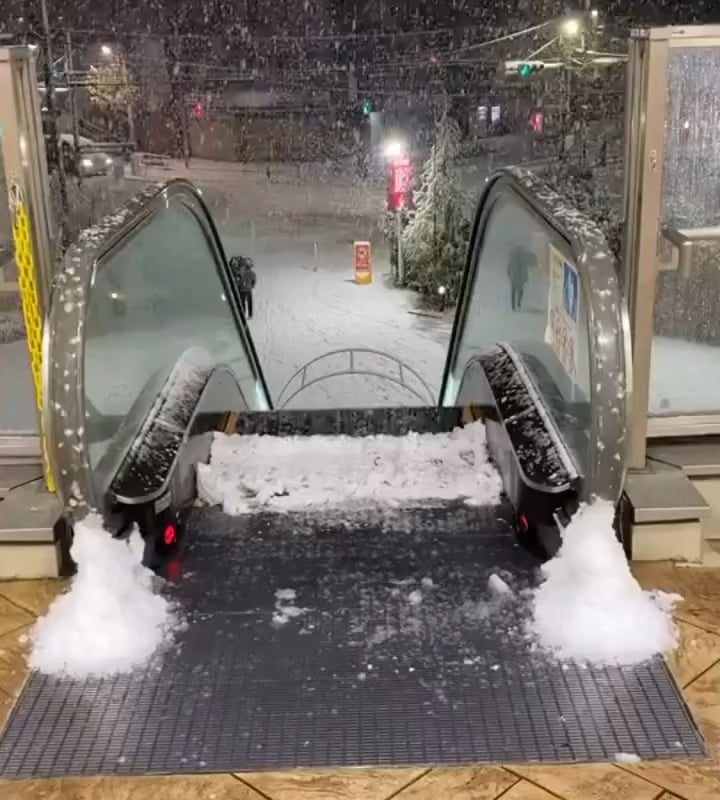
Seen on an aggregator channel, OG source unknown.
Title: Why Outdoor Escalators Accumulate Snow on Top Steps (And How to Prevent Hazards)
Meta Description: Discover why outdoor escalators often accumulate snow on the top step, the risks it creates, and proven solutions to prevent accidents and maintain functionality.
Introduction
Outdoor escalators are engineering marvels that simplify mobility in open-air spaces like transit hubs, ski resorts, shopping districts, and stadiums. But during winter, a common—and hazardous—problem often emerges: snow accumulation on the top step. This phenomenon isn’t just an inconvenience; it can lead to mechanical failures, slips, and costly downtime. In this article, we’ll explore why this happens, the dangers it poses, and actionable strategies to keep outdoor escalators safe and operational in snowy conditions.
Why Does Snow Build Up on the Top Step?
Snow accumulation at the top of an outdoor escalator is primarily due to four factors:
-
Heat Transfer Dynamics:
Escalator steps are typically made of metal, which conducts heat away rapidly. When snow falls, the top step—the first point of contact with precipitation—loses heat quickly and becomes colder than the air temperature, causing snow to freeze instantly rather than melt. -
Lack of Friction:
Unlike steps further down the escalator, the top step doesn’t benefit from the friction and heat generated by moving parts below. This creates a “cold zone” where snow sticks and builds up. -
Wind and Exposure:
The top step is fully exposed to wind, which sweeps snow onto its surface. Nearby structures like roofs or overhangs can even funnel snow directly onto it. -
Design Limitations:
While modern escalators have drainage systems, melting snow can refreeze at the top if temperatures fluctuate, creating a stubborn ice layer.
The Risks of Snow on Escalator Steps
Ignoring snow buildup can lead to severe consequences:
- Safety Hazards:
A snowy or icy top step increases slip-and-fall risks, especially when passengers transition from a cleared walkway onto the escalator. - Mechanical Damage:
Compacted snow can seep into gears, motors, or electrical components, accelerating corrosion and causing malfunctions. - Downtime and Costs:
Forced shutdowns for snow removal disrupt operations. Repairs due to cold-weather wear-and-tear also raise maintenance expenses.
Proven Solutions to Prevent Snow Accumulation
Protecting outdoor escalators requires proactive design and maintenance strategies:
-
Heated Steps or Treads:
Install conductive heating systems (like embedded electric coils) or radiant heaters above the escalator to melt snow before it accumulates. These systems can be thermostatically controlled for energy efficiency. -
Automated Brushing Mechanisms:
Attach rotating brushes at the top landing to sweep snow off steps in real time. These are particularly effective in heavy-snowfall regions. -
Wind Deflectors and Canopies:
Install snow shields or extended canopies to redirect windblown snow away from the escalator entry. For example, Hong Kong’s Mid-Levels escalators use shelters to reduce weather exposure. -
Anti-Ice Coatings:
Apply hydrophobic or ice-phobic coatings to steps to prevent snow and ice from bonding to the surface. -
Smart Sensors:
Use moisture and temperature sensors to activate heating systems or alerts when conditions favor snow buildup.
Case Study: A Ski Resort’s Winter-Ready Escalator
A Swiss ski resort installed heated steps and overhead radiant heaters on its outdoor escalators. Combined with nightly antifreeze sprays, this reduced snow accumulation by 90% and eliminated weather-related closures during peak season.
Maintenance Tips for Winter Readiness
- Pre-Storm Inspections: Clear drains and test heating systems before snowfall.
- Frequent Snow Removal: Assign staff to shovel top steps during storms. Use plastic shovels to avoid damaging surfaces.
- Avoid Salt or Chlorides: These can corrode metal components. Opt for acetate-based de-icers instead.
Planning New Outdoor Escalators? Consider These Design Factors
- Location: Avoid placing escalators in wind tunnels or below structures that may drip melting snow.
- Materials: Stainless steel or composite steps handle cold better than traditional metals.
- Slope and Overhangs: A steeper slope helps shed snow naturally, while overhangs minimize direct exposure.
Conclusion
Outdoor escalators accumulating snow on the top step is a solvable problem—not a design flaw. By integrating heating technology, protective structures, and smart maintenance routines, facilities can ensure safe, year-round operation. Prioritize prevention to avoid injuries, downtime, and costly repairs, turning a winter weakness into a reliability win.
Keywords:
outdoor escalator accumulating snow, snow on escalator top step, escalator winter safety, heated escalator steps, preventing snow buildup on escalator, outdoor escalator maintenance