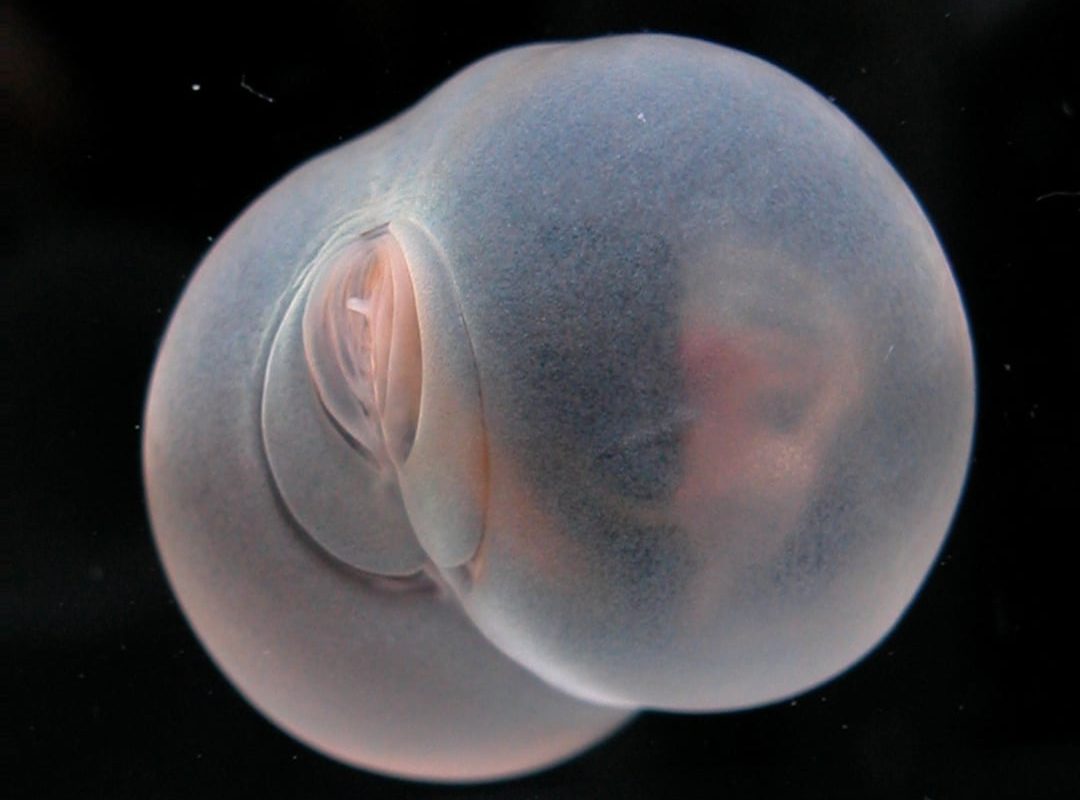
CHAETOPTERUS PUGAPORCINUS, the “Pigbutt Worm” is a unique, deep sea polychaete worm known for its distinctive shape resembling a pig’s rear, discovered off California in the midnight zone (820-2,200m deep)
Title: Pigbutt Worm: The Bizarre Deep-Sea Creature That Looks Like a Pig’s Rear
Meta Description: Discover the Chaetopterus pugaporcinus or Pigbutt Worm, an enigmatic deep-sea worm found off California’s coast. Explore its midnight zone habitat, unique biology, and why scientists are fascinated by this strange polychaete.
Chaetopterus Pugaporcinus: The Pigbutt Worm of the Deep Sea
Imagine a creature so peculiar that scientists named it after a pig’s backside. Meet the Pigbutt Worm (**Chaetopterus pugaporcinus)**, a deep-sea polychaete worm that’s captivated marine biologists with its otherworldly appearance and mysterious lifestyle. Discovered in the inky darkness of California’s midnight zone, this gelatinous oddity resembles a floating pair of buttocks—and holds secrets about life in Earth’s most extreme environments.
What is the Pigbutt Worm?
Chaetopterus pugaporcinus belongs to the Chaetopteridae family of parchment worms but stands out for its bizarre morphology. Unlike its tube-dwelling relatives, this free-floating worm has a chubby, rounded body divided into segments that look uncannily like a pig’s rear end. The moniker “Pigbutt” isn’t just a joke—it’s a nod to its Latin name (pugaporcinus = “pig’s rear” + Chaetopterus genus).
Discovery and Habitat
- First spotted: Researchers from the Monterey Bay Aquarium Research Institute (MBARI) discovered this worm in 2007 using remotely operated vehicles (ROVs).
- Depth range: It inhabits the midnight zone (bathypelagic zone), between 820–2,200 meters deep, where sunlight never penetrates.
- Location: Primarily found off the coast of Central California, though similar species may exist in other deep-sea regions.
Anatomy of a Deep-Sea Oddity
The Pigbutt Worm’s physique is both hilarious and fascinating:
- Body shape: A pumpkin-segment-like body (3–4 cm long) with inflated, mucus-filled sections.
- Glowing secrets: Some scientists speculate it may use bioluminescent mucus to lure prey, though this is unconfirmed.
- Movement: It drifts in the water column using paddle-like bristles (chaetae) on specialized body segments.
![Suggested Image: Artistic rendering of Pigbutt Worm floating in darkness, highlighting its segmented, “butt-like” shape. Alt Text: Chaetopterus pugaporcinus (Pigbutt Worm) drifting in the deep sea]
Life in the Midnight Zone: Survival Strategies
To thrive in the crushing pressures and freezing temperatures of the deep sea, C. pugaporcinus has evolved unique adaptations:
- Floating lifestyle: Unlike most Chaetopterids, it doesn’t build tubes. Instead, it drifts mid-water, potentially feeding on marine snow (organic particles).
- Mucus mastery: Secretes a mucus net to trap plankton or detritus, funneling food toward its mouth.
- Predator evasion: Its translucent, gelatinous body may help it avoid detection by predators like anglerfish or jellies.
Why Scientists Are Fascinated
The Pigbutt Worm challenges assumptions about deep-sea life and polychaete evolution:
- Evolutionary puzzle: Its free-swimming behavior suggests a radical departure from tube-dwelling ancestors.
- Midnight zone ecology: As a mid-water drifter, it could play an understudied role in nutrient cycling.
- Climate change insights: Studying its mucus or physiology may reveal how deep-sea species adapt to shifting oceans.
Conservation and the Unknown
Like many deep-sea creatures, C. pugaporcinus faces threats from deep-sea mining, pollution, and climate change. Only a handful have ever been observed, leaving critical questions unanswered:
- How does it reproduce?
- What is its lifespan?
- How widespread is its population?
MBARI continues to study this species using cutting-edge ROVs, but the deep sea’s vastness means many of its secrets remain hidden.
Fun Facts About the Pigbutt Worm
- Size: Roughly the size of a hazelnut or large grape.
- Nicknames: Also called the “Flying Buttocks Worm” due to its floating posture.
- Deep-sea celebrity: Featured in documentaries like Blue Planet II for its “WTF factor.”
Final Thoughts
The Pigbutt Worm (Chaetopterus pugaporcinus) is a reminder that the ocean’s depths harbor wonders beyond imagination. From its hilarious silhouette to its enigmatic lifestyle, this creature underscores why deep-sea exploration matters—and how much we still have to learn.
Target Keywords: Pigbutt Worm, Chaetopterus pugaporcinus, deep-sea worm, midnight zone, bizarre sea creatures, MBARI discoveries, California deep-sea life.
Internal Links (if applicable):
- [MBARI’s Deep-Sea Research]
- [Other Strange Deep-Sea Animals]
- [The Midnight Zone: Life in Eternal Darkness]
Image Suggestions:
- High-resolution ROV footage of C. pugaporcinus (MBARI).
- Illustrations comparing Pigbutt Worm anatomy to related species.
- Infographic on midnight zone ecosystems.
By blending weird science with SEO-friendly terms, this article aims to engage curious readers while climbing search rankings for niche marine biology topics. 🐷🌊