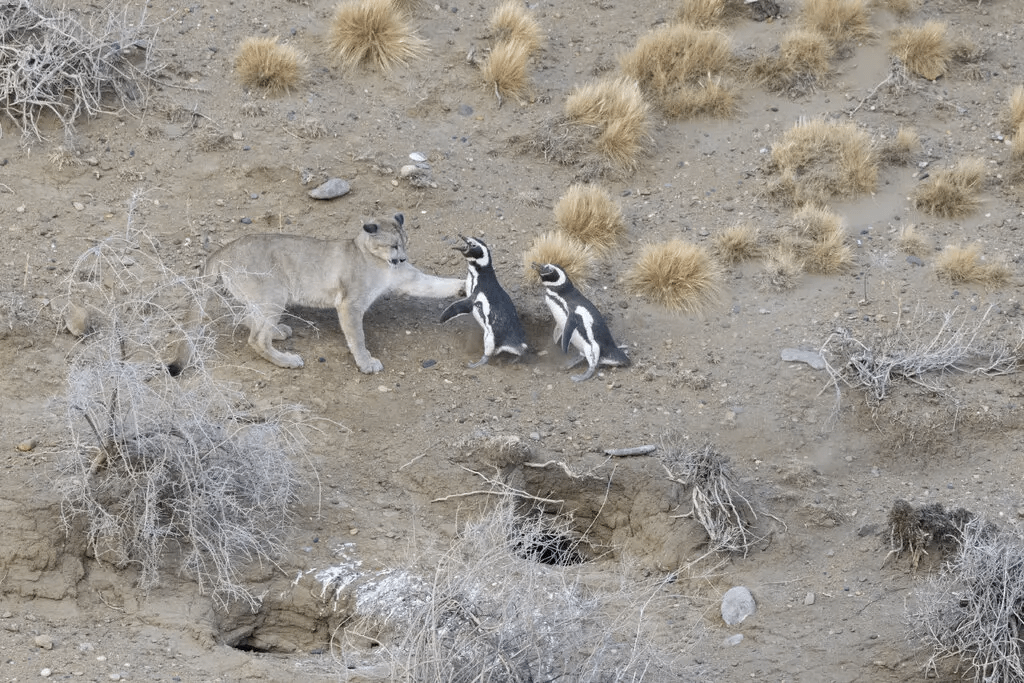
Patagonian pumas prey on penguins
Title: Unveiling the Wild: How Patagonian Pumas Hunt Penguins in Argentina’s Untamed Landscapes
Introduction
In the windswept coasts of Patagonia, a predator-prey dynamic defies expectations: Patagonian pumas, South America’s apex mountain lions, are documented preying on Magellanic penguins. This startling interaction, observed in remote regions like Península Valdés and Punta Tombo, highlights nature’s adaptability and the hidden complexities of Patagonia’s ecosystems. Dive into the science, strategies, and ecological implications of this rare behavior.
Patagonian Pumas: The Silent Stalkers of the South
Patagonian pumas (Puma concolor patagonicus) are a distinct subspecies of mountain lion, adapted to the harsh grasslands, forests, and coastal terrains of southern Argentina and Chile. Smaller than their North American cousins but equally agile, these solitary predators typically hunt guanacos, armadillos, and introduced species like hares. However, studies reveal their diet occasionally includes coastal birds—even penguins.
Key Traits:
- Stealth hunters: Rely on camouflage and patience to ambush prey.
- Adaptive diet: Opportunistically exploit available food sources.
- Habitat range: Roam up to 150 square miles, sometimes venturing near penguin colonies.
Magellanic Penguins: Coastal Dwellers in Peril
Magellanic penguins (Spheniscus magellanicus) flock to Patagonia’s shores between September and April to breed. While they face threats from orcas, sea lions, and skuas, pumas represent an unexpected terrestrial predator. Nesting penguins—especially young, injured, or isolated individuals—become vulnerable when they waddle inland to burrow or rest.
Colonies at Risk:
- Primary nesting sites include Punta Tombo (Argentina) and Magdalena Island (Chile).
- Human disturbances (tourism, fisheries) may inadvertently drive penguins closer to puma territories.
How Pumas Hunt Penguins: Strategy and Surprise
Puma predation on penguins is not common but provides critical calories when other prey is scarce. Observations show:
- Opportunistic Strikes: Pumas patrol coastlines during penguin breeding seasons, capitalizing on grounded birds.
- Night Hunts: Using darkness to mask their approach, pumas ambush penguins near nests or pathways.
- Low Success Rate: Penguins’ group vigilance and swift ocean escapes limit pumas’ success.
Scientific Findings:
- A study in Journal of Mammalogy documented puma scat with penguin remains in Península Valdés.
- Researchers estimate penguins comprise ≤5% of puma diets, underscoring the behavior’s rarity.
Ecological Impact: Balance or Threat?
While penguin predation may seem alarming, it’s part of a natural checks-and-balances system:
- Population Control: Pumas likely target weaker penguins, strengthening colony health.
- Scavenger Benefits: Uneaten carcasses feed foxes, caracaras, and other scavengers.
However, climate change and human encroachment could disrupt this balance:
- Rising temperatures may force penguins to nest further inland, increasing puma encounters.
- Overfishing reduces penguins’ primary food (anchovies), stressing populations already facing predation.
Conservation and Research
Wildlife biologists emphasize protecting both species:
- Puma Conservation: Patagonia’s pumas are near-threatened due to habitat loss. Organizations like Rewilding Argentina advocate for corridor preservation.
- Penguin Safeguards: Monitoring colonies and minimizing human interference helps mitigate risks.
- Citizen Science: Tourists and guides contribute data via platforms like iNaturalist, tracking puma-penguin interactions.
Witnessing Nature’s Drama Responsibly
Ecotourism offers a chance to observe these species—ethically:
- Guided Tours: Join certified wildlife tours in Península Valdés or Torres del Paine.
- Keep Distance: Use binoculars; avoid disturbing nesting penguins or puma dens.
Conclusion
The unexpected saga of Patagonian pumas preying on penguins reminds us that nature’s food webs are full of surprises. While rare, this behavior underscores Patagonia’s ecological richness and the urgent need to protect its wild inhabitants. Through research, conservation, and mindful exploration, we can ensure these iconic species thrive for generations.
SEO Keywords: Patagonian pumas, penguin predation, Magellanic penguins, puma diet, Patagonia wildlife, puma hunting behavior, Patagonia conservation, Argentina penguin colonies.
Meta Description: Discover how Patagonian pumas opportunistically prey on Magellanic penguins in Argentina’s coastal wilderness. Explore the science, ecology, and conservation efforts behind this rare behavior.