Egypt reveals restored colossal statues of pharaoh in Luxor
Egypt Unveils Magnificent Restored Colossal Pharaoh Statues in Luxor: A Journey into Ancient Grandeur
Introduction
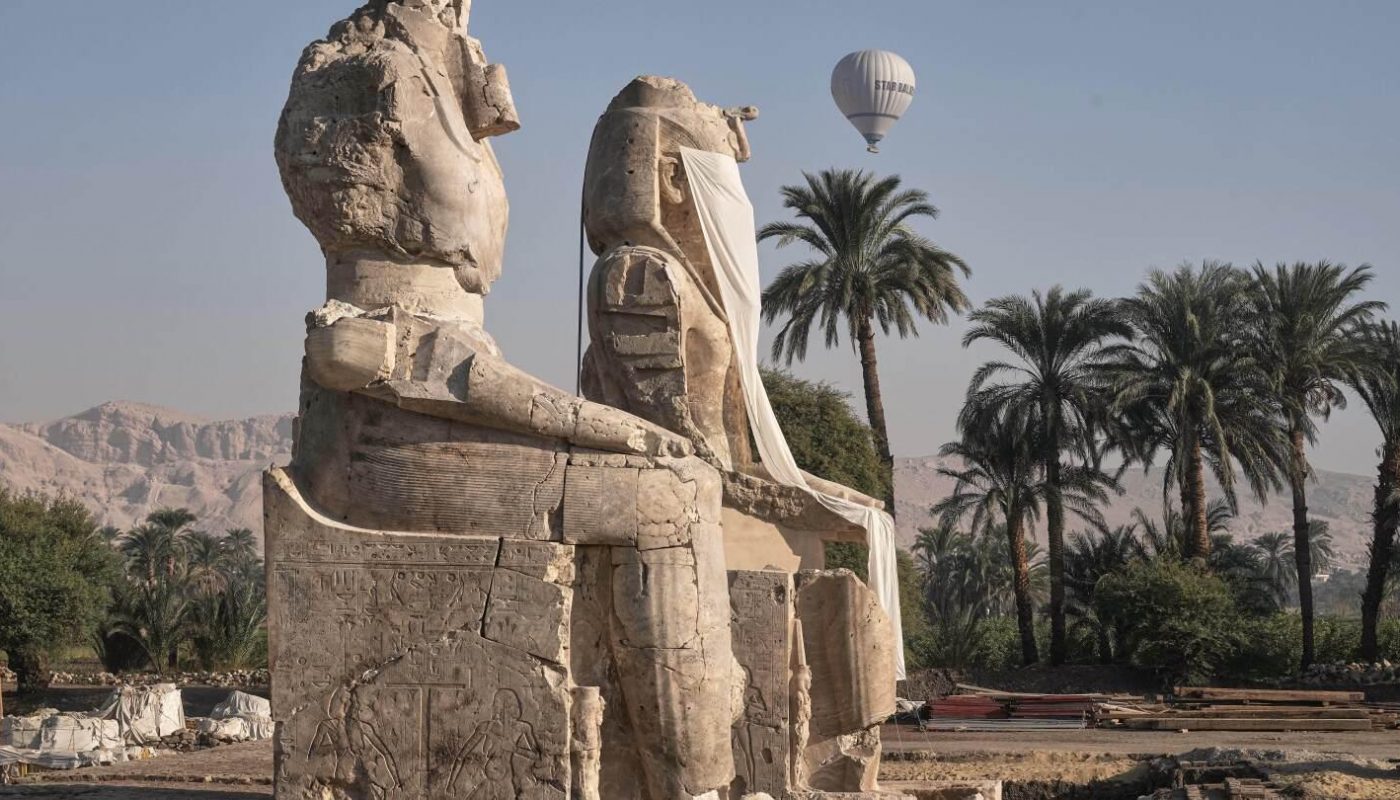
In a stunning archaeological triumph, Egypt has unveiled the newly restored colossal statues of Pharaoh Amenhotep III in Luxor’s ancient Theban Necropolis. This headline-making restoration—led by Egyptian and international archaeologists—brings the majesty of Egypt’s New Kingdom back to life and reaffirms the country’s commitment to protecting its unparalleled cultural heritage. As tourism rebounds post-pandemic, this revelation offers travelers and history enthusiasts a fresh glimpse into the power and artistry of the 18th Dynasty.
The Rediscovery: History Unearthed on Luxor’s West Bank
The twin statues, originally part of the mortuary temple of Amenhotep III (c. 1386–1349 BCE), stood for millennia on Luxor’s West Bank—though time, earthquakes, and Nile floods had left them partially buried and fragmented. Known as the “Colossi of Memnon” since antiquity, these towering limestone figures once guarded the entrance to the pharaoh’s temple complex, a sprawling structure larger than even Karnak Temple.
After years of painstaking excavation and restoration by the Egyptian Ministry of Tourism and Antiquities and Germany’s Archaeological Institute, the statues now stand tall once more. Their resurgence showcases intricate details of royal regalia, hieroglyphics, and divine symbolism lost to centuries of erosion.
Restoring Greatness: How Experts Revived the Pharaoh’s Legacy
The project, spanning over a decade, utilized cutting-edge technology alongside traditional methods:
- 3D Scanning & Digital Modeling: Used to map fractures and recreate missing segments.
- Original Materials: Newly quarried limestone was carefully matched to the statues’ ancient blocks.
- Conservation Science: Anti-erosion treatments protect against future environmental damage.
- Reassembly: Over 100 fragments were repositioned to restore the statues’ 14-meter (46-foot) height.
Dr. Mostafa Waziry, Secretary-General of Egypt’s Supreme Council of Antiquities, emphasized that this work “preserves the legacy of Amenhotep III, whose reign symbolized Egypt’s golden age of prosperity and artistic innovation.”
Why Amenhotep III? The Pharaoh Who Defined an Era
Amenhotep III (father of the controversial Akhenaten and grandfather of Tutankhamun) ruled during a period of unmatched wealth and diplomatic power. His temple at Kom el-Hettan featured not just the colossi but hundreds of sculptures, including the famous “Lost City of Amenhotep III” rediscovered in recent years.
The restored statues depict him seated, wearing the nemes headdress and false beard—symbols of kingship. Hieroglyphs on the throne highlight his divine connections, flanked by imagery of the Nile god Hapi and his wife Queen Tiye.
Luxor’s Tourism Renaissance: A New Highlight for Travelers
Luxor—often dubbed the “world’s greatest open-air museum”—boasts iconic sites like the Valley of the Kings and Karnak. These revitalized colossi add another must-see marvel:
- Location: The statues reside on Luxor’s West Bank, near the Ramesseum and Hatshepsut’s Temple.
- Timing: Visit at sunrise or sunset for breathtaking photos against the Theban Mountains.
- Cultural Impact: The restoration coincides with Egypt’s push to reopen major attractions ahead of the Grand Egyptian Museum’s (GEM) launch.
Tourism officials hope this project will draw global attention back to Luxor’s lesser-explored gems, beyond the headline tombs and temples.
Egypt’s Broader Heritage Revival
This restoration aligns with Egypt’s national strategy to safeguard its archaeological treasures while boosting tourism revenue. Recent projects include:
- The opening of the Avenue of Sphinxes in Luxor.
- The upcoming inauguration of the GEM near the Pyramids of Giza.
- Ongoing excavations in Saqqara and Tanis.
Conclusion: A Testament to Time and Tenacity
The revival of Amenhotep III’s colossal statues is more than an archaeological feat—it’s a bridge connecting modern Egypt to its pharaonic zenith. For history buffs, travelers, and admirers of ancient engineering, Luxor’s West Bank now shines even brighter.
Plan Your Visit:
- Where: Kom el-Hettan, Luxor West Bank, Egypt
- When: Open year-round; winter (November–February) offers cooler temperatures.
- Insider Tip: Pair your visit with the nearby “Lost Golden City” of Aten for a full day of 18th Dynasty exploration.
Egypt continues to reveal wonders, proving that even after 3,400 years, the pharaohs’ stories are far from over.
SEO Meta Description:
Discover Egypt’s newly restored colossal statues of Pharaoh Amenhotep III in Luxor. Learn about the decade-long restoration, historical significance, and travel insights.
Keywords:
- Restored pharaoh statues Luxor
- Egypt Colossi of Memnon restoration
- Amenhotep III statues
- Luxor West Bank attractions
- Egyptian archaeological discoveries 2023
- Pharaoh statue conservation
- Ancient Egypt tourism
Hashtags: