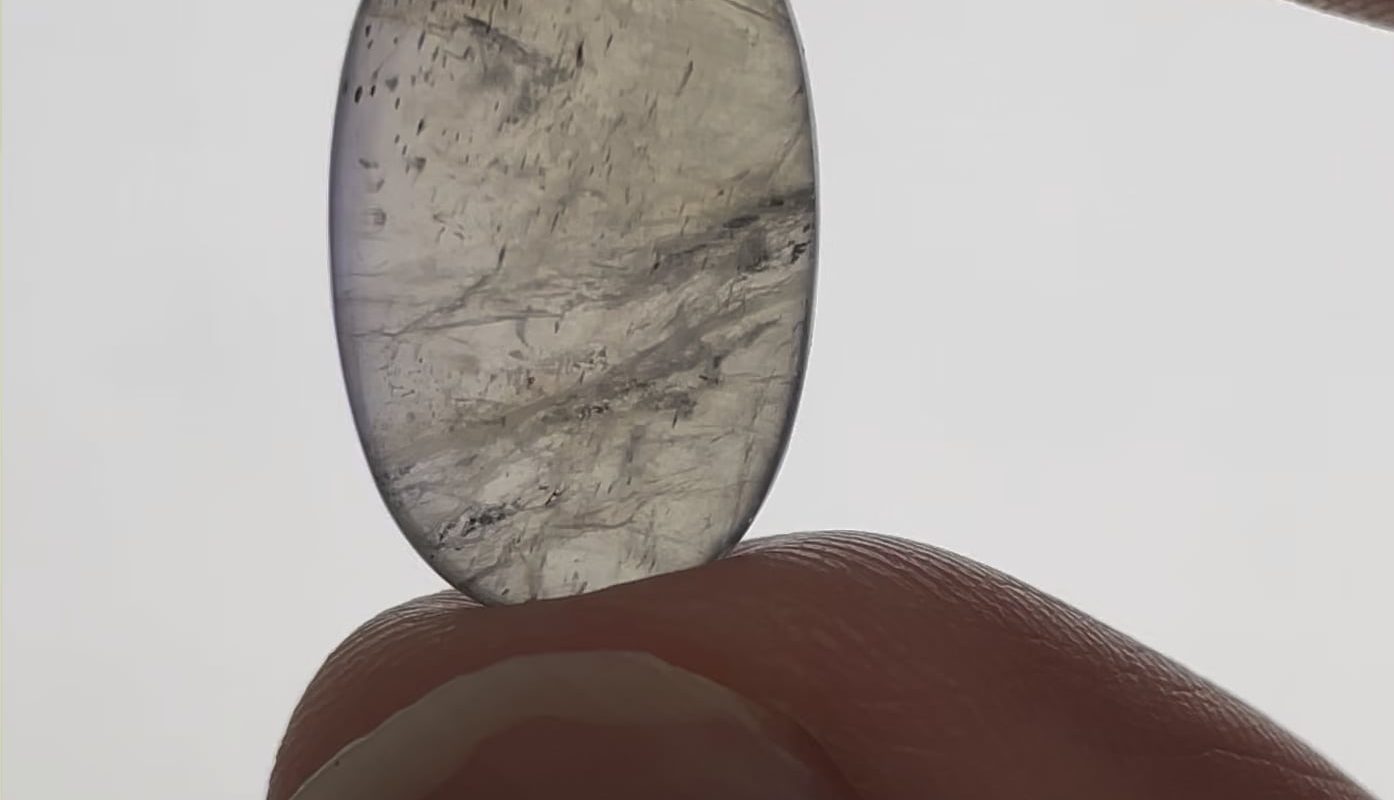
This mineral (Cordierite) changes colour when rotated due to the crystal lattice’s lack of symmetry along all 3 axes (Pleochroism)
Title: Cordierite: The Color-Changing Mineral & the Magic of Pleochroism Explained
Meta Description: Discover why cordierite (aka iolite) changes color when rotated! Learn how its asymmetric crystal structure creates stunning pleochroism and where to find this mesmerizing mineral.
What is Cordierite? An Introduction to Nature’s Kaleidoscope
Cordierite, also known as iolite in its gem-quality form, is a magnesium iron aluminosilicate mineral famed for its remarkable optical property: pleochroism. When rotated under light, cordierite shifts between shades of violet-blue, gray, and yellowish-brown, creating a mesmerizing visual effect reminiscent of a mood ring. But this phenomenon isn’t magic—it’s rooted in the mineral’s unique atomic structure.
Why Does Cordierite Change Color? The Science of Pleochroism
Pleochroism occurs when a mineral absorbs light differently depending on the direction it’s viewed. In cordierite’s case, the secret lies in its unsymmetrical crystal lattice. Unlike minerals with uniform symmetry (like cubic crystals), cordierite’s orthorhombic structure lacks identical symmetry along all three axes.
Key Takeaways:
- Asymmetry Matters: Light waves entering the crystal split into polarized rays that vibrate along different paths.
- Selective Absorption: Each vibration direction absorbs specific wavelengths of light, altering the color perceived by the eye.
- Multi-Axis Shift: Rotate cordierite, and you’ll see three distinct hues—blue-violet (X-axis), pale yellow (Y-axis), and deep blue (Z-axis).
This makes cordierite a textbook example of trichroism, a type of pleochroism displaying three colors.
Geology & Formation: Where Does Cordierite Form?
Cordierite is a metamorphic mineral, typically found in high-temperature, low-pressure environments such as:
- Altered Igneous Rocks: Formed via contact metamorphism (e.g., near magma intrusions).
- Pelitic Schists: Rich in aluminum, like shale or clay-rich sediments.
- Regional Metamorphic Zones: Often alongside minerals like garnet, sillimanite, or quartz.
Notable Locations:
- India (gem-quality iolite)
- Norway, Germany, and Finland
- Madagascar, Sri Lanka, and Tanzania
Uses of Cordierite: From Viking Navigation to Modern Gemstones
- Iolite Gemstones: Used in jewelry for its vivid pleochroism. Historically, Vikings used thin cordierite slices as polarizing lenses to locate the sun on cloudy days.
- Industrial Applications: Cordierite’s low thermal expansion makes it ideal for ceramics, catalytic converters, and kiln furniture.
- Spiritual Symbolism: Believed to enhance intuition and spiritual insight, iolite is nicknamed the “Viking’s Compass Stone.”
Identifying Cordierite: Tips for Rockhounds
- Color Shift Test: Rotate under light to spot pleochroism.
- Hardness: 7–7.5 on the Mohs scale (scratch-resistant but less hard than quartz).
- Cleavage: Poor cleavage, often found in granular masses or prismatic crystals.
Frequently Asked Questions (FAQ)
Q: Is cordierite rare?
A: While common in metamorphic rocks, gem-quality iolite is relatively scarce.
Q: Does synthetic cordierite exist?
A: Yes! Lab-created cordierite is used in industrial ceramics but lacks natural pleochroism.
Q: How is cordierite different from tanzanite?
A: Both are pleochroic, but tanzanite is a variety of zoisite with stronger red-violet flashes.
Conclusion: The Allure of Asymmetry
Cordierite’s optical magic—powered by its asymmetrical crystal lattice—serves as a dazzling reminder of how geology and physics collide to create natural wonders. Whether as a gemstone, a polarizing tool, or a collector’s prize, this mineral continues to fascinate scientists and enthusiasts alike.
Next time you see iolite jewelry, give it a spin—you’re witnessing the beauty of pleochroism!
Target Keywords:
- Cordierite
- Pleochroism
- Color-changing mineral
- Iolite gemstone
- Asymmetric crystal lattice
- Trichroism
Optimization Tips:
- Use high-quality images/videos of rotating cordierite.
- Link to geological resources or gemological guides.
- Target search terms like “why does iolite change color?” or “how pleochroism works.”