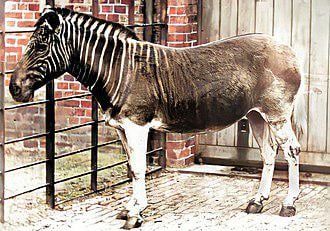
The quagga was a unique subspecies of the plains zebra, distinguished by its half-striped, half-solid coat. That went extinct around 1883.
Title: The Quagga: Uncovering the Mysteries of Africa’s Extinct Half-Striped Zebra
Meta Description: Discover the quagga, the enigmatic half-striped zebra subspecies hunted to extinction in the 19th century. Explore its biology, extinction story, and modern-day revival efforts.
Introduction
In the annals of extinction, the quagga (Equus quagga quagga) stands as one of the most striking examples of human impact on biodiversity. A unique subspecies of the plains zebra, the quagga was distinguished by its unusual coat—vivid stripes on the front half of its body that faded into solid brown hindquarters. Once roaming South Africa’s grasslands, this iconic animal vanished forever by 1883, a victim of overhunting and habitat loss. Yet its legacy lives on in science, conservation, and even modern resurrection efforts.
What Was the Quagga?
The quagga was a subspecies of the plains zebra (Equus quagga), endemic to the arid grasslands of South Africa’s Cape Province and southern Free State. While resembling a zebra at first glance, it had several distinctive traits:
- Hybrid Appearance: Stripes adorned its head, neck, and forebody but became faint and eventually disappeared around the midsection, leaving the hindquarters a solid sandy brown.
- Size & Build: Smaller than other zebras, the quagga stood about 1.3 meters tall and had a stockier build adapted to grassland life.
- Behavior: Like plains zebras, quaggas lived in herds and grazed on tough grasses. Early European settlers noted their loud, “kwa-ha-ha” calls—the origin of their name.
For decades, scientists debated whether the quagga was a distinct species or a subspecies. In 1984, DNA analysis confirmed it was a southern variant of the plains zebra, diverging genetically around 200,000 years ago.
The Vanishing Stripes: Why Did the Quagga Go Extinct?
By the late 19th century, the quagga had disappeared from the wild. Its extinction stemmed from a brutal combination of factors:
- Overhunting: Settlers and indigenous groups hunted quaggas intensively for meat, hides (used for sacks and leather), and to eliminate competition with livestock.
- Habitat Loss: Farmland expansion decimated South Africa’s grasslands, fragmenting herds.
- Misunderstanding: Many settlers saw zebras as pests and killed them indiscriminately, unaware of subspecies distinctions.
The last known wild quagga was shot in the 1870s, and the final captive individual died at Amsterdam’s Artis Magistra Zoo on August 12, 1883. Only 23 skins and seven preserved specimens remain in museums worldwide.
The Quagga’s Legacy: Science & “Resurrection”
Though extinct, the quagga left an indelible mark on science and conservation:
- Taxidermy Clues: Preserved specimens (like the Natural History Museum of London’s quagga foal) provided genetic material for DNA studies, proving its zebra lineage.
- The Quagga Project: Launched in 1987, this South African initiative uses selective breeding of plains zebras to “recreate” the quagga’s coat pattern. Progress has produced “Rau quaggas”—zebras with reduced striping—though they’re genetically distinct from the extinct subspecies.
Lessons from the Quagga’s Extinction
The quagga’s demise highlights critical themes in conservation:
- The Silent Disappearance: At the time, few understood extinction’s permanence. The quagga’s loss spurred early wildlife protection laws, including South Africa’s 1886 Game Law.
- Genetic Rediscovery: DNA research redefined how we classify species, showing nature’s diversity is more fluid than once thought.
- Symbol of Hope: The Quagga Project underscores humanity’s capacity to repair ecological damage, even if true revival remains impossible.
Conclusion
The quagga’s story is a haunting reminder of extinction’s finality—but also a catalyst for change. Today, it fuels efforts to protect endangered species like the Grevy’s zebra and inspires innovative conservation genetics. As we uncover more about this half-striped marvel, the quagga challenges us to recognize the fragility of Earth’s biodiversity and act before other unique creatures vanish into history.
Keywords: Quagga, extinct zebra, quagga extinction, quagga facts, quagga project, half-striped zebra, extinct animals, conservation genetics.