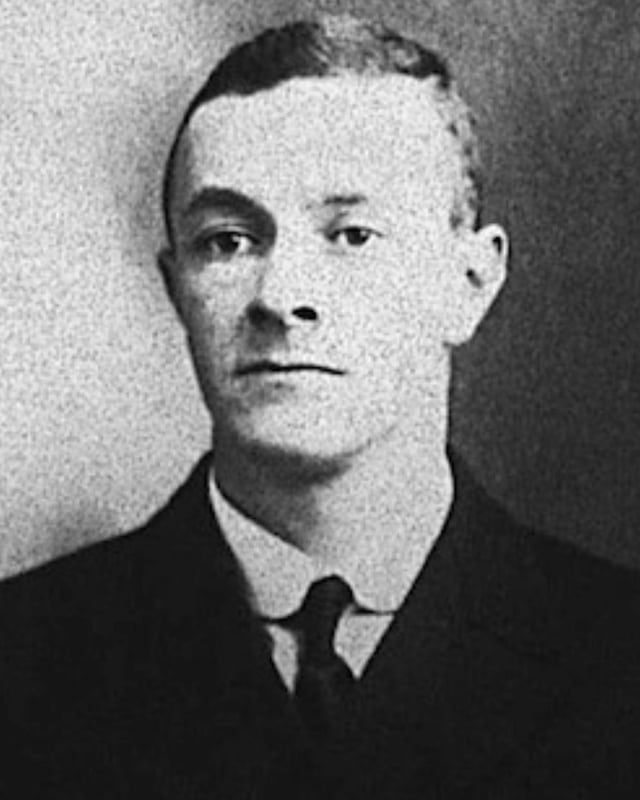
In 1917 a sailor named John Charles Mayers survived the Halifax explosion (Canada’s worst explosion) despite being hurled 1km away from where he stood
Against All Odds: The Incredible Survival of John Charles Mayers in the Halifax Explosion of 1917
Introduction: A Moment Frozen in Time
On the morning of December 6, 1917, the bustling port city of Halifax, Nova Scotia, became the site of one of history’s deadliest non-nuclear explosions. Amid the chaos and devastation, a young sailor named John Charles Mayers defied death in a way that still defies belief: he was hurled nearly 1 kilometer (3,280 feet) through the air by the blast’s force—and lived to tell the tale. His survival remains one of the most astonishing stories of human resilience in Canadian history.
The Halifax Explosion: Canada’s Worst Disaster
At 9:04 a.m., a catastrophic collision between the French cargo ship Mont-Blanc—loaded with volatile explosives—and the Norwegian vessel Imo ignited a fire that triggered a 3-kiloton blast, equivalent to 2.9 kilotons of TNT. The explosion obliterated the Richmond district, killing over 1,900 people, injuring 9,000 more, and leaving 25,000 homeless. Shockwaves shattered windows 50 miles away, and the blast was heard in Prince Edward Island.
John Charles Mayers: Witness to the Unthinkable
John Charles Mayers, a sailor aboard the HMS Highflyer, a British Royal Navy cruiser docked in Halifax Harbour, was standing on deck when the Mont-Blanc erupted. Eyewitness accounts described a blinding flash, a mushroom cloud, and a force so immense that it ripped ships from their moorings and flattened buildings.
Mayers found himself caught in the maelstrom. The blast wave lifted him off his feet, launching him across the harbor and over the city’s rooftops like a piece of debris. When he regained consciousness, he was roughly 1 kilometer away from his original position—miraculously alive but critically injured.
The Physics of Survival
How could a human survive being thrown such a distance? Scientists later theorized that Mayers’ trajectory may have been softened by landing in water or soft mud, sparing him fatal impact. He also likely avoided deadly debris or heat due to his mid-air path. Despite suffering severe burns, broken bones, and shock, Mayers survived thanks to quick medical intervention amid the widespread rescue efforts.
His experience underscored the randomness of the disaster: while thousands perished instantly from the blast or collapsing structures, Mayers’ flight—terrifying as it was—placed him outside the immediate kill zone.
Aftermath and Legacy
Mayers’ survival became a symbol of hope amid Halifax’s collective trauma. His story spread rapidly, even reaching wartime newspapers in Europe. Though records of his later life are scarce, his ordeal remains a cornerstone of Halifax Explosion lore, often cited alongside other miraculous survivals, like that of Vincent Coleman, the railway dispatcher who sacrificed his life to warn incoming trains of the danger.
Today, monuments like the Halifax Explosion Memorial Bell Tower honor victims and survivors. Mayers’ tale is a testament to the unyielding human spirit—a man who quite literally flew through hell and lived.
Why Stories Like Mayers’ Matter
The Halifax Explosion reshaped emergency response protocols worldwide, leading to advances in disaster medicine, firefighting, and urban planning. Survivor accounts like Mayers’ remind us that even in humanity’s darkest hours, stories of courage and luck endure. They also highlight the importance of historical memory, ensuring future generations never forget the resilience of those who rebuilt Halifax from the ashes.
Visit and Reflect
To learn more about John Charles Mayers and the Halifax Explosion:
- Explore the Maritime Museum of the Atlantic in Halifax.
- Walk the Halifax Explosion Ground Zero trail.
- Read “Curse of the Narrows” by Laura Mac Donald for a detailed account.
John Charles Mayers’ flight through the skies of Halifax is more than folklore—it’s a reminder that even in annihilation, life finds a way.
Keywords: Halifax Explosion 1917, John Charles Mayers, Canadian history, survival stories, Halifax disaster, Mont-Blanc explosion, HMS Highflyer, Nova Scotia history