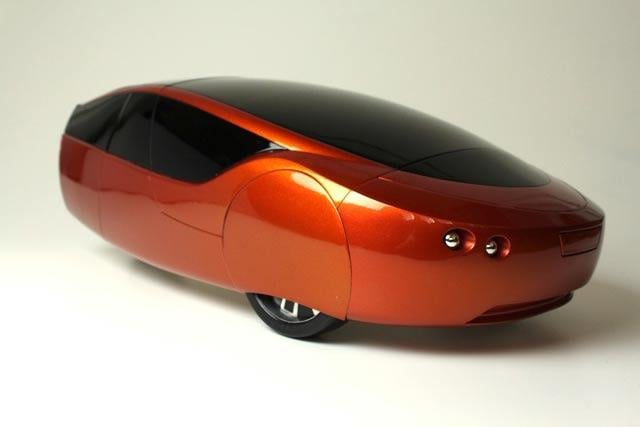
Two 3D printed vehicles, the former in 2010 was the Urbee, it was the first to use large-scale additive manufacturing for the car body. The latter in 2014, the Strati, took 44 hours to print and three days to assemble. Both disputed to be the first truly 3D printed vehicle.
Title: Urbee vs. Strati: The Race to Build the World’s First 3D Printed Car
Meta Description: Discover the Urbee (2010) and Strati (2014)—two pioneering 3D printed vehicles competing for the title of the first truly 3D printed car. Explore their tech, timelines, and legacy.
URL Slug: urbee-vs-strati-first-3d-printed-cars
The Dawn of 3D Printed Cars: A Battle for Innovation
The rise of additive manufacturing (3D printing) transformed industries from aerospace to healthcare—but its most daring application emerged in automotive design. Between 2010–2014, two groundbreaking vehicles staked their claim as pioneers: the Urbee, the first car to use large-scale 3D printing for its body, and the Strati, a near-fully printed vehicle assembled in days. Their stories highlight not just a rivalry, but a revolution in how cars could be built.
The Urbee (2010): The First Hybrid Car with a 3D Printed Body
Developed by: KOR Ecologic (Winnipeg, Canada)
Key Innovation: Large-scale additive manufacturing of a car exterior.
The Urbee (“Urban Electric with Ethanol”) debuted in 2010 as a hybrid eco-car designed for efficiency. Its futuristic body—sleek, aerodynamic, and lightweight—was printed layer by layer using fused deposition modeling (FDM).
Why It Made History:
- First Major 3D Printed Automotive Body: While mechanical components (engine, wheels) were traditional, the Urbee’s exterior panels represented the largest 3D printed parts ever used in a drivable vehicle at the time.
- Sustainability Focus: Built for low energy consumption (0.2 hp!), it aimed for 200+ MPG on highways.
- Years-Long Process: Printing the body alone took months due to early-gen printer limitations.
Critics argued the Urbee wasn’t “fully” printed—but its use of 3D tech for structural elements sparked global interest in auto additive manufacturing.
The Strati (2014): The “Almost Entirely” 3D Printed Car
Developed by: Local Motors (USA) in partnership with Cincinnati Incorporated & ORNL
Key Innovation: Nearly 100% of the chassis/body 3D printed in one piece.
Unveiled at the 2014 International Manufacturing Technology Show, the Strati (“layers” in Italian) stunned audiences. Printed in just 44 hours and assembled in three days, it challenged traditional auto production.
What Set the Strati Apart:
- Single-Piece Construction: The chassis/body was printed as a unified part using direct metal laser sintering (DMLS) and polymer extrusion, slashing part counts from 20,000+ (in standard cars) to ~50.
- Speed: 44 hours of printing vs. years for the Urbee.
- Non-Printed Parts: Only non-plastic elements (battery, motor, suspension) were conventional.
Local Motors hailed it as the “world’s first 3D printed car,” igniting debate over what “truly printed” meant.
Urbee vs. Strati: Who Really Was First?
The dispute hinges on definitions:
- Urbee (2010): A hybrid pioneer with a large 3D printed body but traditional internals.
- Strati (2014): A near-monolithic printed structure, minus critical metal components.
While the Urbee leveraged 3D printing earliest for functional auto parts, the Strati pushed boundaries in speed, scale, and integration. Industry experts split credit:
“The Urbee proved additive manufacturing’s potential. The Strati proved its practicality.”
— AutoTech Analyst, 2015
Legacy: How These Vehicles Shaped the Auto Industry
Both cars accelerated the adoption of 3D printing in automotive manufacturing:
- Lightweighting: 3D printing enabled lighter, fuel-saving designs.
- Rapid Prototyping: Automakers now print test parts in hours vs. months.
- Customization: BMW, Ford, and others use 3D printing for bespoke interiors and trims.
Today, companies like XEV Yoyo and Czinger deploy hybrid printing for limited-run electric cars, building on the Urbee and Strati’s groundwork.
The Future of 3D Printed Vehicles
While questions linger over “firsts,” the Urbee and Strati reshaped possibilities. Advances in multi-material printing and AI-driven design hint at fully printed EVs with embedded electronics—eliminating assembly lines entirely.
As KOR Ecologic’s Jim Kor mused: “We didn’t just build a car; we built a roadmap.”
TL;DR: The Urbee (2010) pioneered 3D printing for car bodies, while the Strati (2014) printed almost its entire structure in days—sparking debate over the “first” fully printed car. Both remain icons of automotive innovation.
Need visuals? Imagine:
- Side-by-side images of the Urbee (rounded, eco-design) vs. Strati (angular, rugged).
- Infographic comparing printing times, materials, and assembly.
For automotive history buffs, 3D printing enthusiasts, and sustainability advocates alike, these vehicles mark a turning point in how we engineer the future.
Optimized Keywords: 3D printed car, Urbee, Strati, additive manufacturing automotive, first 3D printed vehicle, Local Motors, KOR Ecologic, sustainable car design.