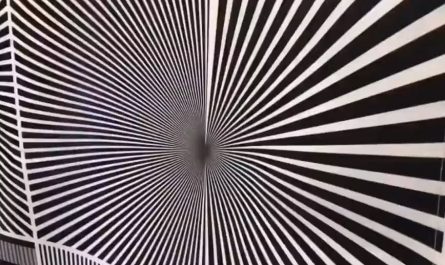
A very cool optic illusion!
Title: Mind-Blowing Optical Illusion: The Checker Shadow Illusion Explained
Meta Description: Discover the fascinating Checker Shadow Illusion—a visual trick that defies logic! Learn how your brain gets fooled and why this optical illusion works.
Introduction: When Your Eyes Lie to You
Optical illusions are more than just fun party tricks—they reveal how our brains interpret the world around us. One of the most jaw-dropping examples is the Checker Shadow Illusion, created by MIT professor Edward H. Adelson. At first glance, it seems impossible, but once you unravel the science behind it, you’ll never trust your eyes the same way again!
What Is the Checker Shadow Illusion?
In this iconic illusion, a checkerboard pattern features two squares labeled “A” and “B”. One appears dark, and the other appears light—like a standard chessboard. But here’s the kicker: both squares are the exact same color!
[Insert Image of the Checker Shadow Illusion for Visual Reference]
When a shadow is cast across the board by a cylinder, your brain insists Square A is darker than Square B. But when you mask the surrounding context (e.g., using a color picker tool or folding the image), the truth reveals itself: they’re identical shades of gray!
How Does This Mind-Bending Trick Work?
The illusion exploits how our brains process light, shadow, and contrast. Here’s the breakdown:
1. Lightness Constancy
Our eyes don’t see absolute colors—they see relative brightness. The brain adjusts for lighting conditions to maintain object consistency. For example, a white shirt looks white indoors and outdoors, even if lighting changes.
2. Context Is King
The checkerboard’s shadow tricks your brain into thinking Square B is in bright light while Square A is in shade. Since Square B is surrounded by darker squares, your brain assumes it must be lighter. Conversely, Square A sits among lighter tiles, making it seem darker.
3. The Role of Edges and Contrast
The abrupt edge of the shadow makes your brain treat the two regions differently. It interprets shadows as temporary distortions, not intrinsic color changes.
Why This Illusion Matters
Beyond being a viral curiosity, the Checker Shadow Illusion teaches us about human perception:
- Neuroscience: It reveals how the brain processes visual input in layers (color, light, context).
- Design & Art: Artists and UX designers use these principles to create depth, realism, or intentional confusion.
- Cognitive Psychology: Illusions prove that our brains “fill in gaps” to make sense of incomplete data.
Try It Yourself!
- Open the illusion image on your screen.
- Use a color picker tool to confirm Squares A and B are identical.
- Cover surrounding squares with your hands—suddenly, the “shadow” disappears!
Other Cool Optical Illusions to Explore
- The Rotating Snakes: Static images that appear to move.
- The Dress (#BlueAndBlack or #WhiteAndGold?): A viral debate over color perception.
- Rubin’s Vase: Flip between a vase and two faces!
Conclusion: Question What You See
The Checker Shadow Illusion reminds us that reality is subjective. Our brains construct visual narratives based on experience, lighting, and context—not always raw data. Share this illusion with friends, and watch their minds unravel!
Call to Action
Stunned by this optical trick? Share your reaction below or challenge someone to solve the mystery! For more brain teasers, subscribe to our newsletter. 👀✨
Keywords: optical illusion, checker shadow illusion, visual perception trick, brain science, neuroscience, Edward Adelson, cool optical tricks, how illusions work.