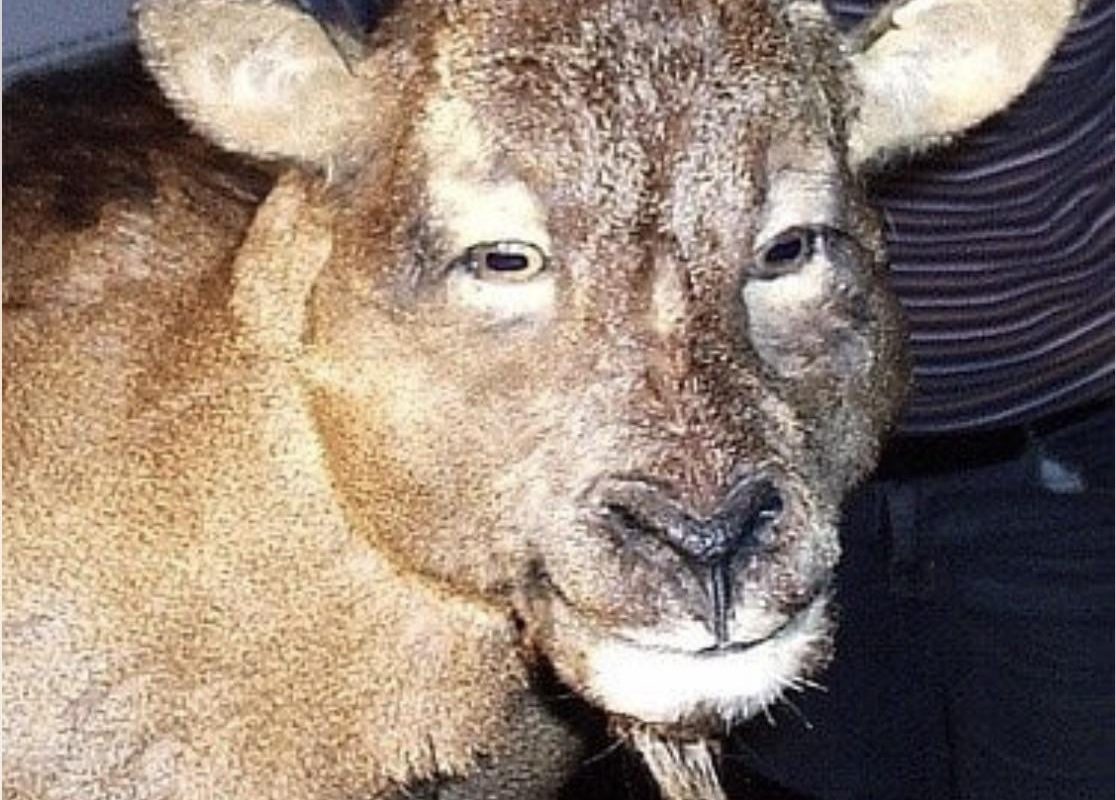
Balearic island cave goat or myotragus balearicus, that went extinct ~3000-4000BCE, is the only known species of goat to have forward facing eyes
Title: Myotragus Balearicus: The Enigmatic Balearic Cave Goat with Primate-Like Eyes
Introduction
Deep within the limestone caves of Spain’s Balearic Islands lies evidence of a prehistoric marvel: Myotragus balearicus, an extinct species of goat that defied evolutionary norms. Unlike any other goat species in history, this unique mammal roamed the islands of Mallorca and Menorca until its abrupt extinction around 3000–4000 BCE. Its most astonishing feature? Forward-facing eyes—a trait unseen in other goats and more reminiscent of primates or predators. This article explores the biology, adaptation, and mysterious demise of the Balearic cave goat, a creature that rewrites our understanding of island evolution.
Evolutionary Origins: A Story of Isolation
Myotragus balearicus evolved in near-total isolation on the Balearic Islands for over 5 million years. Separated from mainland Europe during the Miocene epoch, its ancestors underwent dramatic changes to survive in the resource-limited island environment. Fossil records reveal a process called “island dwarfism,” where large animals shrink in size over generations to conserve energy—a phenomenon also seen in extinct dwarf elephants and hippos. Standing just 50 cm tall at the shoulder, Myotragus was a compact, goat-antelope hybrid with robust legs built for climbing rocky terrain rather than speed.
The Primate-Like Gaze: Forward-Facing Eyes
The most striking adaptation of Myotragus was its forward-facing, binocular vision—unique among goats and even-toed ungulates. Unlike modern goats, whose eyes sit laterally for broad peripheral vision (a lifesaver against predators), Myotragus evolved eyes positioned frontally, similar to primates or owls. Scientists theorize this trait enhanced depth perception, critical for navigating the Balearic cliffs and judging distances while leaping between rocks. This adaptation suggests a lack of natural predators allowed the species to prioritize precision over vigilance—until humans arrived.
Survival Tactics in a Lost World
Myotragus wasn’t just defined by its eyes. Its teeth grew continuously like rodents, enabling it to graze tough, silica-rich island vegetation. Bone isotopes show seasonal dietary flexibility, shifting from woody plants in dry summers to grasses in wet winters. Combined with a slow metabolism—evidenced by growth patterns in its bones—this goat was a master of energy conservation. These traits sustained it through climatic shifts, including the Ice Age, when the Balearics acted as a refuge.
The Extinction Event: Humans and a Changing World
Around 3000 BCE, Neolithic settlers reached the Balearics, bringing agriculture, livestock, and hunting tools. Archaeological sites reveal Myotragus bones butchered alongside human artifacts, indicating it was hunted for meat. With no fear of humans or fast predators, its evolutionary advantages became fatal flaws. Compounded by habitat loss from deforestation and competition with imported species, the cave goat vanished within centuries of human arrival—a stark example of how fragile island ecosystems can be.
Why Myotragus Matters Today
- Evolutionary Oddity: Myotragus challenges assumptions about ungulate evolution. Its primate-like eyes demonstrate how isolation can drive radical adaptations.
- Climate Resilience Lessons: Its ability to thrive through Ice Age fluctuations offers insights into species survival amid modern climate change.
- Human Impact: Its extinction parallels current biodiversity crises, underscoring humanity’s role as a disruptor of fragile ecosystems.
Conclusion: Echoes of a Lost Species
Myotragus balearicus remains a symbol of evolution’s creativity—and vulnerability. Its forward-facing eyes, once a survival tool in a predator-free paradise, couldn’t save it from the advent of humans. As scientists continue studying its fossils, this cave goat serves as a cautionary tale for conservationists today: unique species, especially those confined to islands, require urgent protection. Could another Myotragus be hiding in Earth’s remote corners? For now, its legacy lives on in the caves of the Mediterranean, reminding us of nature’s capacity to astonish and adapt.
SEO Keywords: Myotragus balearicus, Balearic cave goat, extinct goat species, forward-facing eyes, prehistoric mammals, island dwarfism evolution, human-driven extinction, Balearic Islands wildlife, evolutionary adaptations, Neolithic extinctions.
Image Suggestion: Include a reconstruction of Myotragus climbing Mediterranean cliffs, highlighting its short stature, robust legs, and forward-facing gaze.