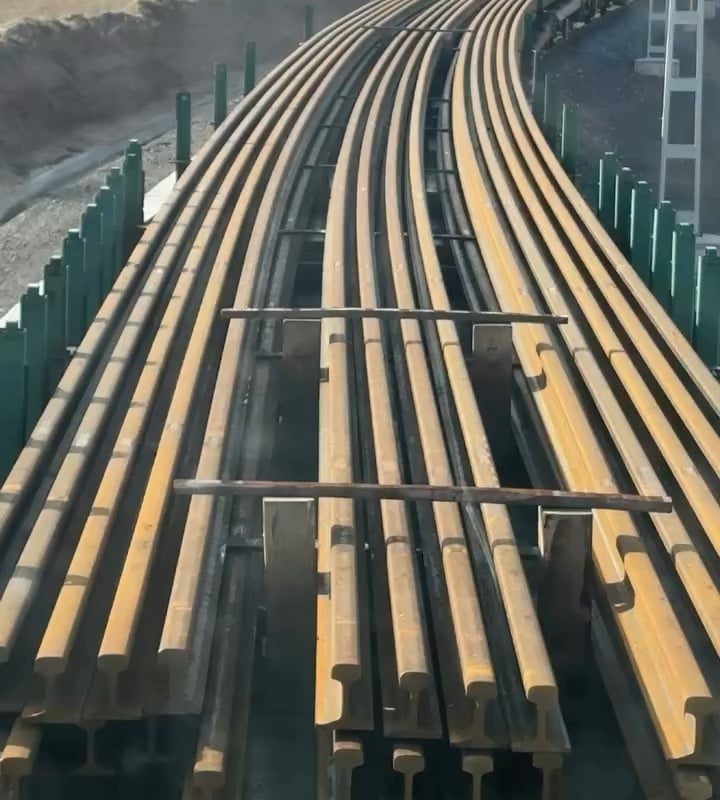
Credit: ATHOS FORMACIÓN FERROVIARIA
Transporting Railroad Rails: The Backbone of Rail Infrastructure Logistics
The transportation of railroad rails is a critical yet often overlooked component of global infrastructure development. These massive steel beams—typically ranging from 30 to 120 feet in length and weighing 100–150 pounds per yard—form the literal foundation of rail networks worldwide. Moving these colossal components requires specialized equipment, meticulous planning, and adherence to stringent safety protocols. This guide explores the complexities, methods, and innovations in transporting railroad rails.
Why Railroad Rail Transport Is Uniquely Challenging
Transporting rails isn’t like moving standard freight. Their extreme length, weight, and susceptibility to damage demand precision logistics:
- Weight & Dimensions: A single rail segment can weigh 5–15+ tons. Long rails (80–120 ft) require specialized transport to avoid bending.
- Handling Sensitivity: Rails must be supported correctly to prevent warping, twisting, or surface damage.
- Regulatory Compliance: Oversize/overweight loads require permits, route surveys, and escorts in many jurisdictions.
- Safety Risks: Improper loading or securement can lead to catastrophic accidents.
Primary Methods of Transporting Railroad Rails
1. Flatbed Trucks & Heavy Haul Trailers
- Best For: Short- to medium-distance transport (e.g., rail yards to construction sites).
- Equipment: Stretch flatbeds, multi-axle trailers, or specialized rail-carrying frames (e.g., bulk rail cars or “rail trains”).
- Securement: Rails are bundled in stacks and secured with chains, steel straps, or cradles to prevent shifting.
2. Railroad Flatcars
- Best For: Long-distance transport via existing rail lines.
- Advantages: Rails are transported in bulk (up to 20+ segments per car), minimizing road traffic risks.
- Challenges: Requires coordination with rail operators and terminal transfers.
3. Barges & Ships
- Best For: International or coastal transport (e.g., steel mills to ports).
- Efficiency: Ideal for moving thousands of tons of rails in a single voyage.
4. Multimodal Transport
Combining trucks, trains, and ships optimizes cost and time for cross-continental delivery.
Key Challenges & Solutions
| Challenge | Solution |
|---|---|
| Route Planning | GPS mapping, bridge/weight audits, escorts. |
| Loading/Unloading Safety | Cranes with rail clamps or specialized rail grapplers. |
| Cross-Border Logistics | Harmonized customs codes (HS 7302 for rails). |
| Theft Prevention | GPS tracking, secure parking, and overnight guards. |
Safety & Legal Requirements
- Permits: Oversize/overweight loads require state/provincial permits (e.g., USDOT/FMCSA in the U.S.).
- Securement Standards: Compliance with FMCSA’s cargo securement rules or EN 12195 in Europe.
- Training: Drivers and handlers must be certified in heavy-load logistics.
- Insurance: High-value cargo insurance covering damage, delays, and liability.
Innovations in Rail Transportation
- Automated Securement Systems: Sensors monitor load tension during transit.
- Composite Rails: Lighter materials reduce transport costs (still in development).
- Digital Routing Software: AI optimizes routes for fuel efficiency and safety.
- Modular Rail Trains: Self-loading flatcars minimize handling.
Best Practices for Efficient Rail Transport
- Pre-Transport Inspection: Check rails for defects to avoid rejection at delivery.
- Bundle Strategically: Stack rails in interlocked layers to improve stability.
- Use Protective Coatings: Prevent corrosion during transit with grease or wraps.
- Partner with Experts: Work with logistics providers experienced in rail transport.
The Future of Rail Logistics
As rail networks expand in high-growth regions like Africa, India, and the Middle East, demand for efficient rail transport will surge. Sustainability is also driving innovation—electric heavy-haul trucks and hydrogen-powered ships may soon decarbonize this critical supply chain.
Conclusion
Transporting railroad rails is a high-stakes operation requiring engineering precision and regulatory expertise. Whether moved by road, rail, or sea, each method ensures these giants of steel reach their destination safely, enabling the construction and maintenance of the world’s railways. Partnering with specialized heavy-haul providers remains key to navigating this complex process—because when it comes to rails, there’s no room for error.
Meta Description:
Discover the complexities of transporting railroad rails—methods, safety standards, and logistics solutions for moving these heavy steel beams efficiently and safely worldwide.
Target Keywords:
- Transporting railroad rails
- Railroad rail logistics
- Heavy haul rail transport
- Railway rail shipping
- Oversize rail cargo
Internal Linking Opportunities:
- “Rail Construction Best Practices”
- “Heavy Equipment Transport Guide”
- “Understanding Rail Network Maintenance”
Note: Optimize images with alt text (e.g., “Flatbed truck transporting railroad rails”) and embed video links demonstrating rail loading techniques for enhanced engagement.