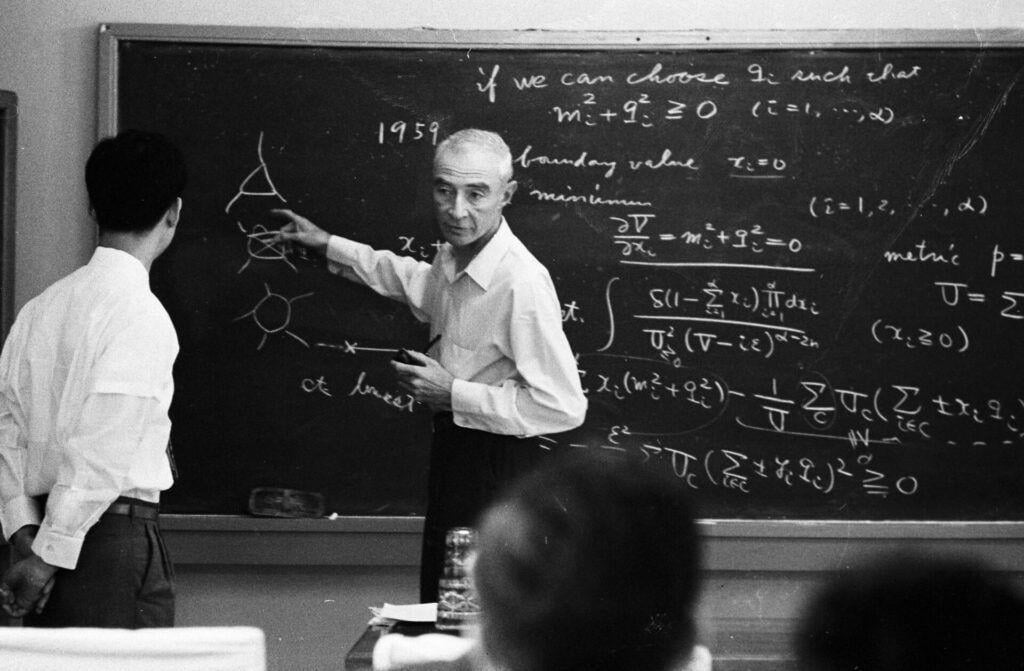
Robert Oppenheimer, renowned for leading the Manhattan Project, lectured at Kyoto University in 1960, invited by the Japan Committee for Intellectual Interchange
Title: Robert Oppenheimer’s Historic 1960 Lecture at Kyoto University: A Bridge for Post-War Intellectual Exchange
Meta Description: Explore the significance of J. Robert Oppenheimer’s 1960 lecture at Kyoto University, invited by the Japan Committee for Intellectual Interchange, and its role in post-war reconciliation.
Introduction
In September 1960, J. Robert Oppenheimer—the visionary physicist known as the “father of the atomic bomb” for leading the Manhattan Project—delivered a landmark lecture at Kyoto University. Invited by the Japan Committee for Intellectual Interchange, his visit marked a symbolic moment of post-war dialogue, bridging scientific communities amid Cold War tensions. This article delves into the context, themes, and legacy of Oppenheimer’s Kyoto lecture, highlighting its role in fostering intellectual diplomacy after WWII.
Oppenheimer’s Complex Legacy
Oppenheimer’s leadership of the Manhattan Project (1942–1946) cemented his place in history, but the atomic bombings of Hiroshima and Nagasaki in 1945 also left him morally conflicted. By the 1950s, he became an advocate for international scientific cooperation and nuclear disarmament. Despite being stripped of his U.S. security clearance in 1954 during the McCarthy era, his global stature as a thinker remained intact—paving the way for invitations like Kyoto University’s.
The Japan Committee for Intellectual Interchange: A Mission of Healing
The Japan Committee for Intellectual Interchange, founded in the post-war era, aimed to rebuild Japan’s academic ties with the world and promote peace through cultural dialogue. Inviting Oppenheimer—a figure synonymous with the bomb that devastated Japan—was a bold statement of reconciliation. The Committee sought not to dwell on the past, but to advance shared intellectual values in science, ethics, and global citizenship.
The Kyoto Lecture: Science, Ethics, and the Global Future
Though exact transcripts of Oppenheimer’s 1960 lecture are scarce, historical accounts suggest he addressed themes central to his later career:
- The Responsibility of Scientists: He reflected on the moral obligations of researchers in the nuclear age.
- International Collaboration: Emphasized the need for open scientific exchange, even amid Cold War divides.
- The Danger of Nuclear Proliferation: Warned against the arms race while advocating for peaceful uses of atomic energy.
His presence at Kyoto University—a hub of physics research—resonated deeply. Once a wartime adversary, Japan now hosted Oppenheimer as a partner in progress.
Reception and Controversy
The lecture drew mixed reactions:
- Academics & Students: Many praised his intellectual humility and vision for a collaborative scientific future.
- Atomic Bomb Survivors: Some groups protested, viewing his visit as insensitive to Japanese suffering.
- Media Coverage: The event sparked global headlines, reigniting debates about nuclear ethics and U.S.-Japan relations.
Despite tensions, the dialogue symbolized Japan’s reemergence as a leader in science and diplomacy.
Historical Significance
Oppenheimer’s 1960 visit served three pivotal roles:
- Diplomatic Thaw: Bridged Cold War divides by prioritizing knowledge over politics.
- Moral Reconciliation: Addressed wartime trauma through honest discourse, not avoidance.
- Inspiration for Japanese Science: Reinforced Japan’s investment in physics, leading to breakthroughs in particle research.
Ironically, the man who built the bomb became an ambassador for peace—and Japan’s intellectual openness exemplified post-war resilience.
Conclusion: A Legacy Beyond the Bomb
Robert Oppenheimer’s lecture at Kyoto University remains a testament to science’s power to heal. Organized by the Japan Committee for Intellectual Interchange, it reminded the world that progress thrives not in isolation, but through dialogue. As nuclear threats persist, Oppenheimer’s words—and Japan’s willingness to listen—offer timeless lessons in ethics, courage, and shared humanity.
Keywords for SEO: Robert Oppenheimer, Kyoto University lecture 1960, Manhattan Project, Japan Committee for Intellectual Interchange, post-war Japan, Oppenheimer in Japan, Cold War intellectual exchange, atomic bomb history, nuclear ethics, science diplomacy.
Learn more about Oppenheimer’s legacy in Kyoto University’s archives or explore the Japan Committee for Intellectual Interchange’s ongoing peace initiatives.