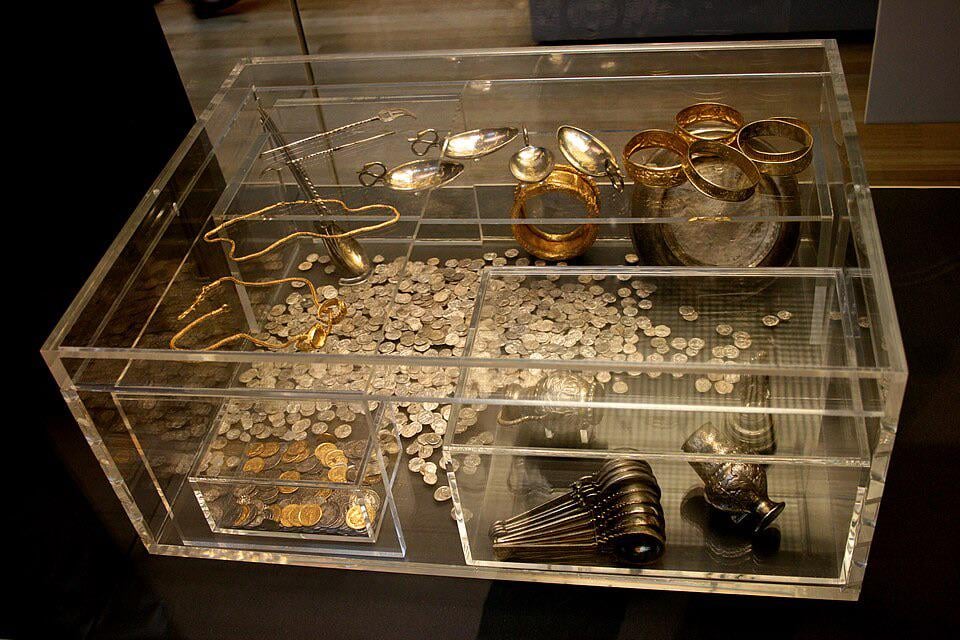
In 1992, a British farmer Peter Whatling, searching for a lost hammer instead discovered the Hoxne Hoard, the largest late Roman gold and silver treasure ever found in Britain, and after reporting it to authorities, he and the landowner were legally rewarded £1.75 million.
The Hammer’s Tale: How a British Farmer Uncovered Britain’s Largest Roman Treasure
A Quest for a Lost Hammer Leads to an Unimaginable Discovery
In November 1992, Suffolk farmer Peter Whatling faced a minor annoyance: he’d misplaced his hammer while working on his land near the village of Hoxne. To search for it, he enlisted his friend Eric Lawes, a retired gardener and amateur metal detectorist. What happened next would rewrite British archaeological history—and turn an ordinary Tuesday into a tale of treasure worthy of legend.
The Hoxne Hoard: A Glimpse into Roman Britain’s Final Days
As Lawes swept his metal detector across a field, a loud signal prompted him to dig—revealing not a hammer, but silver spoons, gold jewelry, and coins buried just inches below the surface. The stunned pair immediately contacted authorities, launching one of the UK’s most significant archaeological excavations.
What emerged was the Hoxne Hoard:
- Over 14,865 Roman coins (99% solid gold or silver).
- 200+ exquisite gold and silver objects, including intricate jewelry, ladles, and pepper pots.
- Rare treasures like a golden body chain and an ornate silver tigress handle.
Dating to the early 5th century AD, the hoard reflected the turmoil of Roman Britain’s collapse. Wealthy families, fearing Viking raids or political chaos, often buried valuables. This cache—worth millions today—remained hidden for 1,500 years.
Treasure, Law, and a £1.75 Million Reward
Under Britain’s Treasure Trove law (later updated by the Treasure Act 1996), finders must report potential treasure. In a landmark decision:
- The hoard was declared “Treasure Trove” (owned by the Crown).
- The British Museum acquired it for £1.75 million—a record for such a find.
- Whatling and Lawes split the reward with the landowner, showcasing how ethical metal detecting benefits both history and citizens.
This case became a template for modern treasure laws, proving that cooperation between detectorists and archaeologists preserves history.
Why the Hoxne Hoard Still Matters
- Scale & Preservation: Britain’s largest late-Roman treasure, untouched by looters.
- Archaeological Insights: Coins helped scholars pinpoint Britain’s Roman “exit” date.
- Cultural Legacy: Artifacts like the Empress pepper pot reveal elite Roman lifestyles.
Fun Twist: Lawes did eventually find Peter’s hammer—now displayed alongside the hoard at the British Museum!
Where to See the Hoxne Hoard Today
The collection resides permanently in the British Museum, London. Many pieces also tour globally, symbolizing how a farmer’s lost hammer unlocked a golden chapter in history.
Lessons Learned:
✅ Report Finds: Rewards await ethical discoverers.
✅ History Lies Close: Even ordinary fields can hide extraordinary stories.
As for Peter Whatling? He quipped, “Not bad for a day looking for a hammer.” Indeed.