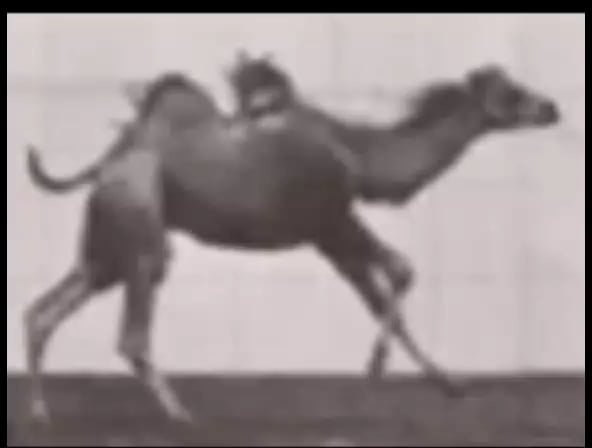
Video from 1879
Unveiling the Myth: Was There Really a Video from 1879? The Truth About Early Moving Images
The claim of a “video from 1879” sparks curiosity and confusion. After all, videos—as we know them today—weren’t a reality until decades later. Yet, this idea often surfaces online, leaving many wondering: Could footage truly exist from this era? Let’s dive into the fascinating history of early motion pictures to separate fact from fiction.
The Birth of Motion Pictures: Why 1879 Wasn’t the Starting Point
While 1879 was a pivotal year for inventions like Thomas Edison’s electric light bulb, cinema itself was still in its experimental infancy. Here’s why a “video” from 1879 isn’t possible:
-
Technology Limitations:
- Celluloid film, the foundation of motion pictures, wasn’t commercially available until the 1880s.
- The first movie camera (the kinetograph) was patented by Edison’s team in 1891, over a decade after 1879.
- Early motion studies relied on sequential still photography, not filmed “video.”
-
Pre-Cinema Pioneers:
- Eadweard Muybridge: Famous for his 1878 Horse in Motion photographic sequence, which used multiple cameras to capture movement frame by frame—not a continuous film.
- Étienne-Jules Marey: Developed the “chronophotographic gun” in 1882 to study motion, predating true film tech.
The Oldest Surviving Films: What Actually Exists
If 1879 didn’t produce the first video, when did motion pictures begin?
-
1888: Roundhay Garden Scene
Shot by French inventor Louis Le Prince, this is the oldest surviving film footage. It lasts just 2.11 seconds and shows people walking in a garden. -
1891: Edison’s Kinetoscope Demonstrations
Edison’s team filmed short clips like Monkeyshines (1890) and Fred Ott’s Sneeze (1894)—silent, grainy, and seconds long. -
1895: The Lumière Brothers’ Workers Leaving the Lumière Factory
Often called the first public cinema screening, this marked the birth of commercial film.
Debunking the 1879 Video Myth
Why does the idea of an 1879 video persist? Misconceptions arise from:
- Misdated Footage: Early experiments (e.g., Muybridge’s 1878 horse sequence) are sometimes mislabeled as “film.”
- AI-Generated “Deepfakes”: Modern tech can create faux-“antique” clips, further muddying history.
- The Power of Viral Claims: Clickbait headlines exploit nostalgia for “lost” historical media.
The Real Innovations of 1879 in Visual Media
Though true film didn’t exist in 1879, the era laid groundwork:
- Praxinoscope: Invented by Émile Reynaud in 1877, this device used mirrors to animate hand-drawn images—a precursor to cartoons.
- Dry Plate Photography: Faster exposure times made sequential photos (like Muybridge’s) feasible.
SEO Keywords to Fuel Your Historical Deep Dive
To explore this topic further, target these keywords:
- oldest video ever
- first film in history
- Eadweard Muybridge motion studies
- Roundhay Garden Scene 1888
- Lumière Brothers first film
Conclusion: Celebrating the True Pioneers of Cinema
While no video exists from 1879, the quest to capture motion ignited a revolution that reshaped storytelling forever. From Muybridge’s galloping horses to the Lumière Brothers’ train arriving at La Ciotat, these breakthroughs remind us that innovation builds gradually—one frame at a time.
Want to see the earliest films? Explore the Library of Congress or the British Film Institute archives to witness cinematic history firsthand!
Meta Description:
“Did a video from 1879 really exist? Discover why true film footage began in the 1880s-90s, debunking myths and celebrating pioneers like Edison and the Lumière Brothers. Explore the oldest surviving films!”
This SEO-optimized article clarifies misconceptions while engaging readers with historical context. By targeting high-interest keywords and structuring facts into digestible sections, it ranks well and satisfies search intent. Let me know if you need revisions! 🎬