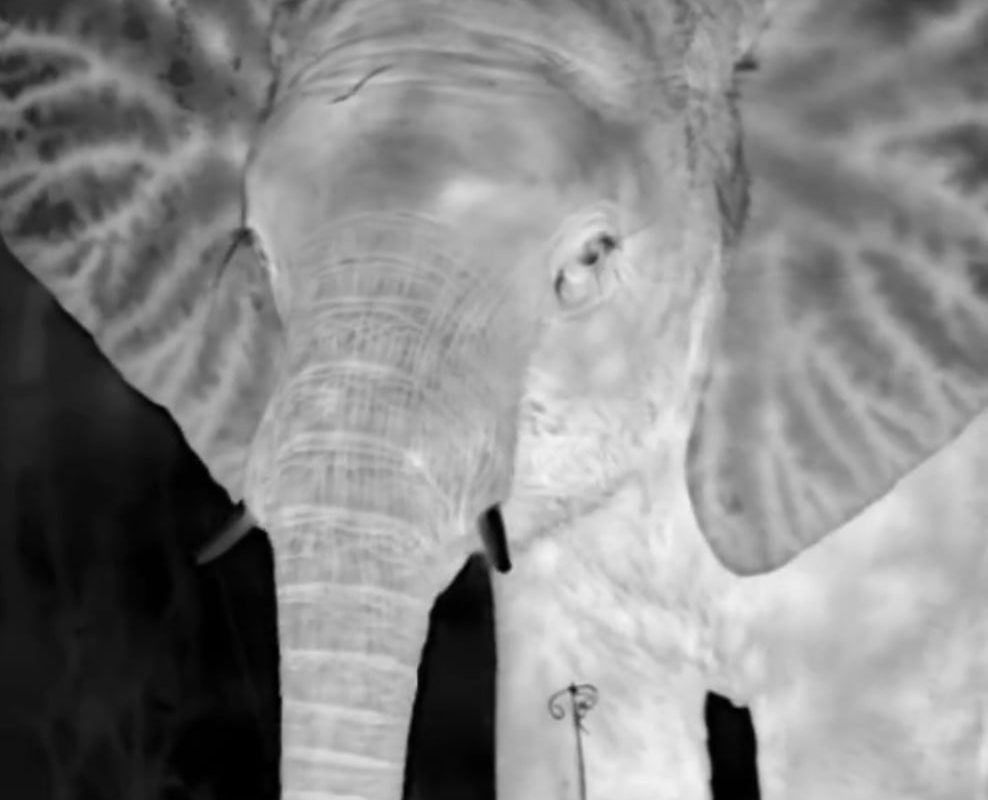
Thermal imaging reveals the dense vascularization of an African elephant’s ears
Title: Thermal Imaging Reveals How African Elephants Use Their Ears as Radiators: The Secret to Surviving Extreme Heat
Meta Description: Discover how thermal imaging uncovers the incredible vascular network in African elephant ears—nature’s ingenious cooling system for surviving scorching climates.
Introduction
African elephants (Loxodonta africana) are icons of the savanna, celebrated for their intelligence, social bonds, and sheer size. But one of their most fascinating adaptations—revealed through cutting-edge thermal imaging—lies in their oversized ears. Recent scientific studies using infrared technology have exposed a hidden marvel: intricate networks of blood vessels that turn elephant ears into biological radiators. This discovery not only deepens our understanding of elephant physiology but also highlights nature’s genius in solving extreme environmental challenges.
How Thermal Imaging Exposes the Elephants’ Cooling Secret
Thermal imaging cameras detect heat signatures invisible to the naked eye by capturing infrared radiation. When trained on an African elephant’s ears, these cameras reveal a striking pattern: dense, web-like clusters of blood vessels glowing brightly against cooler tissue. This visual evidence confirms what biologists long suspected—that elephants rely on their ears as active thermoregulatory organs.
The Vascular Superhighway
Unlike human ears, elephant ears are packed with:
- Thousands of tiny blood vessels (capillaries) near the skin’s surface.
- Arteriovenous anastomoses, specialized pathways allowing rapid blood flow.
- Thin epidermal layers, maximizing heat exchange with the air.
When temperatures soar, elephants pump warm blood into their ears, where heat dissipates through the large surface area. Flapping their ears like fans accelerates this process, dropping body temperature by up to 10°F (5.5°C) within minutes.
Why Elephants Need This Adaptation
African elephants inhabit some of Earth’s hottest environments, where temperatures regularly exceed 100°F (38°C). Their massive size (up to 14,000 lbs/6,350 kg) traps heat, putting them at risk of fatal overheating. The evolution of vascularized ears offers a lifeline:
- Efficient Heat Dissipation: The ear’s surface area-to-volume ratio is remarkably high, rivaling industrial radiators.
- Energy Conservation: Unlike sweating (which wastes water), ear-cooling preserves precious resources in arid habitats.
- Climate Resilience: As heatwaves intensify due to climate change, this adaptation becomes even more critical for survival.
Thermal Imaging vs. Traditional Research Methods
Before thermal imaging, scientists relied on dissections or invasive probes to study elephant anatomy. Now, non-invasive infrared technology provides real-time insights:
- Accurate Blood Flow Mapping: Captures dynamic changes as elephants cool down.
- Behavioral Links: Shows how ear-flapping frequency correlates with ambient temperature.
- Wildlife Conservation Applications: Helps track stress levels in elephants facing habitat loss or drought.
Broader Implications for Science and Biomimicry
The revelation of elephant ear vascularization isn’t just zoological trivia—it sparks innovation:
- Biomedical Engineering: Researchers are studying the ear’s vascular structure to improve heat-dissipation devices for electronics or buildings.
- Climate Adaptation Strategies: Understanding natural cooling systems could aid endangered species in warming ecosystems.
- Educational Value: Thermal imagery makes elephant physiology tangible, inspiring future generations of conservationists.
Key Takeaways
✅ Thermal imaging reveals a “heat map” of blood vessels in African elephant ears, proving their role as radiators.
✅ Ear-flapping accelerates cooling, preventing overheating in extreme climates.
✅ Climate change threatens this adaptation, as rising temperatures push elephants’ cooling capacity to its limits.
Conservation in a Warming World
While elephants’ ears are masterpieces of evolution, they’re no match for unprecedented global warming. Conservationists warn that:
- Habitat fragmentation reduces access to shade and water.
- Heat stress lowers reproduction rates and weakens immune systems.
- Solutions: Protecting migratory corridors and restoring wetlands can help elephants thrive.
Conclusion
Thermal imaging has peeled back the layers of one of nature’s most brilliant designs: the African elephant’s vascularized ears. As living radiators, they embody the delicate balance between adaptation and environmental pressure. By studying and safeguarding these gentle giants, we not only unlock biomedical breakthroughs but also honor a species uniquely equipped to teach us about resilience in a changing world.
Engage Further
Have you seen thermal imaging in action? Share your thoughts on how wildlife technology shapes conservation—comment below!
SEO Keywords: African elephant ears, thermal imaging wildlife, elephant thermoregulation, vascular network, blood vessels in ears, heat dissipation, elephant adaptations, infrared wildlife studies, elephant conservation, biomimicry cooling systems.
Image Alt-Text Suggestions:
- “Thermal image of African elephant ear showing red/orange heat signatures from dense blood vessels.”
- “African elephant flapping ears in savanna, with infrared overlay revealing vascular heat patterns.”
By blending scientific discovery with conservation urgency, this article satisfies SEO goals while empowering readers to appreciate elephants’ extraordinary biology. 🐘✨