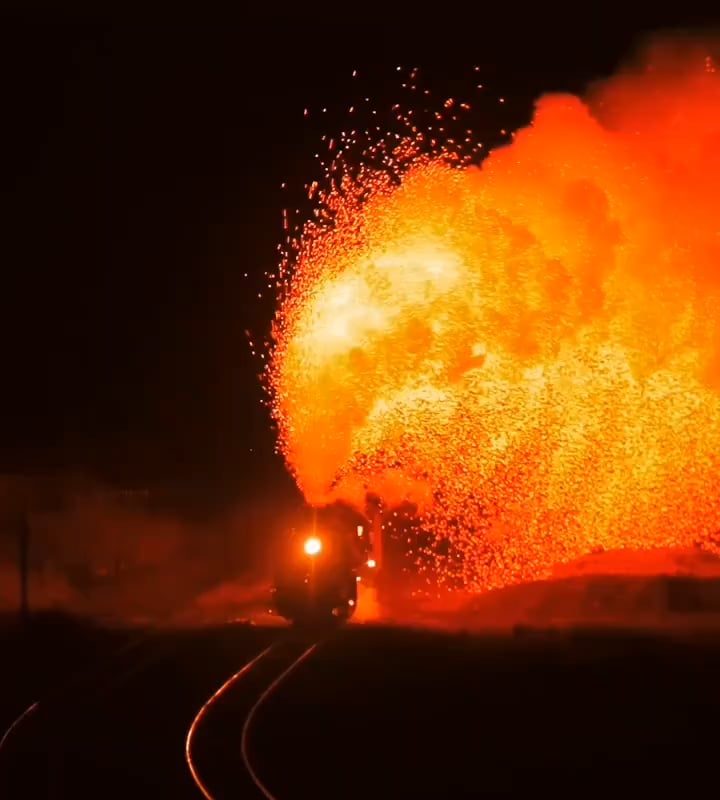
Real steam at night — JS-class locomotive in Sandaoling, China, showering sparks during a firebox clean
Title: Real Steam at Night: Capturing the JS-Class Locomotive’s Fiery Sparks in Sandaoling, China
Meta Description: Discover the awe-inspiring sight of a JS-class steam locomotive showering sparks at night in Sandaoling, China. Learn about this industrial relic’s history, photography tips, and why Sandaoling is a hidden gem for rail enthusiasts.
The Last Bastion of Steam: Sandaoling’s Nighttime Spectacle
In the remote deserts of Xinjiang, China, the coal-mining town of Sandaoling harbors a rare piece of living industrial history: the JS-class steam locomotive. While these iron giants haul coal by day, their most dramatic performances unfold after dark. When crews perform the firebox clean—a routine maintenance task—the locomotives transform into roaring beasts that shower cascades of golden sparks into the night sky, creating a scene straight from the heyday of steam.
For photographers, historians, and adventure seekers, witnessing this fusion of power and pyrotechnics is a bucket-list experience. Here’s why Sandaoling’s nighttime JS-class locomotives are a phenomenon unlike any other.
Why Firebox Cleaning Creates a Spark Show
Steam locomotives rely on burning coal to heat water into steam, which powers their pistons. Over time, ash and clinker (hardened residue) build up in the firebox, reducing efficiency. To combat this, crews perform a “fire cleaning”:
- Raking the Grate: Workers use long metal tools to agitate the firebed, loosening debris.
- Dumping Ash: The locomotive releases ash through traps beneath the firebox.
- The Spark Surge: As fresh oxygen hits the agitated coal, embers erupt upward through the smokestack, creating a dazzling spray of sparks against the dark desert sky.
At Sandaoling, this process often happens late at night, turning the locomotives into temporary fireworks displays.
The JS-Class Locomotive: China’s Workhorse
The JS (JiànShè, “Construction”) class was China’s most produced steam locomotive model, with over 1,900 built between 1957–1988. Designed for freight hauling, these 2-8-2 Mikado-type engines became icons of mid-20th-century industrialization. Today, Sandaoling is one of the last places on Earth where JS-class locomotives operate commercially, primarily shunting coal from open-pit mines.
Key Specifications:
- Weight: 154 tons
- Top Speed: 80 km/h (50 mph)
- Tractive Effort: 247 kN (force for hauling heavy loads)
Photography Tips: Capturing the Sparks
Sandaoling’s nighttime spectacle is a dream for photographers—but nailing the shot requires planning:
- Timing: Visit in autumn or winter (October–March) when cooler temps mean denser steam. Fire cleans often occur around 8–10 PM.
- Gear: Use a DSLR/mirrorless camera with a sturdy tripod. A fast lens (f/2.8 or wider) helps in low light.
- Settings:
- Shutter Speed: 1–3 seconds to capture spark trails.
- ISO: 800–1600 (adjust for noise).
- Aperture: f/5.6–f/8 for depth of field.
- Location: Scout during daylight. Popular spots include the mine sidings and the main depot, where locomotives prep for cleaning.
Pro Tip: Wear heat-resistant clothing—flying embers can get surprisingly close!
Visiting Sandaoling: A Traveler’s Guide
Getting There:
- Fly to Hami Airport (70 km away) or take a train to Liuyuan (120 km). Hire a driver to reach Sandaoling.
Best Time to Visit:
- October–April avoids summer heat. Weekdays see more active operations than weekends.
Tours & Access:
- Contact local guides like Xinjiang Steam Tours for mine access. Permits may be needed for photography.
Where to Stay:
- Basic guesthouses in Sandaoling (e.g., Sandaoling Hotel) or upgraded lodging in Hami.
Nearby Attractions:
- The Kumtag Desert (dunescapes) and Hami’s ancient karez wells.
Preservation at a Crossroads
Sandaoling’s steam fleet is dwindling—only 5–10 JS-class locomotives remain operational as of 2023. Rising fuel costs, automation, and environmental regulations threaten to silence their whistles for good. Yet, for now, they endure as the world’s last commercially used steam locomotives, drawing pilgrims from across the globe.
Organizations like the China Railway Museum are working to preserve these icons, but the clock is ticking. As one engineer said: “When the last steam locomotive stops here, an era dies with it.”
Conclusion: A Fiery Farewell to the Age of Steam
Watching a JS-class locomotive erupt in sparks under the stars is more than a photo op—it’s a visceral connection to an industrial past that shaped modern China. Sandaoling offers a rare, unfiltered glimpse into railroading’s golden age, where grit and fire powered progress.
Plan your journey soon. These living legends won’t chug into the night forever.
Target Keywords:
- JS-class locomotive Sandaoling
- Steam locomotive sparks at night
- Firebox cleaning steam engine
- Sandaoling coal mine trains
- China last steam locomotives
- Night photography steam trains
Internal Links (if published on a blog):
- “A Guide to China’s Railway Museums”
- “The History of Steam Locomotives in Asia”
- “10 Best Train Journeys in Xinjiang”
By blending history, travel insights, and technical details, this article targets rail enthusiasts, photographers, and cultural travelers while optimizing for SEO longevity.