The Physics of Supercooled Water: Instant Crystallization
The Physics of Supercooled Water: When Liquid Defies Freezing – Until It Shatters Instantly
Water freezing at 0°C (32°F) feels like one of nature’s most reliable rules. But under the right conditions, water can remain eerily liquid far below its usual freezing point in a phenomenon called supercooling. Yet this liquid state is incredibly fragile – a tiny disturbance triggers instantaneous crystallization, transforming water into ice in an explosive flash. This fascinating dance between order and chaos hinges on the fundamental laws of physics.
What is Supercooled Water?
Supercooled water is liquid water that exists below its standard freezing point (0°C/32°F) under normal atmospheric pressure without turning to ice. In controlled laboratory settings, scientists have achieved supercooling down to -48.3°C (-55°F) before spontaneous crystallization occurs. In nature, supercooled water droplets are common in high-altitude clouds (even at -40°C) and play a crucial role in precipitation formation.
Why Doesn’t Supercooled Water Freeze Immediately?
The freezing process relies on a trigger called nucleation – the formation of an initial seed crystal that ice molecules can latch onto. For ice to form, water molecules must:
- Lose enough thermal energy to slow their movement.
- Organize into a rigid, hexagonal lattice structure (ice).
- Overcome an energy barrier – the initial formation of a stable ice nucleus is energetically unfavorable at very small scales.
Without impurities (like dust, minerals, or microscopic scratches on containers) or mechanical disturbances to act as nucleation sites, supercooled water remains metastable. It’s essentially stuck in a liquid state, waiting for a tiny push to initiate crystallization.
The Instant Freeze: How Nucleation Triggers Explosive Crystallization
When a nucleation site introduces that “push,” the supercooled water undergoes rapid crystal growth:
- Nucleation Event: A disturbance—even a vibration, a speck of dust, or introducing an ice crystal—provides a template for water molecules to arrange into ice.
- Energy Release: As molecules transition from liquid to solid (ice), they release latent heat. However, because the water was supercooled far below 0°C, the released heat isn’t enough to warm the system back above freezing.
- Chain Reaction: The ice crystal structure propagates outward at incredible speeds (over 1,500 mph in some pure lab conditions!), freezing the entire volume almost instantly. This is why videos of supercooled water bottles show ice shooting from the point of impact.
Types of Nucleation:
- Homogeneous Nucleation: Extremely rare in nature. Occurs spontaneously when random molecular fluctuations in perfectly pure, undisturbed water create a critical ice nucleus large enough to sustain growth. Requires extreme supercooling (-40°C or below).
- Heterogeneous Nucleation: The common mechanism. Introduced by impurities, surfaces, or mechanical agitation providing a scaffold for ice formation, requiring far less supercooling (-5°C to -20°C range often seen in experiments).
Surprising Real-World Implications and Dangers
Supercooling isn’t just a lab curiosity – it impacts technology, weather, and even daily life:
- Aviation Hazards: Supercooled water droplets in clouds instantly freeze upon contact with aircraft wings (impact icing), disrupting airflow and causing dangerous drag.
- Cloud Seeding: Introducing particles (like silver iodide) into supercooled clouds provides nucleation sites, triggering rain or snow.
- Windshield Woes: Supercooled rain can freeze instantly onto cold windshields (“instant ice“), creating hazardous driving conditions.
- Biological Survival: Some fish and insects produce antifreeze proteins that inhibit ice nucleation, preventing fatal internal freezing in supercooled waters.
- The Mpemba Effect: While still debated, this phenomenon (where hot water sometimes freezes faster than cold) may involve complex interactions between supercooling, evaporation, and dissolved gases.
Experiment: Creating Supercooled Water at Home (Caution Advised!)
Safety Note: Supercooling experiments often involve handling freezing temperatures. Wear gloves and eye protection. Glass bottles can crack under pressure from expanding ice.
Materials:
- Very pure/distilled water (impurities aid nucleation!)
- Clean, smooth plastic bottle (glass risks shattering)
- Freezer with precise temperature control (aim for -8°C to -18°C)
- Optional: Ice cube or nucleation device
Steps:
- Place the sealed bottle of distilled water in the freezer.
- Wait patiently (2-4+ hours). Avoid jostling the freezer.
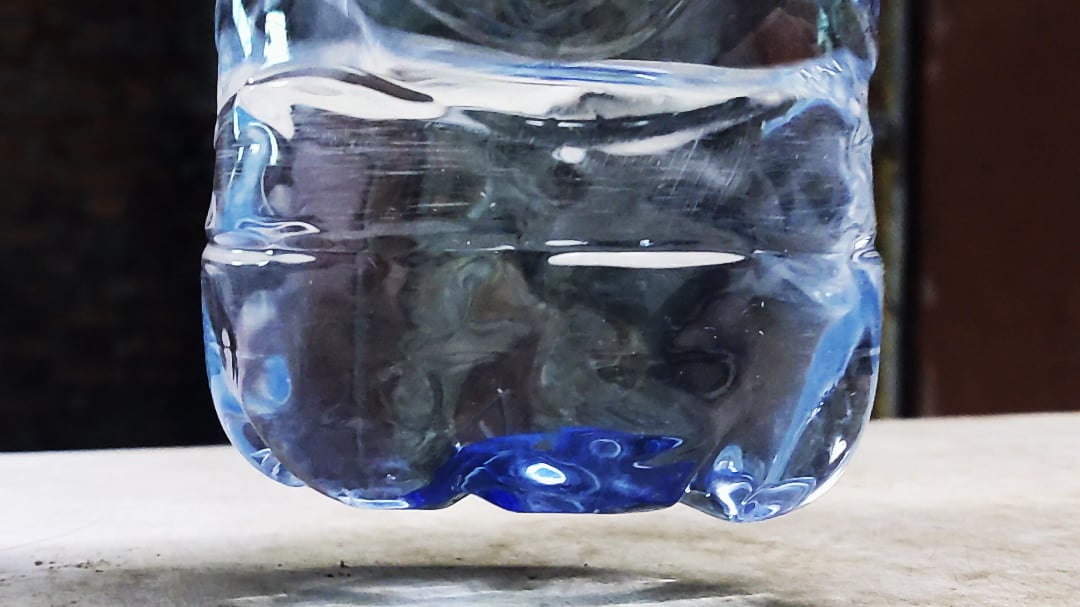
- Carefully remove the bottle. If successful, the water remains liquid though well below 0°C.
- Trigger nucleation:
- Tap the bottle sharply.
- Drop in an ice cube.
- Pour it onto a cold surface.
Observe: The water will crystallize outward from the nucleation point in a breathtaking flash-freeze!
The Frontier of Supercooling Research
Scientists continue probing supercooled water to answer unresolved mysteries:
- The Liquid-Liquid Critical Point Hypothesis: Does supercooled water transition between two distinct liquid phases under extreme conditions?
- Amorphous Ice: Can water achieve non-crystalline, “glassy” solid states without forming standard ice?
- Cryopreservation: Could controlled supercooling preserve organs for transplant without ice damage?
Supercooled Water & Instant Crystallization FAQ
Q: Can you supercool water indefinitely?
A: No. Eventually, random molecular motion (homogeneous nucleation) or external factors will trigger freezing, typically by -48.3°C.
Q: Why does purified water supercool more easily?
A: Fewer impurities mean fewer nucleation sites, raising the energy barrier to ice formation.
Q: Can supercooled water exist naturally on Earth?
A: Yes! High-altitude clouds often contain supercooled water droplets below -10°C. Some freezing rain is supercooled.
Q: Is instant crystallization dangerous?
A: In controlled settings, it’s dramatic but safe. In nature (aviation icing), it poses real risks.
Conclusion
Supercooled water epitomizes nature’s delicate balance. This liquid defies freezing, holding its chaotic molecular dance until the slightest disturbance unlocks an instantaneous transformation into crystalline order. Understanding this physics illuminates cloud formation, improves safety, and fuels scientific discovery. Next time you see a viral video of water freezing mid-air, remember: you’re witnessing thermodynamics and nucleation in a spectacular real-time experiment.