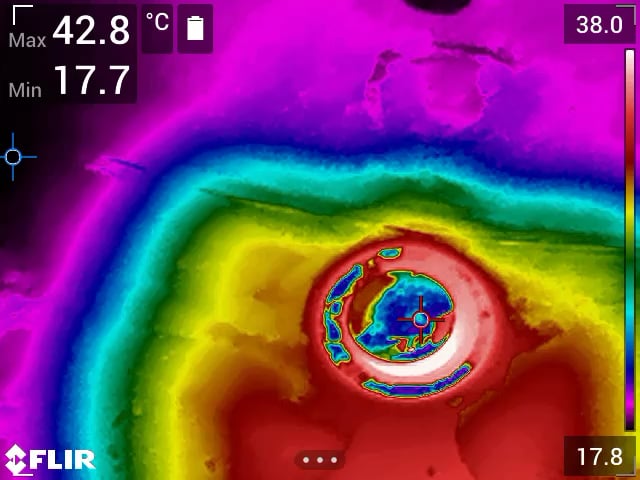
Thermal Camera: Messing around with the faucet, with cold and hot water.
Title:
Hot vs. Cold: What Happens When You Point a Thermal Camera at Your Faucet?
Meta Description:
Discover how thermal cameras reveal hidden temperature dynamics in everyday faucets. Explore cold vs. hot water flows, insulation leaks, and energy efficiency with infrared imaging.
Introduction to Thermal Imaging: Seeing the Invisible
Thermal cameras, also known as infrared cameras, uncover the hidden world of heat. Unlike visible light, infrared radiation is emitted by all objects based on their temperature. By translating this radiation into color-coded images, thermal cameras let us visualize temperature differences we can’t see with the naked eye.
In this experiment, we’ll explore how thermal imaging transforms the mundane act of turning on a faucet into a captivating science lesson. Spoiler alert: The results might make you rethink your plumbing!
The Faucet Experiment: Thermal Imaging in Action
To demonstrate the power of thermal cameras, we pointed one at a standard kitchen faucet while alternating between cold and hot water. Here’s what we observed:
1. Cold Water Activation
- Initial State: At room temperature (~70°F/21°C), the faucet appeared neutral (greens/yellows) on the thermal camera.
- Cold Water Flow: As cold water (40–50°F/4–10°C) began flowing, the faucet handle, spout, and pipes turned deep blue/purple, signaling a rapid temperature drop.
- Heat Transfer: The camera captured “cold streaks” spreading along the countertop or sink basin where water pooled.
2. Hot Water Activation
- Warming Up: Switching to hot water (120–140°F/49–60°C) caused the metal faucet to heat up almost instantly, glowing red/orange on the thermal display.
- Residual Heat: Even after shutting off the water, the faucet components retained heat, creating a lingering thermal “ghost” effect.
- Safety Insight: The camera highlighted hotspots near handles or joints, revealing potential burn risks or insulation gaps.
3. Mixing Hot & Cold Water
- Temperature Gradients: When both hot and cold water flowed simultaneously, the thermal camera displayed a striking color gradient—red blending into blue—along the stream and hardware.
- Inconsistent Mixing: Poorly calibrated faucets showed uneven heat distribution, proving thermostats aren’t always precise!
Why This Matters: Real-World Applications
This fun experiment isn’t just for curiosity’s sake. Thermal imaging has serious implications for:
✅ Detecting Plumbing Issues
- Leaky Pipes: Cold spots around joints might indicate hidden leaks.
- Insulation Gaps: Heat loss from hot water pipes signals poor insulation, wasting energy.
✅ Improving Home Safety
- Scalding Prevention: Identify overheating fixtures to protect kids or elderly users.
- Electrical Risks: Thermal cameras can spot overheating pipes near wiring (e.g., under sinks).
✅ Boosting Energy Efficiency
- Water Heater Insights: Use thermal imaging to evaluate insulation around your water heater, reducing energy bills.
DIY Thermal Imaging Tips
Want to try this at home? Here’s how:
- Rent or Borrow a Camera: Affordable models like the FLIR ONE or Seek Thermal work with smartphones.
- Maximize Contrast: Run water at extreme temps (cold first, then hot) for dramatic results.
- Check for Drafts: Scan walls around sinks for cold air leaks while you’re at it!
FAQ: Thermal Cameras & Faucets
Q: Can thermal cameras see through pipes?
A: No, but they detect surface temperatures, revealing heat loss or cold spots caused by interior flow.
Q: Does ambient temperature affect results?
A: Yes! For best results, experiment in a stable indoor environment.
Q: Are thermal cameras waterproof?
A: Most aren’t—keep them dry and avoid direct water contact.
Conclusion: Beyond the Faucet
Playing with a thermal camera at your sink is more than a party trick—it’s a gateway to understanding heat transfer, conserving energy, and safeguarding your home. Whether you’re a DIY enthusiast, parent, or energy-conscious homeowner, infrared technology turns everyday objects into sources of discovery.
Next time you turn on the tap, remember: there’s an invisible thermal story waiting to be told!
Keywords for SEO:
Thermal camera faucet experiment, infrared hot and cold water, plumbing thermal imaging, detect water leaks with thermal camera, home energy efficiency, FLIR faucet test, thermal imaging DIY, faucet temperature gradients.
Internal Linking Suggestions:
- How Thermal Cameras Improve Home Insulation
- Top 5 Uses for Thermal Imaging in Everyday Life
- Guide to Detecting Hidden Water Leaks
Image ALT Tags:
- “Thermal camera image of hot water faucet showing red and orange heat signatures.”
- “Infrared view of cold water faucet with blue and purple temperature zones.”