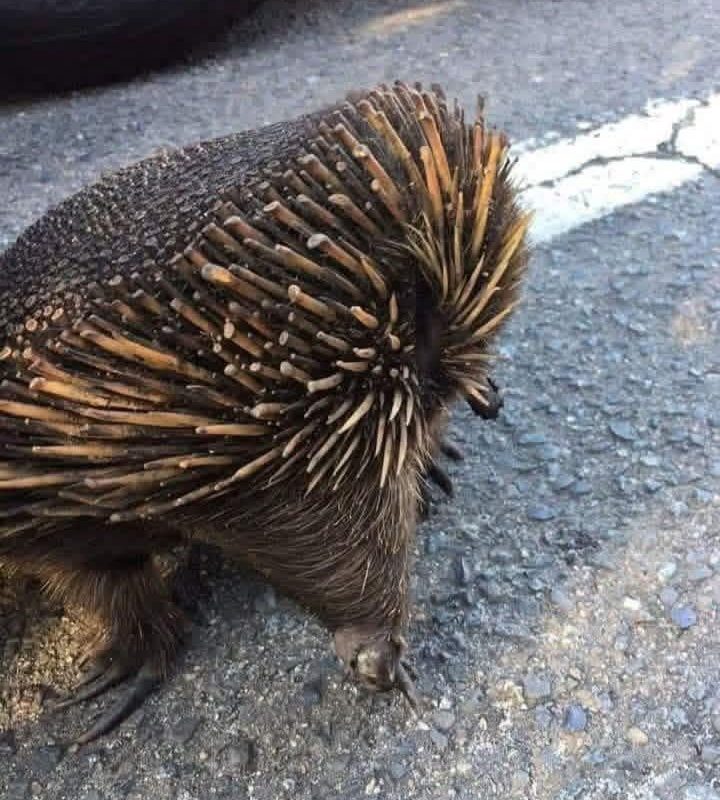
Echidnas survive bushfires by burrowing into the soil and entering torpor, a short hibernation-like state that lowers body temperature and metabolism. This echidna likely did not burrow deep enough, damaging its spikes, with long-term impacts still unknown.
Title: Fire & Spikes: How Echidnas Survive Bushfires – And What Happens When They Don’t Burrow Deep Enough
Meta Description: Discover how echidnas use torpor to survive bushfires, and the hidden dangers when their burrowing fails—including mysterious spike damage and unknown long-term impacts.
Introduction: The Echidna’s Fire Survival Secret
In the aftermath of Australia’s fierce bushfires, a fascinating survival story emerges from the ashes: the echidna. These spiky, egg-laying monotremes deploy an ingenious tactic to endure infernos—burrowing into the soil and slipping into torpor, a hibernation-like state that slashes their metabolism and body temperature. But when this strategy fails, the consequences are both visible and enigmatic. Recent observations reveal echidnas with charred, damaged spines, likely due to inadequate burrowing depth during fires. Scientists now question the long-term effects of this damage on individual survival and species resilience.
The Brilliant Bushfire Strategy: Burrowing & Torpor
Echidnas are nature’s ultimate bushfire survivors. When flames approach, they dig rapidly into loose soil or hide beneath rocks, logs, or tree roots. Once underground, they enter torpor, drastically reducing their oxygen needs, heart rate, and body temperature. This state allows them to wait out the fire’s intense heat and smoke, emerging unharmed once the danger passes.
Key Adaptations:
- Torpor vs. Hibernation: Unlike hibernation (a seasonal, months-long slowdown), torpor lasts days or weeks—perfect for short-term crises like fires.
- Heat Resistance: Their low metabolic rate shields them from temperature extremes underground.
- Spike Shield: Their keratin spines act as insulation against radiant heat.
When Survival Tactics Fail: Burrowing Too Shallow
Not all echidnas escape unscathed. In some cases, individuals may fail to burrow deeply enough, leaving them partially exposed to scorching heat. The result? Singed spines, melted spike tips, or even permanent damage to their iconic armor.
Why Does This Happen?
- Rushed Evacuation: Fast-moving fires force quicker, shallower burrowing.
- Soil Conditions: Compact or rocky ground limits digging depth.
- Stress & Disorientation: Panic may override instinct in extreme conditions.
The Hidden Toll: Spike Damage & Unknown Futures
Echidna spines aren’t just for defense—they regulate body temperature, aid in climbing, and protect against predators. Damaged spikes impair these functions, potentially leading to:
- Thermal Stress: Reduced insulation makes echidnas vulnerable to temperature swings.
- Mobility Issues: Broken spines hinder movement through dense vegetation.
- Infection Risk: Exposed tissue beneath damaged spikes could invite pathogens.
The Big Unknown: Researchers still don’t know whether spines regenerate fully, how damage impacts reproductive success, or if burned individuals face higher predation rates. Long-term studies are underway to assess these risks in fire-affected regions.
Broader Implications: Climate Change & Wildlife Resilience
As bushfires grow more frequent and intense due to climate change, echidnas—and other burrowing species—face escalating threats. Their ability to adapt will depend on:
- Habitat Protection: Preserving loose-soil areas for safe burrowing.
- Fire Management: Controlled burns to reduce fuel loads without destroying refuges.
- Research Investment: Tracking torpor efficiency and post-fire recovery.
Dr. Peggy Rismiller, a leading echidna researcher, notes:
“Torpor buys echidnas time, but it’s not foolproof. We’re seeing survivors with severe spine damage—and we need to understand what that means for their future.”
Conclusion: A Story of Adaptation—And Urgent Questions
Echidnas embody nature’s creativity in the face of disaster. Their torpor tactic is a marvel, yet the sight of fire-damaged spines exposes a fragile edge to their resilience. As Australia’s ecosystems rebuild, protecting these ancient monotremes requires not just admiration for their survival skills but a deeper commitment to unraveling the mysteries of their recovery.
Call to Action: Support wildlife conservation efforts and citizen science projects tracking post-fire echidna health. Every observation helps safeguard these iconic survivors.
SEO Keywords: Echidna bushfire survival, torpor adaptation, echidna spine damage, wildlife fire resilience, monotreme conservation, climate change impact on echidnas, burrowing animals Australia.
Image Alt Text: Charred echidna spines after a bushfire, highlighting fire damage to protective spikes.
This article blends scientific insight with urgent conservation messaging, targeting audiences interested in wildlife biology, climate adaptation, and Australian ecology. By framing echidnas as both resilient and vulnerable, it invites engagement while optimizing for search terms tied to bushfire recovery and unique animal behaviors.