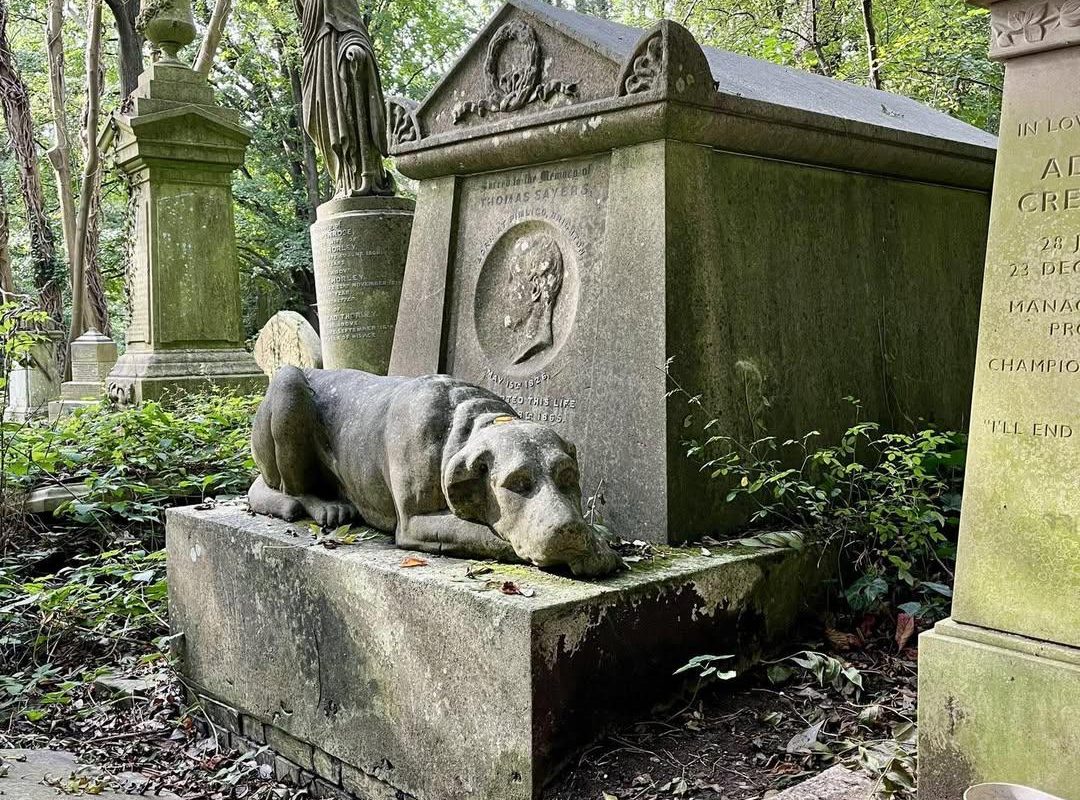
The tomb of Thomas Sayers (1826-1865), who was an English bare-knuckle prize fighter, located in Highgate Cemetery in London. His tomb is guarded by a sculpture of his pet dog, Lion, who was chief mourner at his funeral
Title: The Tomb of Thomas Sayers: A Champion’s Rest Guarded by Loyalty in Highgate Cemetery
Meta Description: Discover the story behind Thomas Sayers’ unique tomb in Highgate Cemetery, London—guarded by a sculpture of his faithful dog, Lion. Uncover the legacy of England’s bare-knuckle boxing legend.
Introduction: A Tomb Steeped in Legend
Highgate Cemetery in London is famed for its atmospheric Victorian graves, Gothic architecture, and notable residents—from Karl Marx to George Eliot. Among these historic tombs lies a poignant tribute to Thomas Sayers (1826–1865), England’s celebrated bare-knuckle prize fighter. His final resting place stands out not just for its grand design but for the statue of his devoted pet dog, Lion, who keeps eternal vigil. This is the story of a pugilist, his loyal companion, and a tomb that captures Victorian England’s fascination with heroism and devotion.
The Life of a Bare-Knuckle Legend
Thomas Sayers rose from humble beginnings in Brighton to become one of England’s most revered fighters during the bare-knuckle boxing era. His career spanned 1853–1860, culminating in his infamous 1860 bout against American John Camel Heenan, dubbed “the fight of the century.” Though the match ended in a chaotic draw after 42 brutal rounds, it immortalized Sayers as a working-class hero and earned him a massive following.
Sayers retired shortly after, his body worn but his fame undimmed. Tragically, he died of tuberculosis just five years later at age 39. His funeral drew over 10,000 mourners, one of the largest public gatherings of its time—a testament to his fame.
A Tomb Unlike Any Other: The Sculpture of Lion
Sayers was buried in Highgate Cemetery’s West Cemetery (now a protected heritage site), and his tomb remains one of its most visited. The design reflects his legacy:
-
A Monument to Strength
The tomb features a muscular, classical-style bust of Sayers atop a pedestal, symbolizing his athletic prowess. -
The Eternal Guardian
At the tomb’s base sits a life-sized stone sculpture of Lion, Sayers’ mastiff-type dog. Lion was not just a pet but a symbol of loyalty. After Sayers’ death, Lion walked in the funeral procession as the chief mourner and reportedly stayed by the grave until his own death a year later. -
Victorian Sentimentality
The inclusion of Lion reflects the era’s romanticization of loyalty and kinship. Dogs were often depicted in Victorian mourning art, but Lion’s role as chief mourner elevated this symbolism to mythic status.
Lion’s Legacy: From Mourner to Myth
The story of Lion’s devotion captured the public imagination:
- The Funeral Procession: Lion walked alongside the hearse, draped in black crepe, amid crowds stunned by the spectacle. Newspapers of the time immortalized the scene.
- The Faithful Vigil: Legend claims Lion refused to leave the graveside, sustained by cemetery workers and admirers until his death in 1866. He was buried nearby, though the exact location remains unknown.
- A Symbol of Loyalty: Lion’s statue serves as a timeless emblem of fidelity, turning Sayers’ grave into a pilgrimage site for dog lovers and history buffs alike.
Visiting the Tomb Today
Highgate Cemetery remains one of London’s most evocative destinations. Here’s how to experience Sayers’ tomb:
- Location: West Highgate Cemetery (access via guided tour only).
- What to See: Look for the tomb near the cemetery’s “Circle of Lebanon.” Lion’s statue is weathered but unmistakable—patinaed by time, yet eternally watchful.
- Nearby Highlights: Combine your visit with stops at Karl Marx’s grave, the Egyptian Avenue, and the Terrace Catacombs.
Visitor Tips:
✓ Book cemetery tours in advance via the Friends of Highgate Cemetery website.
✓ Wear sturdy shoes—Highgate’s terrain is steep and uneven.
✓ Photography is allowed, but respect the solemn atmosphere.
Conclusion: A Testament to Victorian Eccentricity and Love
Thomas Sayers’ tomb is more than a monument to a sports hero—it’s a poignant intersection of Victorian excess, public spectacle, and heartfelt devotion. Lion’s watchful presence transcends time, reminding us that legends are built not just on strength, but on the bonds that outlast even death.
For history enthusiasts, dog lovers, or seekers of London’s hidden gems, a visit to Sayers’ grave offers a unique glimpse into an era when sportsmanship, loyalty, and marble memorials converged to immortalize a champion and his truest companion.
Keywords: Thomas Sayers tomb, Highgate Cemetery Lion dog, Victorian bare-knuckle boxer, London historical graves, English prize fighter, Victorian funeral traditions, famous graves in Highgate, Sayers Heenan fight, tomb sculpture dog, chief mourner dog.
Image Alt-Tag Suggestions:
- “Statue of Lion the dog at Thomas Sayers’ grave in Highgate Cemetery”
- “Victorian tomb of bare-knuckle fighter Thomas Sayers in London”
- “Sayers’ grave with Lion sculpture in West Highgate Cemetery.”
By weaving historical intrigue with SEO-friendly keywords, this article invites readers to explore one of London’s most touching and unconventional landmarks. Whether inspired by boxing history, canine devotion, or Gothic grandeur, Sayers’ tomb offers a story worth discovering.