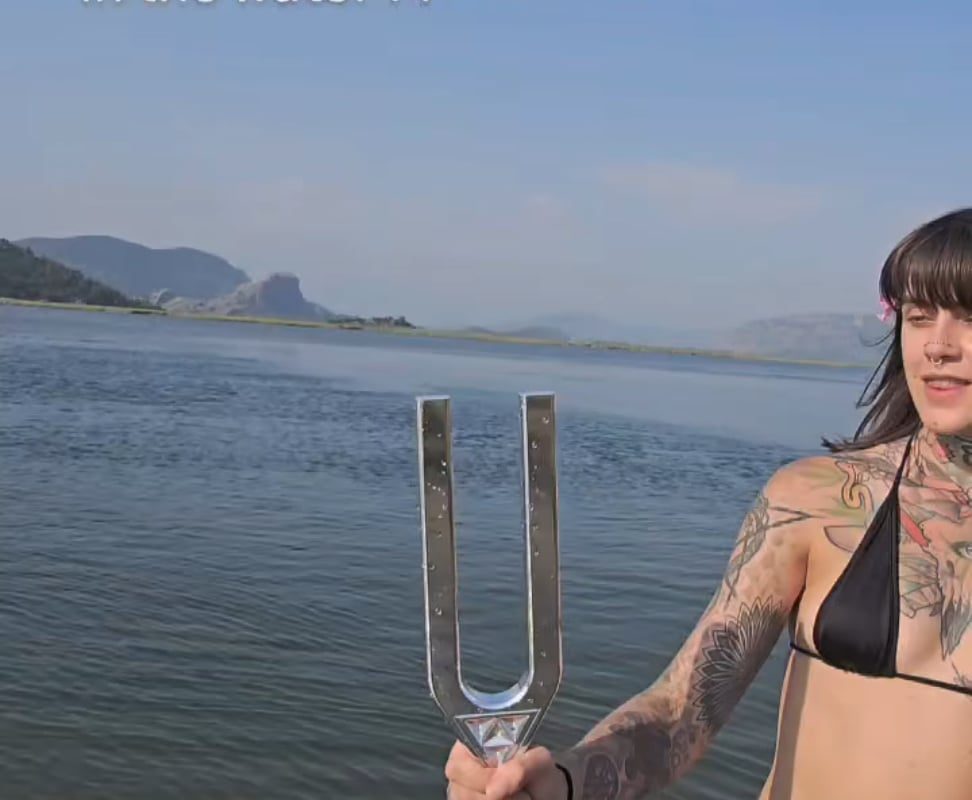
Resonating Tuning fork inside water
H1: The Resonating Tuning Fork in Water: A Captivating Physics Exploration
H2: The Science Behind Resonance & Tuning Forks
A tuning fork is a simple acoustic device designed to produce a precise musical pitch when struck. Its U-shaped metal prongs vibrate at a specific natural frequency, creating sound waves in the surrounding air. This phenomenon is called resonance—the tendency of an object to vibrate more intensely at certain frequencies.
When you tap a tuning fork and hold it in air, the prongs oscillate rapidly, generating a clear, sustained tone. However, submerging the vibrating fork in water creates a striking visual and auditory effect that reveals key principles of physics.
H2: What Happens When You Dip a Vibrating Tuning Fork in Water?
Placing a resonating tuning fork into water dramatically alters its behavior due to:
-
Increased Damping:
Water is denser than air, so the prongs encounter more resistance (damping). This quickly reduces their vibration amplitude, shortening the sound duration. -
Splash Visualization:
The vibrating prongs agitate the water, creating visible splashes or ripples. This offers a tangible demonstration of kinetic energy transfer from the fork to the water. -
Altered Sound Transmission:
Sound travels faster in water (~4x faster than in air), but most of the fork’s vibrations dissipate into the liquid instead of radiating through air. The result? A muted or muffled tone above the surface.
H2: Why Does the Sound “Disappear” Underwater?
While sound doesn’t vanish entirely, its transmission changes:
- Above Water: Sound waves travel efficiently through air to our ears.
- Underwater: Vibrations transfer directly into water molecules, but human ears (outside the water) detect less airborne noise. If you submerge your ear, you’d hear a low rumble.
This contrast underscores how sound relies on medium density for propagation—an essential concept in acoustics.
H2: Classroom Demonstration Guide (Step-by-Step)
This experiment is a staple in physics education. Here’s how to perform it safely:
Materials Needed:
- Tuning fork (256 Hz or 512 Hz work well)
- Rubber mallet or striking surface
- Container of water (bowl or beaker)
Steps:
- Strike the fork firmly against the mallet.
- Hold it near your ear to hear the pure tone.
- Submerge the vibrating prongs halfway into the water.
- Observe the splashing and fading sound.
Key Observations to Discuss:
- How damping affects vibration time vs. air.
- Energy transfer via water displacement.
- Why sound waves behave differently in liquids.
H2: Practical Applications & Related Phenomena
- Musical Instrument Design: Understanding resonance helps engineers optimize materials for guitars, pianos, and drums.
- Medical Diagnostics: Tuning forks test hearing and bone conduction (e.g., Rinne and Weber tests).
- Ultrasound Technology: Submerged transducer vibrations mimic this effect for imaging or cleaning.
H3: FAQs About Tuning Forks in Water
Q1: Why do tuning forks vibrate longer in air than water?
A: Air applies less damping force, allowing prongs to oscillate freely.
Q2: Can water damage a tuning fork?
A: No, but dry it after use to prevent corrosion.
Q3: Do higher-frequency forks create more splashing?
A: Not necessarily—amplitude (strike force) matters more than frequency.
H2: Key Takeaways
- Water dampens vibrations, shortening a tuning fork’s resonant duration.
- Splashes visualize mechanical energy transfer.
- Sound transmission depends on the medium’s density.
This deceptively simple experiment illuminates core physics principles—making it perfect for educators, students, and science enthusiasts alike!
Internal Linking Tip: Interested in more wave experiments? Explore our guide to [Standing Waves on a String] or [How Speakers Work].
Meta Description: Discover why a resonating tuning fork behaves dramatically in water! Explore resonance, damping, sound physics, and step-by-step classroom demonstrations.
Target Keywords:
- Tuning fork in water experiment
- Resonance physics demonstration
- Sound waves in liquid
- Why does a tuning fork stop in water
- Damping effect on vibration
By blending vivid descriptions with scientific rigor, this article aims to rank for educational queries while captivating curious minds. 🌊🎵