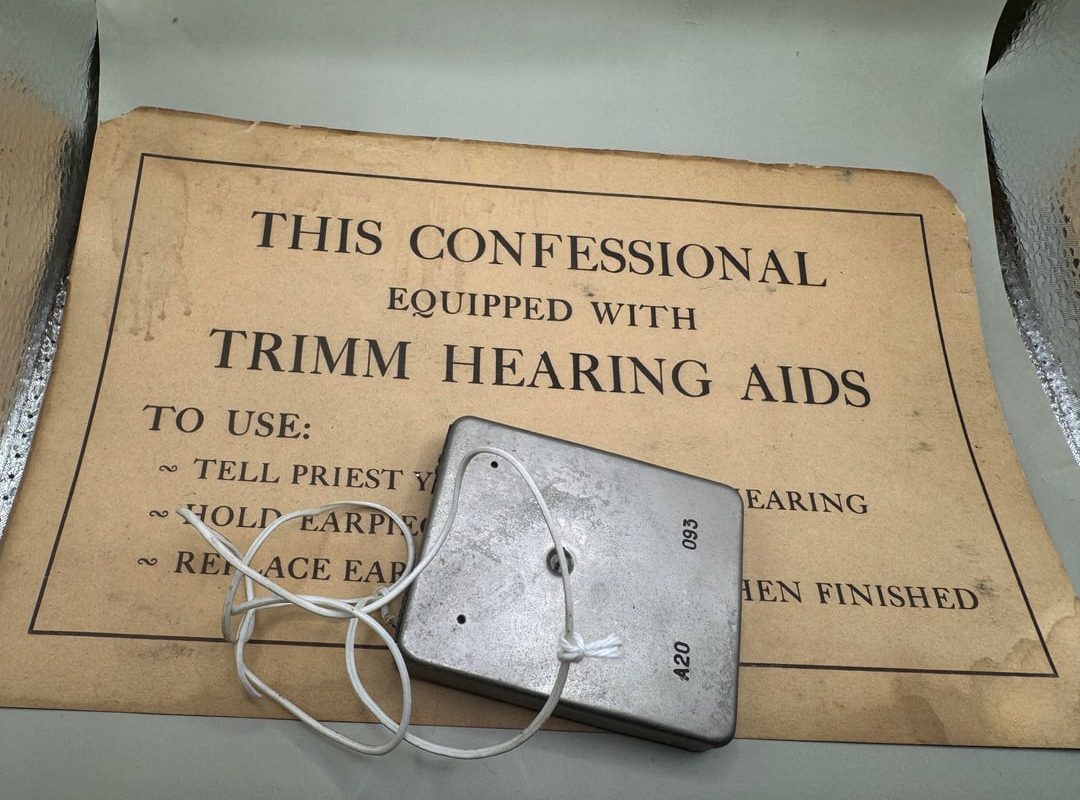
This is a real Soviet KGB listening device from the Cold War.
Discover the Secrets of the Soviet KGB’s Most Ingenious Cold War Listening Device
In the shadows of the Cold War, espionage was a high-stakes game of innovation and deception. Among the most fascinating artifacts of this era is a Soviet KGB listening device, known as “The Thing” (or the “Great Seal Bug”), which acted as an undetectable spy tool for nearly a decade. This unassuming gadget, hidden in plain sight, showcases the USSR’s technological brilliance—and its relentless pursuit of intelligence. Below, we unravel the history, mechanics, and legacy of this real-life spy gadget.
The Birth of “The Thing”: A Gift That Eavesdropped
In 1945, a group of Soviet schoolchildren presented a hand-carved wooden plaque of the Great Seal of the United States to U.S. Ambassador Averell Harriman in Moscow. Unbeknownst to the Americans, the gesture concealed a KGB-engineered listening device. The bug lay dormant inside the seal for seven years, transmitting confidential conversations from the ambassador’s office to Soviet agents. It wasn’t discovered until 1952—and only then by accident.
How the KGB Listening Device Worked: Simplicity Meets Genius
Unlike modern bugs, “The Thing” (officially named RF Resonator Cavity Bug) had no batteries, wires, or conventional power source. Instead, it relied on passive resonance technology:
- Activation by Radio Waves: Soviet operatives would beam a high-frequency radio signal at the embassy.
- Sound Vibrations: When someone spoke in the room, sound waves caused a tiny membrane inside the device to vibrate.
- Signal Modulation: These vibrations altered the reflected radio waves, which Soviet spies could capture and decode into audible speech from afar.
This “passive” design made it immune to detection by traditional bug-sweeping tools. Only a thorough physical search exposed its presence.
The Discovery and Fallout: A Cold War Wake-Up Call
“The Thing” was finally uncovered in 1952 by British radio operator Peter Wright during a routine embassy inspection. Its discovery sent shockwaves through Western intelligence agencies, highlighting Soviet advancements in surveillance tech. The U.S. responded by:
- Developing counter-surveillance techniques (like “TEMPEST” shielding to block electromagnetic eavesdropping).
- Launching projects to reverse-engineer Soviet spy technology.
Ironically, the device became a blueprint for modern intelligence tools, inspiring innovations in RFID and near-field communication (NFC) systems.
Legacy of “The Thing”: Why It Still Matters Today
“The Thing” symbolizes the Cold War’s technological arms race. Its impact endures in three key ways:
- Espionage Ethics: It exposed vulnerabilities in diplomatic security, forcing embassies to adopt stricter countermeasures.
- Tech Influence: Engineers studied its design to advance passive sensor technology now used in wireless devices.
- Cultural Icon: The original device is displayed at the NSA’s National Cryptologic Museum, while replicas appear in spy exhibits worldwide.
FAQs About Soviet KGB Listening Devices
Q: Were there other Soviet listening devices like “The Thing”?
Yes! The KGB deployed bugs inside furniture, coins, pens, and even cigarette cases—but few matched the stealth of “The Thing.”
Q: Could modern tech detect such a device?
Modern spectrum analyzers might identify unusual radio reflections—but mid-century tech lacked this capability.
Q: Are Cold War-era spy gadgets still used today?
While outdated, their principles influence contemporary surveillance. (For example, “laser eavesdropping” uses similar resonance concepts.)
Final Thoughts: The Silent Witness to History
“The Thing” remains one of the most brilliant spy gadgets ever created—a testament to Cold War ingenuity. As historian Christopher Andrew noted, “It took the West years to understand what the Soviets had already mastered.” For collectors and history buffs, this device symbolizes an era where espionage wasn’t just about secrets but revolutionizing the science of secrecy itself.
Meta Description: Uncover the story of “The Thing”—the Soviet KGB’s Cold War listening device hidden inside the U.S. Embassy. Learn how it worked, its discovery, and its lasting legacy in espionage tech.
Keywords: Soviet kgb listening device, Cold War espionage tech, The Thing bug, KGB spy gadgets, Great Seal Bug, Cold War history, Soviet surveillance tech, RF resonator cavity bug.