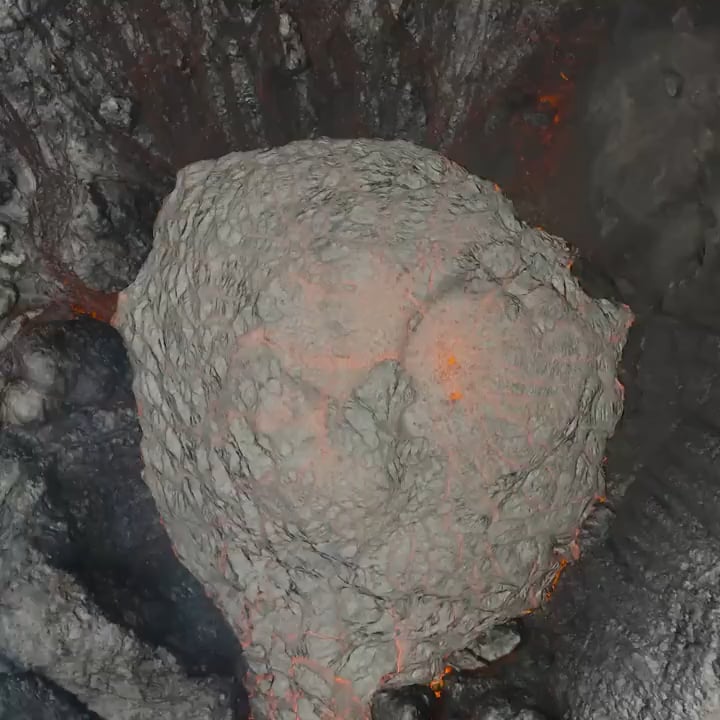
Fagradalsfjall volcano (specifically the Geldingadalir eruption site); hot enough to melt Gold, Silver, cast Iron and a host of other metals with ease.
Meta Title: Fagradalsfjall’s Geldingadalir Eruption: A Volcanic Inferno Hot Enough to Melt Gold & Iron
Meta Description: Discover Iceland’s Geldingadalir eruption – where lava flows exceeded 1,200°C, hot enough to melt gold, silver, and even cast iron. Explore the science and spectacle of Fagradalsfjall volcano!
Fagradalsfjall’s Geldingadalir Eruption: Molten Lava Hot Enough to Melt Gold, Silver, and Iron
Iceland’s Fagradalsfjall volcano captivated the world in 2021 when the Geldingadalir eruption began spewing lava into a quiet valley on the Reykjanes Peninsula. Beyond its fiery beauty, this volcanic event showcased nature’s raw power—with temperatures soaring high enough to liquefy gold, silver, and other metals in seconds. Here’s why this “gentle giant” eruption was a metallurgist’s nightmare come to life.
The Eruption That Turned Iceland Into a Laboratory
On March 19, 2021, after 800 years of dormancy, Fagradalsfjall volcano split open near Geldingadalur Valley. Unlike explosive eruptions, this event featured slow-flowing basaltic lava, creating rivers of molten rock that crept across the landscape. Scientists recorded lava temperatures between 1,150°C and 1,200°C—far surpassing the melting points of most precious metals:
- Gold: Melts at 1,064°C
- Silver: Melts at 961°C
- Copper: Melts at 1,085°C
- Cast Iron: Requires up to 1,538°C (only the hottest lava pools neared this!)
The eruption provided a rare natural demonstration of extreme heat physics—something typically confined to industrial furnaces.
Why Was Geldingadalir’s Lava So Hot?
Unlike silica-rich volcanoes (e.g., Mt. Vesuvius), Fagradalsfjall’s lava was mafic magma—low in viscosity but rich in iron and magnesium. This composition allows heat to build rapidly as magma rises from Earth’s mantle (over 1,400°C). When exposed to air, the lava’s surface cooled into black crust, but beneath it flowed orange-hot streams at near-maximum temperatures, capable of:
- Instantly vaporizing organic material
- Melting aluminum cans (660°C) like butter
- Warping steel tools left too close
Geology of the Reykjanes Peninsula: A Volcanic Hotspot
The Geldingadalir eruption was no fluke. Iceland straddles the Mid-Atlantic Ridge, where tectonic plates pull apart, allowing magma to surge upward. Fagradalsfjall sits on the Reykjanes volcanic belt, a region with a history of episodic eruptions. Unlike catastrophic events like Eyjafjallajökull (2010), Geldingadalir was a “tourist-friendly” eruption—slow-moving and accessible, drawing thousands of spectators.
Tourism & Science Collide at Fagradalsfjall
The Geldingadalir eruption became Iceland’s most-watched natural spectacle. Visitors hiked to witness lava fountains and glowing valleys firsthand. Scientists, meanwhile, seized the opportunity to:
- Analyze lava samples for geothermal insights
- Test drones for volcanic gas monitoring
- Study how metals interact with molten basalt
Local guides even experimented with cooking food over lava-heated rocks—proving nature’s furnace was as functional as it was fearsome!
Could This Happen Again?
Volcanologists warn that the Reykjanes Peninsula is entering a new active cycle, with multiple eruptions since 2021 (including nearby Meradalir in 2022 and Sundhnúkur in 2023). While Geldingadalir’s lava flows are dormant now, Fagradalsfjall remains a high-potential hotspot—one that could ignite another metal-melting spectacle at any time.
Visiting Fagradalsfjall Safely
If planning a trip to Fagradalsfjall or future eruption sites:
- Check local alerts: Via Iceland’s Met Office.
- Respect barriers: New lava crust can hide deadly pockets of heat.
- Bring a gas mask: Sulfur dioxide levels can spike unexpectedly.
Final Thoughts: Nature’s Blast Furnace
Fagradalsfjall’s Geldingadalir eruption wasn’t just a visual marvel—it was a visceral reminder of Earth’s transformative power. With heat rivaling industrial smelters, it forged a glowing landscape where even the toughest metals stood no chance. As Iceland’s volcanoes continue to awaken, this fiery laboratory remains a bucket-list destination for adventurers and scientists alike.
(Featured Image: Glowing lava flow at Geldingadalir. Credit: Iceland Geological Survey)
SEO Keywords:
Fagradalsfjall volcano, Geldingadalir eruption, lava melt gold silver, Reykjanes Peninsula volcanoes, Iceland volcano tour, volcanic heat metal melting, basaltic lava temperature
Internal Links (Example Anchor Texts):
- [Why Iceland’s Volcanoes Are So Active]
- [Best Volcano Tours in Iceland]
- [The Science of Lava Flow Prediction]
External Links (For Credibility):
Engage with us! Have you witnessed the Fagradalsfjall eruptions? Share your story below or tag #VolcanoAdventures on social media. 🌋