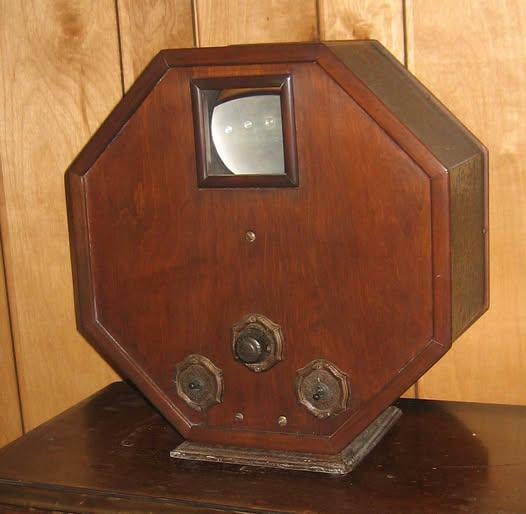
In 1928, 3 television sets were installed by GE in homes in New York, to demonstrate the first home television receiver. The picture was 1.5 inches long by 1 inch wide and 24 lines at 16 frames per second.
Title: The Dawn of Home Television: GE’s 1928 Experiment That Changed Entertainment Forever
Meta Description: Discover the fascinating story of GE’s 1928 television demonstration—the first home receiver, with a screen size of just 1.5 inches. Learn how this historic moment paved the way for modern TV.
Introduction: A Tiny Screen That Sparked a Revolution
In 1928, long before flat screens and streaming dominated our lives, General Electric (GE) made history by installing three experimental television sets in private homes across New York. This bold demonstration marked the birth of home television—a technology so primitive by today’s standards that it’s almost unimaginable. With a screen measuring just 1.5 inches long by 1 inch wide and broadcasting at a low-resolution 24 lines at 16 frames per second, GE’s invention was a marvel of its time. Let’s explore how this humble beginning laid the groundwork for the multi-billion-dollar entertainment industry we know today.
The 1928 GE Television Demo: Breaking Down the Technology
In the late 1920s, television was still in its infancy. Radio ruled the airwaves, but engineers dreamed of transmitting moving images. GE, alongside inventors like Ernst Alexanderson and John Logie Baird, was at the forefront of experimentation.
Here’s what made their 1928 demonstration revolutionary:
- Miniature Screens: The televisions displayed images roughly the size of a postage stamp (1.5” x 1”), relying on a tiny neon tube receiver.
- Low Resolution: Images were constructed from just 24 lines of resolution—compared to modern HD’s 1080+ lines—creating a fuzzy, flickering picture.
- Frame Rate: At 16 frames per second (fps), the choppy motion was far from smooth (today’s standard is 24–120 fps).
- Mechanical Scanning: Unlike digital TVs, GE’s system used spinning Nipkow disks—a mechanical method—to scan and transmit images.
The broadcasts were primitive, often limited to test patterns or simple shapes like crosses, but they captivated early adopters who glimpsed the future.
Why New York? The Battle for Public Attention
New York City was the epicenter of media innovation in the 1920s, making it the perfect testing ground. GE’s parent company, RCA, broadcast experimental signals from its W2XBS station (the future NBC). The three prototype TVs were strategically placed in the homes of GE executives and engineers to showcase “home reception” as a viable concept.
Despite the technical limitations, the project proved something extraordinary: television could work outside laboratories. It was no longer a science-fair novelty—it was entertainment in waiting.
Challenges and Skepticism: Not Everyone Was Impressed
Critics scoffed at GE’s tiny, blurry screens. Many doubted television would ever replace radio, let alone films. Challenges included:
- Poor Reception: Interference from electrical devices often disrupted broadcasts.
- Cost: Early TVs were prohibitively expensive.
- Content: Without regular programming, viewers had little reason to invest.
Yet GE persisted, refining its designs through the 1930s and inspiring competitors like Philo Farnsworth to improve electronic scanning.
Legacy: How GE’s 1928 Demo Shaped Television History
This experiment was a critical milestone:
- Psychological Impact: It proved television could enter homes, planting the seed for mass adoption.
- Technical Foundation: Mechanical scanning soon gave way to fully electronic systems by the 1930s.
- Industry Momentum: By 1939, RCA debuted televisions at the World’s Fair, kickstarting commercial sales.
Today, GE’s 1.5-inch screen stands as a symbol of innovation—a reminder that even the smallest ideas can grow into world-changing technologies.
From Postage Stamp to 4K: Television’s Journey
Imagine explaining a 65-inch 4K smart TV to a 1928 GE engineer. The leap from 24-line mechanical broadcasts to 8K resolution and streaming is astounding. Yet, every advancement traces back to those three flickering screens in New York.
Key Takeaways for Tech Enthusiasts:
- Innovation thrives on iteration.
- Early tech limitations (size, speed, cost) can be overcome with persistence.
- Disruptive ideas often face skepticism—until they redefine culture.
Conclusion: The Humble Beginnings of a Global Phenomenon
GE’s 1928 experiment wasn’t just about tiny screens and static-filled broadcasts. It was a declaration that television belonged in living rooms—a vision of connectivity that now spans the globe. As we binge-watch shows in ultra-HD, let’s remember those three modest boxes in New York that started it all.
Fun Fact: In 1928, TV screens were so small that families huddled around them like they would around a radio! The first “TV series” wouldn’t debut for another decade.
Keywords for SEO: 1928 GE television demonstration, first home television receiver, early TV history, mechanical television, GE television experiment 1928, invention of television, 24-line resolution.
Enjoyed this blast from the past? Share it to celebrate how far technology has come!