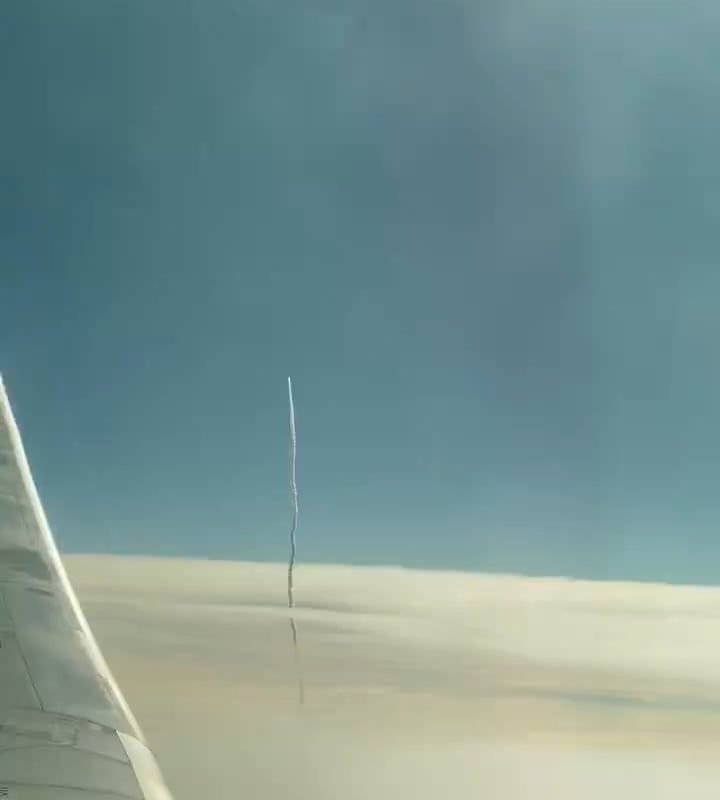
A rocket launch from a commercial plane
Title: Airborne Innovation: How Rocket Launches From Commercial Planes Are Reshaping Space Access
Meta Description: Discover the cutting-edge technology behind rocket launches from commercial planes, exploring the benefits, challenges, and key players revolutionizing satellite deployment.
Introduction: The Sky’s Not the Limit—It’s the Launchpad
Imagine a 747 jet soaring at 35,000 feet, releasing a rocket mid-flight that ignites its engines and hurtles toward space. This isn’t science fiction—it’s the reality of air-launched rockets, a breakthrough in aerospace engineering that combines aviation and spaceflight to deliver satellites into orbit more efficiently. Companies like Virgin Orbit (now under new ownership) and Northrop Grumman have pioneered this method, offering flexibility, cost savings, and rapid deployment. Here’s how it works and why it matters.
Why Launch Rockets From a Plane? Key Advantages
1. Fuel Efficiency & Payload Optimization
Traditional ground launches fight Earth’s thick atmosphere and gravity, burning massive fuel just to reach cruising altitude. Air-launched rockets start higher, where the air is thinner, reducing drag and allowing smaller rockets to carry payloads more efficiently.
2. Launch Flexibility
Ground-based pads are fixed to specific latitudes, limiting orbital inclinations. A plane can fly to an optimal location (e.g., over the ocean), adjust its trajectory mid-flight, and deploy rockets tailored for unique orbits—ideal for small satellites needing precise placement.
3. Reduced Weather Delays
Storms or high winds often delay traditional launches. Air-launch systems fly above bad weather, minimizing disruptions and enabling more reliable scheduling.
4. Cost-Effective for Small Satellites
For lightweight payloads (under 500 kg), air-launch systems bypass the need for large, expensive ground infrastructure, democratizing access to space for universities, startups, and governments.
How It Works: From Aircraft to Orbit in 3 Phases
Step 1: The Carrier Aircraft Takes Flight
A modified commercial plane (e.g., Virgin Orbit’s Cosmic Girl, a Boeing 747) carries the rocket horizontally under its wing. The aircraft climbs to ~35,000 feet—above most atmospheric interference.
Step 2: Mid-Air Rocket Release
Once in position, the rocket detaches and freefalls for 4–5 seconds. This avoids aerodynamic stress on the plane before the rocket engine ignites.
Step 3: Ignition and Ascent
The rocket’s engine fires, propelling it vertically into space. Within minutes, it reaches orbit and deploys its payload.
Key Players and Milestones
- Virgin Orbit (until 2023): Launched LauncherOne from a 747, successfully deploying satellites but filing for bankruptcy in 2023 due to funding challenges. Its assets were later acquired by Rocket Lab.
- Northrop Grumman’s Pegasus: The longest-operational air-launch system, with over 45 missions since 1990. It uses a customized Stargazer L-1011 plane.
- Stratolaunch: Developed the world’s largest aircraft (a twin-fuselage giant with a 385-foot wingspan) for hypersonic and orbital tests.
Challenges and Limitations
- Technical Complexity: Mid-air ignition requires flawless timing and engineering to avoid instability.
- Payload Constraints: Air-launched rockets are smaller, limiting them to lightweight satellites.
- Financial Risk: High R&D costs and competition from reusable rockets (like SpaceX’s Falcon 9) challenge profitability.
The Future of Air-Launched Rockets
Despite setbacks, the technology holds promise:
- Military Applications: Rapid-response satellite deployment for reconnaissance or communications.
- Climate Monitoring: Launching affordable sensors to track environmental changes.
- Space Tourism: Startups like SpinLaunch (using kinetic energy) explore alternative air-assisted systems.
Experts predict hybrid models—such as drones or hypersonic carriers—could further reduce costs, making air-launch systems a staple for the booming small-satellite market.
Conclusion: A New Era of Adaptive Space Access
Rocket launches from planes represent a paradigm shift in space logistics—prioritizing agility over brute force. While not a replacement for heavy-lift rockets, air-launch systems fill a critical niche, enabling faster, cheaper, and more targeted missions. As technology advances and demand for small satellites grows, this airborne innovation may soon become routine in humanity’s quest to conquer the final frontier.
Keywords for SEO:
Air launch system, rocket launch from plane, Virgin Orbit LauncherOne, Pegasus rocket, commercial spaceflight, satellite deployment, Stratolaunch, orbital launch technology, small satellite launch, future of space travel.