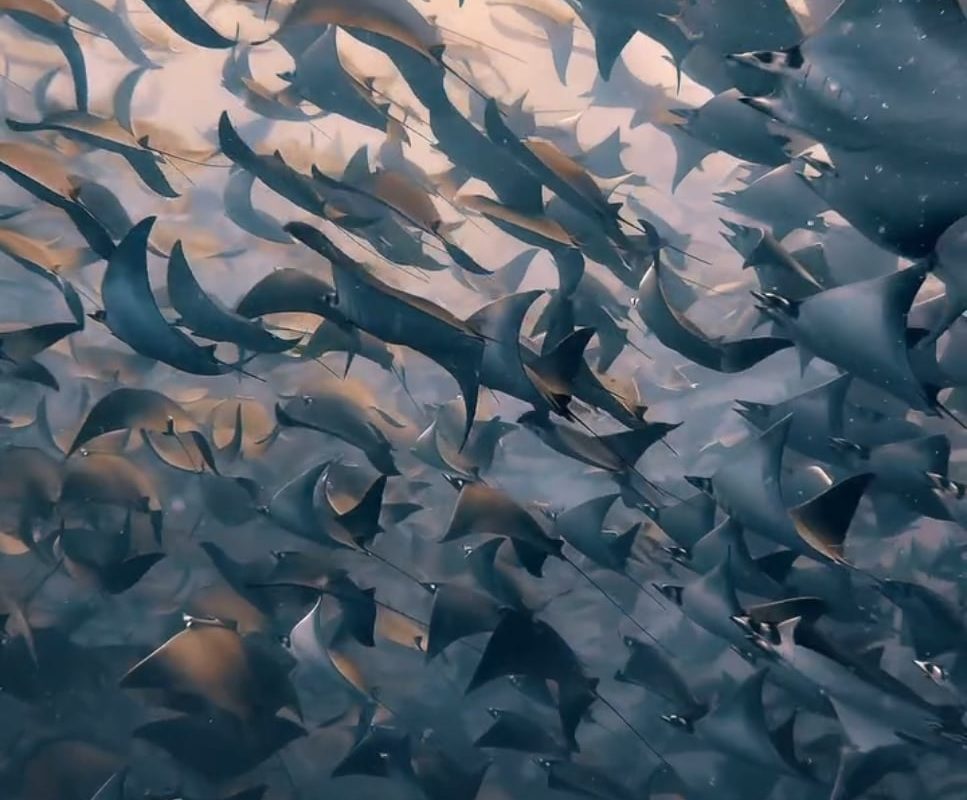
A massive fever of Mobula rays migrating off the coast of Baja California. Footage by Aidan Bedford
Title: Spectacle of Nature: Massive Fever of Mobula Rays Migrates Off Baja California – Stunning Footage by Aidan Bedford
Meta Description: Witness the breathtaking migration of thousands of Mobula rays off Baja California! Dive into the details of this natural phenomenon, captured in stunning footage by Aidan Bedford.
Introduction
Every year, the waters off Mexico’s Baja California Peninsula transform into a living ballet as thousands of Mobula rays gather in a mesmerizing migration known as a “fever.” This awe-inspiring event, documented by filmmaker Aidan Bedford, showcases one of the ocean’s most magical phenomena—where graceful rays leap, spiral, and glide in unison through turquoise waves. In this article, we’ll explore the science behind this migration, its ecological importance, and how Bedford’s footage brings this underwater spectacle to your screen.
The Mobula Ray Migration: A Natural Wonder
Often dubbed “flying rays” or “devil rays,” Mobula rays are close relatives of manta rays, famed for their acrobatic breaches out of the water. From late spring to early summer, massive shoals of Mobulas—sometimes numbering in the tens of thousands—migrate northward along Baja California’s coast. These journeys stretch hundreds of miles, driven by the search for plankton-rich waters and ideal mating grounds.
Why Baja California?
- The Sea of Cortez (Gulf of California), a UNESCO World Heritage Site, offers nutrient-dense currents that attract plankton, small fish, and squid—Mobulas’ primary food sources.
- Warm, shallow bays like Bahía de La Paz and Bahía Magdalena become hotspots for courtship displays, where rays somersault and flap their pectoral fins to attract mates.
Aidan Bedford’s Footage: Capturing the Magic
Wildlife filmmaker Aidan Bedford recently documented this spectacle, releasing viral drone and underwater footage that highlights the scale and beauty of the migration. His clips show rays gliding like synchronized dancers, emerging from the depths in vast chains that stretch as far as the eye can see.
Highlights from Bedford’s Work:
- Aerial Perspectives: Drone shots reveal the fever’s colossal size, with rays forming shape-shifting clouds beneath the waves.
- Underwater Intimacy: Close-ups showcase Mobulas’ intricate patterns and gentle nature as they filter-feed with gaping mouths.
- Breaching Behavior: Slow-motion captures of rays launching themselves into the air—a behavior scientists believe may help remove parasites or communicate.
Why Do Mobula Rays Migrate? The Science Explained
- Feeding Frenzies: Mobulas follow blooms of plankton driven by seasonal upwellings.
- Reproductive Rituals: Males pursue females in elaborate group dances before mating.
- Temperature Tracking: Rays seek warmer waters to optimize metabolism and embryo development.
Despite their grandeur, Mobula rays face threats from overfishing, bycatch, and habitat degradation. Their slow reproductive rates (one pup every 2–3 years) make conservation critical.
How to Witness the Phenomenon Responsibly
Ecotourism in Baja California offers sustainable ways to experience this event:
- Snorkel Tours: Operators in La Paz and Cabo San Lucas lead small groups to observe rays without disruption.
- Drone Photography: Capture the fever’s scale while respecting wildlife regulations.
- Conservation Support: Donate to NGOs like Mobula Conservation or Pelagios Kakunjá, which research and protect these species.
The Bigger Picture: Why Mobulas Matter
Mobula rays play a vital role in marine ecosystems:
- Plankton Control: Their filter-feeding helps balance plankton populations.
- Ecotourism Value: Safaris generate income for local communities, incentivizing protection.
- Biodiversity Indicators: Thriving Mobula populations signal healthy oceans.
Conclusion: A Call to Protect Nature’s Wonders
Aidan Bedford’s footage of Baja California’s Mobula ray fever is more than a visual treat—it’s a reminder of nature’s fragility and grandeur. By supporting sustainable tourism and conservation, we can ensure these migrations endure for generations.
Watch Aidan Bedford’s Viral Footage Here: [Insert link to video/platform].
Keywords for SEO: Mobula rays Baja California, devil ray migration, Aidan Bedford footage, Sea of Cortez wildlife, marine migration spectacle, Mobula ray conservation, underwater drone footage, ecotourism Mexico, plankton bloom Baja, ocean acrobatics.
Internal Links (if applicable):
- [Best Places to Snorkel with Rays in Baja]
- [How Climate Change Affects Marine Migrations]
- [Aidan Bedford’s Wildlife Film Portfolio]
Optimize with alt text for images/video: “Aidan Bedford’s drone footage of Mobula ray migration in Baja California,” “Underwater close-up of Mobula rays feeding in the Sea of Cortez.”