NASA’s Hubble telescope just dropped new images of infant stars in the process of forming
Meta Title: Hubble Captures Rare Images of Infant Stars Forming: A Glimpse Into Stellar Birth
Meta Description: NASA’s Hubble Space Telescope reveals stunning new images of newborn protostars, offering unprecedented insights into the early stages of star formation. Discover the cosmic details here.
Hubble’s Stellar Nursery: NASA Reveals Breathtaking Images of Infant Stars in Formation
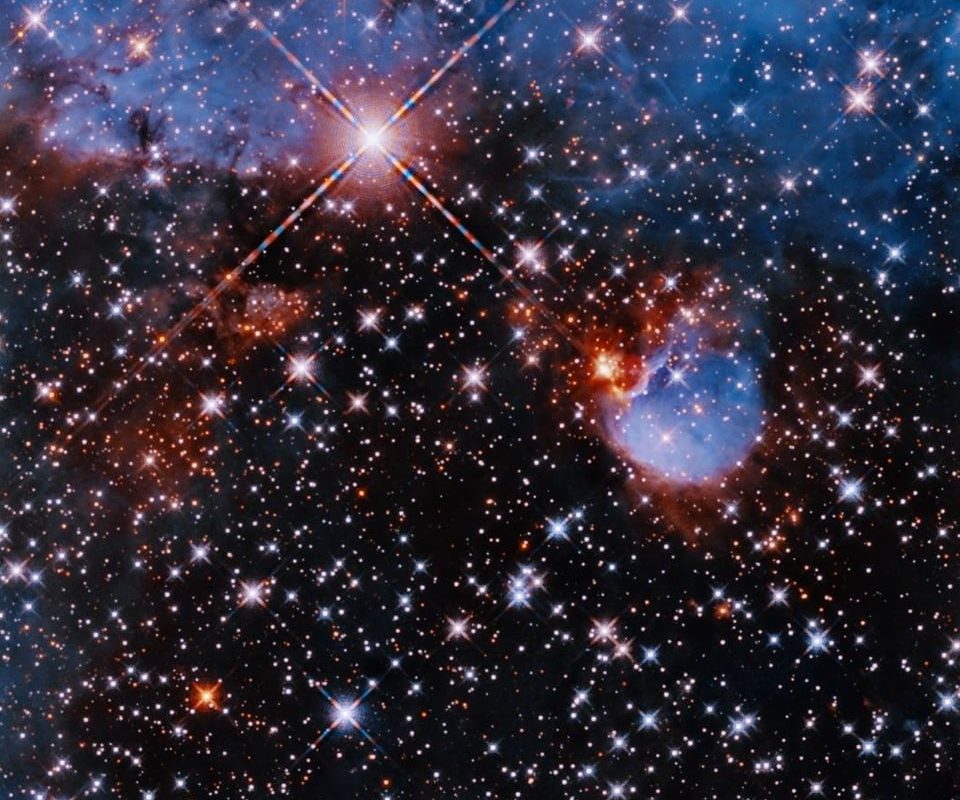
NASA’s Hubble Space Telescope has once again dazzled astronomers and space enthusiasts alike with its latest release: high-resolution images of infant stars in the throes of formation. These cosmic snapshots provide an unparalleled window into the turbulent, high-energy processes that shape nascent stars, illuminating a critical phase of stellar evolution previously shrouded in mystery.
The Cosmic Cradle: What Hubble Captured
The newly released images showcase protostars—stellar infants only a few hundred thousand years old—embedded within the gas-rich clouds of the Dorado molecular cloud complex, located roughly 160,000 light-years from Earth. Hubble’s Advanced Camera for Surveys (ACS) and Wide Field Camera 3 (WFC3) captured these scenes in vivid detail, highlighting:
- Jets of superheated gas (ionized plasma) erupting from the protostars’ poles at speeds exceeding 400,000 mph.
- Glowing shockwaves (Herbig-Haro objects) created as these jets collide with surrounding cold gas and dust.
- Dense accretion disks of material swirling around the stars, feeding their growth.
“These images let us witness the violent yet beautiful process of star birth,” said Dr. Jennifer Wiseman, Hubble Project Scientist at NASA. “We’re seeing how young stars interact with their environments, sculpting the cosmos.”
Why This Discovery Matters
These observations aren’t just visually stunning—they’re scientifically groundbreaking. Here’s why:
- Understanding Solar System Origins: Protostars and their disks are the birthplaces of future planets. Studying them helps unravel how systems like ours formed.
- Testing Stellar Evolution Models: Hubble’s data challenges theories about how stars gather mass and expel energy in their infancy.
- A Window to the Early Universe: Distant galaxies host similar star-forming regions. Insights from nearby stellar nurseries refine how we interpret deep-space phenomena.
The Science Behind the Spectacle
Infant stars form when dense pockets within molecular clouds collapse under gravity. As material spirals toward the core, it generates heat and pressure, igniting nuclear fusion and marking the star’s “birth.” However, not all material is absorbed—some is ejected as bipolar jets, clearing debris and halting excessive growth. Hubble’s images capture this feedback loop in action:
- Ionization fronts: Blue shockwaves mark where jets slam into interstellar material.
- Infrared insights: Dust-piercing infrared data (combined with visible-light imaging) reveals hidden structures.
Hubble’s Enduring Legacy
Despite the James Webb Space Telescope’s (JWST) infrared prowess, Hubble remains indispensable. Its sharp visible/UV vision complements Webb’s capabilities, enabling multi-wavelength studies. “Hubble still surprises us,” said Wiseman. “These images remind us why it’s a cornerstone of modern astronomy.”
How to See the Images
NASA has released the full set on its official Hubble mission page and social channels. For photographers and educators, annotated versions explain key features like Herbig-Haro objects and accretion flows.
Final Thoughts
Hubble’s latest delivery isn’t just eye candy—it’s an astrophysical treasure trove. As researchers analyze these protostars, we inch closer to answering fundamental questions: How do stars really form? What determines their size and lifespan? For now, we can marvel at these celestial newborns, their fiery jets a testament to the dynamism of our universe.
Follow #HubbleStars on social media for updates, and explore NASA’s interactive gallery to dive deeper.
Keywords for SEO: Hubble telescope new images, infant stars formation, protostars, Herbig-Haro objects, NASA space images, stellar nursery, star birth process, Hubble discoveries, cosmic jets, astronomy news.