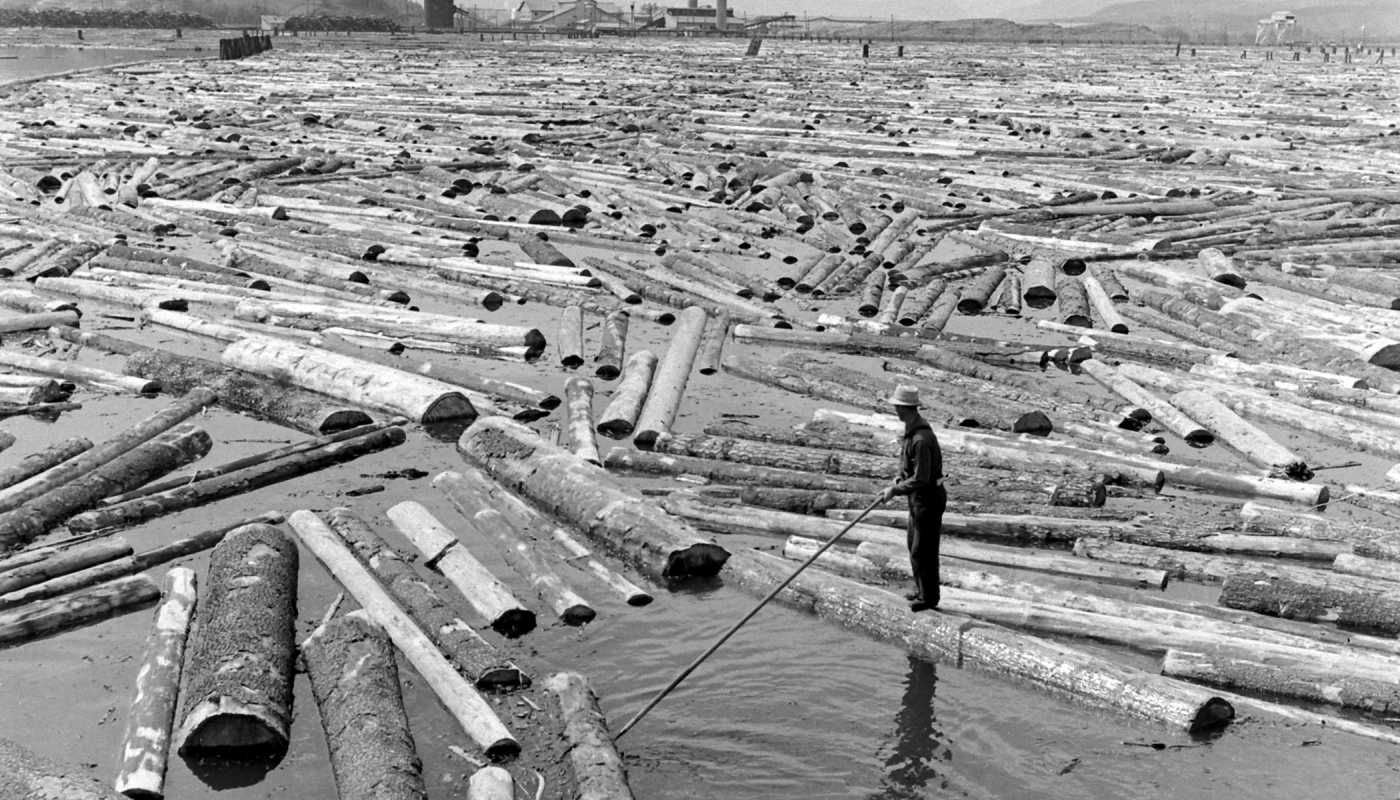
Logging in Idaho. One man stands over one of hundreds of fell trees to go to the Mill, 1940
Title: The Golden Age of Logging in Idaho: A Look Back at the Timber Titans of the 1940s
Meta Description: Explore Idaho’s logging heyday in the 1940s, where towering trees fueled the American Dream. Discover the grit, machinery, and legacy of an era that shaped Idaho’s forests and economy.
Introduction: A Snapshot of History
In a striking black-and-white photograph from 1940, a lone logger stands triumphantly beside one of hundreds of freshly felled giants in Idaho’s dense wilderness. The trees, destined for sawmills that powered America’s wartime economy, symbolize an era when logging wasn’t just an industry—it was a way of life. This image captures the raw scale and ambition of Idaho’s mid-20th-century timber boom, a period that transformed the state’s landscape, economy, and identity.
In this article, we journey back to Idaho’s logging heyday, exploring the machinery, men, and myths that defined this rugged chapter in American history.
The Rise of Idaho’s Timber Empire
By the 1940s, Idaho’s vast conifer forests—rich with ponderosa pine, Douglas fir, and western white pine—had become a cornerstone of America’s timber supply. The demand for wood surged during World War II, driven by military infrastructure, housing for wartime workers, and industrial expansion.
- Key Regions: The Clearwater, Coeur d’Alene, and Panhandle regions buzzed with logging camps and sawmills.
- Economic Impact: Timber employed over 30% of Idaho’s workforce in the 1940s, sustaining rural communities like Lewiston, St. Maries, and Priest River.
The Logger’s Life: Grit and Glory
The men who worked Idaho’s forests were legends of endurance. Armed with crosscut saws, axes, and later, chainsaws, loggers faced perilous conditions—steep slopes, biting winters, and the constant risk of injury.
- Fallers: The stars of the crew, tasked with strategically cutting trees (like the one in our 1940 photo).
- Skidders: Teams of horses or early Caterpillar tractors dragged logs to loading areas.
- Mill Workers: Sawyers and planers transformed raw timber into lumber at mills like Potlatch and Diamond Match.
Fun Fact: Many loggers lived in remote camps for months, bonding over communal meals and tall tales—a culture immortalized in Paul Bunyan-esque folklore.
From Forest to Mill: The Journey of a Log
The felled tree in our 1940 photo had a long journey ahead:
- Felling: Teams cut trees with precision to avoid damaging high-value timber.
- Skidding: Horses or steam donkeys hauled logs to “landings” near railroad tracks or rivers.
- Transport: Logs traveled by train or flume (wooden waterways) to mills.
- Processing: Mills sliced logs into lumber, shipped nationwide for construction, crates, and war supplies.
Challenges and Innovations of the Era
Despite its boom years, 1940s logging faced hurdles:
- Environmental Impact: Clear-cutting sparked early conservation debates, leading to selective harvest practices by the 1950s.
- Technology Shifts: Crosscut saws gave way to chainsaws, improving efficiency but reducing demand for skilled fallers.
- Labor Struggles: Unions like the IWLU (International Woodworkers of America) fought for fair wages and safety reforms.
Legacy of the 1940s Logging Boom
The era left an indelible mark on Idaho:
- Economic Footprint: Mill towns thrived for decades, though automation later shrank jobs.
- Cultural Heritage: Museums like the St. Maries Timberman’s Museum preserve artifacts and stories.
- Forest Management: Lessons from overharvesting led to sustainable practices and reforestation programs.
Modern Logging in Idaho: A Sustainable Future
Today, Idaho’s timber industry balances heritage with ecology:
- Selective Harvesting: Replanting laws ensure forests regenerate.
- Wildfire Mitigation: Logging aids forest health by reducing fuel loads.
- Innovation: GPS and drones optimize harvests with minimal impact.
Conclusion: Honoring the Giants
The unnamed logger in that 1940 photo stood at the crossroads of history—his labor fed America’s growth but also sparked a dialogue about conservation. Idaho’s forests remain a testament to resilience, adapting from an era of unbridled ambition to one of stewardship. As we walk among the second-growth pines of the Clearwater today, we honor the legacy of the men who shaped this land, one tree at a time.
Keywords for SEO:
Logging in Idaho, Idaho logging history, 1940 timber industry, Idaho lumber mills, historic logging photos, Pacific Northwest logging, Idaho forest management, Idaho timber towns.
Optimized Image Alt-Text (for photo):
“1940 Idaho logger stands beside felled trees destined for lumber mills during WW2 timber boom.”
By blending vivid storytelling with SEO-friendly structure, this article transports readers to Idaho’s timber past while ranking for key historical and industry terms.