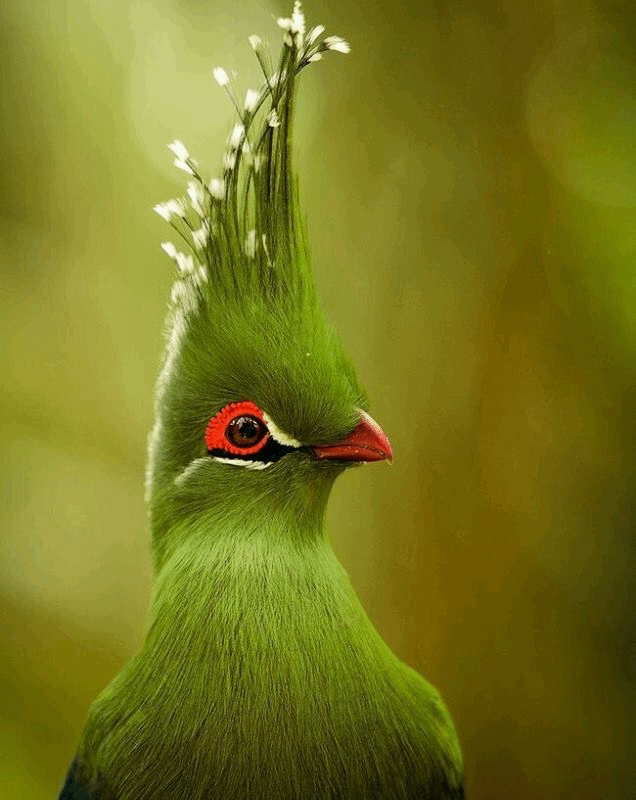
Livingstone’s turaco (Tauraco livingstonii) is a species of bird distributed throughout the subtropical lowlands of southeastern Africa. It is easily identified by its red, white and black eye patches, dark red beak, and a bold green crest sporting white floral flourishes. It mostly eats fruits.
Discover the Livingstone’s Turaco: A Jewel of Southeastern Africa’s Forests
The lush subtropical woodlands of southeastern Africa are home to one of the continent’s most dazzling birds: Livingstone’s turaco (Tauraco livingstonii). Named in honor of famed explorer David Livingstone, this avian gem stands out with its kaleidoscopic plumage and charismatic presence. From its ruby-red beak to its flamboyant green crest, this fruit-loving bird is a living spectacle of African biodiversity. Here’s everything you need to know about this captivating species.
Identification: A Masterpiece in Feathers
Livingstone’s turaco is instantly recognizable thanks to its vibrant palette of colors and bold markings:
- Striking Facial Contrast: Its head features red, white, and black eye patches, creating a dramatic “mask” around its eyes.
- Iconic Beak & Crest: A dark red, slightly curved beak complements a bold green crest adorned with white-tipped feathers that resemble delicate floral flourishes.
- Emerald Elegance: The body is cloaked in iridescent green feathers, while wings and tail flash deep blue and crimson hues during flight.
- Size & Stature: Measuring 35–40 cm (14–16 inches), it’s a medium-sized bird with a long tail and agile movements.
This bird’s vivid pigments aren’t just for show—its red feathers contain turacin, a unique copper-based pigment found only in turacos that can dissolve in water!
Habitat & Distribution: Where to Find Them
Livingstone’s turaco inhabits the subtropical lowland forests and coastal woodlands of southeastern Africa. Its range stretches across:
- Coastal regions of Mozambique, Malawi, and Tanzania.
- Inland forests of Zimbabwe, Eswatini, and eastern South Africa (notably in reserves like Kruger National Park).
These birds thrive in dense canopies near rivers or wetlands, rarely venturing into open savannas. They’re often spotted in pairs or small family groups, leaping between tree branches with acrobatic grace.
Diet & Feeding Habits: Nature’s Frugivore
True to its turaco lineage, this species is primarily frugivorous (fruit-eating):
- Preferred Foods: Feasts on wild figs, berries, and fruits of the sycamore fig (Ficus sycomorus) and waterberry (Syzygium guineense).
- Seed Dispersal Role: By swallowing fruits whole, the turaco aids forest regeneration by dispersing seeds through droppings.
- Occasional Supplements: Rarely consumes insects, flowers, or leaves—especially during dry seasons when fruit is scarce.
Their strong beaks and agile tongues let them pluck even the tartest fruits, making them vital gardeners of their ecosystems.
Behavior & Social Life
- Gregarious Nature: Lives in small flocks of 2–6 birds, often communicating with loud, repetitive “kow-kow” calls to defend territory.
- Weak Flier, Skilled Climber: Though capable of short flights, turacos prefer scrambling through branches using their strong feet and long tails for balance.
- Monogamous Bonds: Pairs mate for life, building flimsy twig nests high in trees where females lay 2–3 eggs. Both parents share incubation and chick-rearing duties.
Conservation Status: A Resilient Species
Livingstone’s turaco is currently listed as Least Concern by the IUCN due to its wide range and stable population. However, habitat loss from logging and agriculture poses localized threats. Protected areas and community-led ecotourism (like birdwatching trails in Mozambique’s Gorongosa Park) help safeguard this iconic bird.
Fun Facts About Livingstone’s Turaco
- Cultural Icon: Its feathers are prized by local cultures for ceremonial attire.
- In-Flight Flash: Crimson wing patches become visible only during flight, startling predators.
- Rain Shower Lover: Turacos bathe in downpours, shaking water through their plumage like feathered umbrellas!
Conclusion: A Living Symbol of African Wilderness
Livingstone’s turaco embodies the vibrant spirit of southeastern Africa’s forests. From its charismatic calls echoing through canopies to its role as a seed-scattering gardener, this bird is both an ecological linchpin and a dazzling sight for wildlife enthusiasts. Whether you’re a birder or a nature lover, spotting a Livingstone’s turaco is an unforgettable encounter with Africa’s wild heart.
Protect these avian wonders by supporting habitat conservation and sustainable tourism in their native ecosystems!