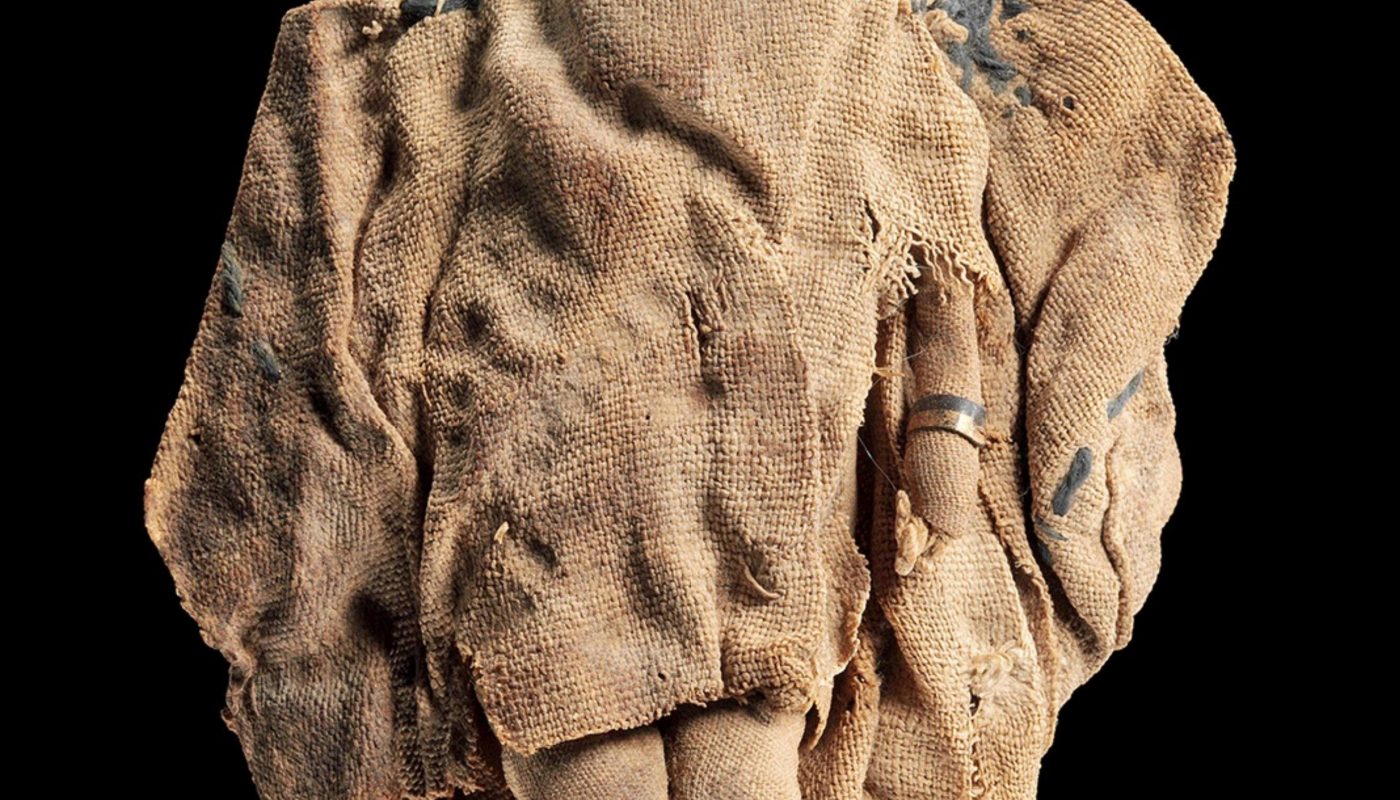
Textile Doll from Roman Egypt, c.100-200 CE: this doll is nearly 1,900 years old, and it’s decorated with real human hair, gold jewelry, gilded leather cuffs, and embroidered linen
Unraveling the Mysteries of the Textile Doll from Roman Egypt (c. 100–200 CE): A 1,900-Year-Old Childhood Treasure
Introduction: A Journey Back to Ancient Childhoods
In the sun-baked sands of Roman Egypt, archaeologists have uncovered extraordinary artifacts that breathe life into the daily experiences of people who lived nearly two millennia ago. Among the most enchanting discoveries is a nearly 1,900-year-old textile doll, crafted between 100–200 CE. This intricately decorated artifact—adorned with real human hair, gold jewelry, gilded leather cuffs, and embroidered linen—offers a rare, intimate glimpse into the world of ancient toys, fashion, and cultural traditions.
The Historical Context: Roman Egypt and Its Artistic Legacy
Egypt under Roman rule (30 BCE–641 CE) was a melting pot of traditions: Egyptian, Greek, Roman, and Near Eastern influences merged to create vibrant art and daily objects. Dolls like this one were likely cherished by children from affluent families, serving both as toys and spiritual tokens. Unlike simple wooden or clay dolls found elsewhere, this textile masterpiece reflects the sophistication of Roman-Egyptian craftsmanship and the value placed on childhood in antiquity.
A Closer Look: Craftsmanship & Symbolism
The doll’s design reveals astonishing attention to detail and luxury, hinting at its owner’s high social status:
-
Human Hair & Embroidered Linen:
The doll’s head features real human hair, carefully styled—possibly a lock from its owner or a symbolic offering. The body, made of fine linen, is embroidered with geometric and floral patterns, showcasing textile skills passed down through generations. -
Gold Jewelry & Status Symbols:
Tiny gold earrings and a necklace, along with gilded leather cuffs on the wrists and ankles, mimic the fashion of elite Roman-Egyptian women. These embellishments weren’t just decorative; they mirrored societal ideals of beauty and affluence. -
Durability & Devotion:
The doll’s preservation suggests it was buried with its owner, perhaps as a grave offering. In Roman Egypt, dolls often accompanied children to the afterlife, serving as companions or protective charms (maniae).
Why Was This Doll Created? More Than Just a Toy
While modern audiences might view the doll as a plaything, its purpose was multifaceted:
- Ritual Significance: Dolls have been linked to rites of passage, such as offerings to gods during girlhood transitions.
- Funerary Practice: Its discovery in burial sites (like nearby Antinoopolis or Hawara) underscores beliefs in an afterlife where cherished items carried comfort.
- Cultural Identity: The blend of Egyptian materials (linen) and Roman aesthetics (gold jewelry) reflects a hybrid identity unique to the era.
The Science of Survival: Preserving Organic Artifacts
What makes this doll extraordinary is its survival. Organic materials like textiles and human hair rarely withstand centuries of decay. Egypt’s arid climate acted as a natural preservative, allowing this delicate artifact to endure. Modern conservation techniques, such as controlled humidity and non-invasive imaging, now help archaeologists study its fibers and dyes without damage.
Legacy & Reflection: What This Doll Tells Us Today
This textile doll bridges a gap between ancient and modern humanity. Children in Roman Egypt laughed, played, and dreamed much like children today—their lives marked by love, loss, and the simple joy of holding a cherished toy. As museum visitors gaze upon its embroidered linen and gilded cuffs, they connect with a child who lived under Emperor Trajan’s rule, in a world transformed by cultural exchange.
Conclusion: A Timeless Echo of Human Connection
The Roman-Egyptian textile doll is more than an archaeological curiosity—it’s a poignant reminder of the universality of childhood and craftsmanship across centuries. As scholars continue to study its stitches and symbolism, this 1,900-year-old treasure invites us to ponder: Who held this doll? What stories did she whisper to it? In its silent embrace, history speaks volumes.
Keywords for SEO:
Textile doll Roman Egypt, ancient Egyptian doll, Roman-era doll, 1,900-year-old doll, archaeological toys, Egyptian burial artifacts, Roman-Egyptian craftsmanship, textile archaeology, ancient human hair artifacts, cultural heritage Egypt.
Meta Description:
Discover the 1,900-year-old Textile Doll from Roman Egypt—adorned with real human hair, gold jewelry & embroidered linen. Explore its history, cultural significance & enduring legacy.