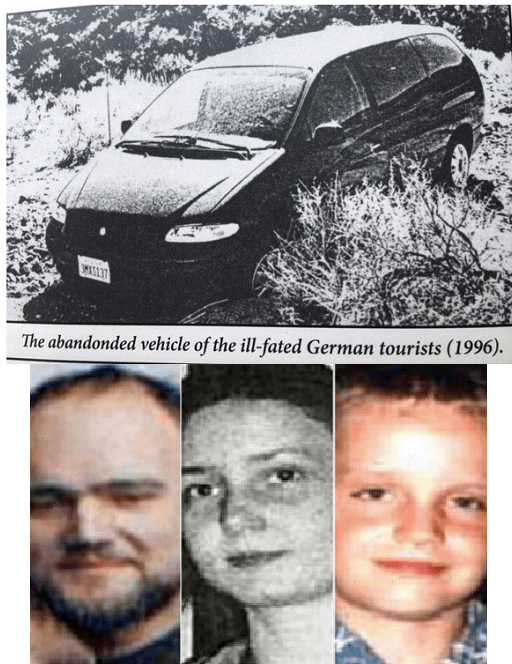
The “Death Valley Germans” is an incident of a family of four tourists from Germany who went missing in Death Valley National Park, on 23 July 1996. The family were discovered in 2009 by experienced hikers, Tom Mahood and Les Walker
The Death Valley Germans: A Tragic Tale of Mystery and Discovery in America’s Harshest Wilderness
Meta Description: Explore the chilling story of the “Death Valley Germans,” a family of four tourists who vanished in 1996 and were discovered 13 years later. Learn about the mystery, the search, and the lessons from this haunting incident.
Introduction
The Death Valley Germans is one of the most haunting mysteries in the history of American national parks. In July 1996, a family of four German tourists disappeared in Death Valley National Park, igniting a search that lasted over a decade. Their remains were finally discovered in 2009 by two determined hikers, closing a chapter of uncertainty but raising questions about survival in one of Earth’s most extreme environments. This article unravels their tragic story, the relentless search efforts, and the enduring lessons for adventurers.
The Disappearance: A Vacation Turns Into a Nightmare
Egbert Rimkus (34), his partner Cornelia Meyer (35), and their sons Max (4) and Georg (11) arrived in Southern California in July 1996 for a scenic road trip. On July 23, they set off to explore Death Valley’s remote Anvil Spring Canyon in a rented minivan. Temperatures soared above 120°F (49°C)—conditions that proved fatal for the unprepared family.
Despite the park’s warnings about summer dangers, the Rimkus family ventured off-road into terrain notorious for its treacherous routes, lack of water, and isolation. When the minivan became stuck in soft sand, they faced an impossible choice: stay with the vehicle or seek help in a landscape that kills swiftly. Tragically, they chose to walk.
Key Details:
- Last Known Location: Near the Anvil Spring area, off Saline Valley Road.
- Vehicle Found: On August 15, 1996, rangers located their abandoned minivan.
- Clues at the Scene: Tire tracks, footprints, and scattered possessions indicated their desperate attempt to find water or rescue.
The Search: Years of Dead Ends
Initial search-and-rescue operations by the Inyo County Sheriff’s Office and the National Park Service yielded no results. Weeks of aerial scans and ground patrols failed to locate the family, and the case grew cold. Death Valley’s sheer size—over 3.4 million acres—and hostile climate made recovery efforts nearly impossible, leaving investigators to speculate about their fate.
The Discovery: A Breakthrough After 13 Years
In November 2009, experienced hikers and former SAR volunteers Tom Mahood and Les Walker reignited the search. Mahood, driven by curiosity and determination, spent years analyzing satellite imagery, maps, and the family’s likely path. He hypothesized they had walked toward Military Pass, hoping to reach Nevada Highway 266.
After multiple expeditions, Mahood and Walker discovered scattered human bones, cameras, and clothing about 6 miles from the van—in an area overlooked by earlier searches. Dental records confirmed the remains belonged to the Rimkus family.
What Happened to the Death Valley Germans?
Forensic evidence suggested a grim timeline:
- Cornelia and Georg succumbed first, their bodies found closer to the van.
- Egbert and Max trekked farther, likely surviving several days before perishing.
- Death by dehydration, heatstroke, and exposure was unavoidable in the brutal desert.
Lessons from the Tragedy
The Death Valley Germans’ story is a cautionary tale for wilderness explorers:
- Respect Extreme Environments: Death Valley’s summer heat is life-threatening. Never hike after 10 AM, and carry 1 gallon (4 liters) of water per person daily.
- Stay with Your Vehicle: A car provides shade and makes rescue easier. In 2021, another tourist survived 3 days in Death Valley by remaining in his stranded truck.
- Prepare for the Worst: Share travel plans, carry navigation tools (GPS, maps), and understand that off-road routes require high-clearance vehicles.
National parks display warnings for a reason: over 1,300 people have died in Death Valley since 1849, many due to underestimating its dangers.
FAQs About the Death Valley Germans
Q: Why did it take so long to find the Death Valley Germans?
A: The vast, rugged terrain hid their remains for years, evading aerial searches. Mahood’s targeted approach based on logical survival behavior led to their discovery.
Q: Could they have survived with better planning?
A: Possibly. Staying with the van, carrying more water, and avoiding summer travel might have saved them.
Q: Are there other unsolved disappearances in Death Valley?
A: Yes. Cases like the vanishing of Charles Manson’s accomplice Steven Parent in 1969 remain open.
Conclusion: Honor Their Memory with Vigilance
The discovery of the Death Valley Germans brought closure to a 13-year mystery, but their story underscores the critical need for preparedness in unforgiving wilderness. While Mahood’s dedication solved the case, it also revived awareness of Death Valley’s lethal beauty.
For travelers, the lesson is clear: respect nature’s power, heed warnings, and prioritize safety over adventure. The desert spares no one—even those with the best intentions.
Explore More:
- Death Valley National Park Safety Guide
- Tom Mahood’s Detailed Account: The Death Valley Germans (2011 blog series)
- Documentary: Missing 411: The Hunted (2019) covers unsolved national park disappearances.
This article is a tribute to the Rimkus family and a reminder to future explorers: embrace the wild, but never underestimate it. 🌵