©ballistichighspeed
Title: The Science of Impact: What Happens When a Bullet Hits a Hard Metal Surface?
Meta Description: Discover the physics, risks, and real-world applications of bullets hitting hard metal surfaces. Learn about ricochets, material deformation, and safety considerations.
Introduction
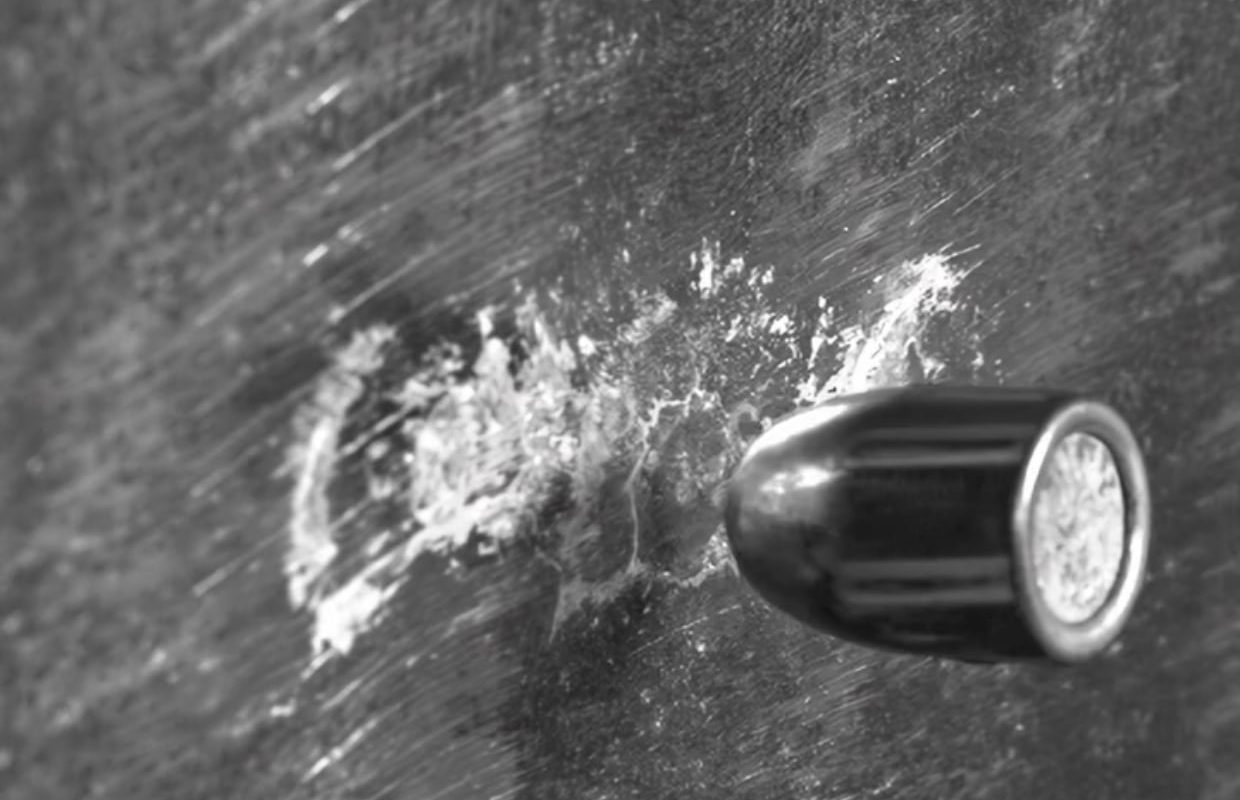
A bullet striking a hard metal surface is a dramatic moment that unleashes a cascade of physics, material science, and practical implications. Whether you’re a firearms enthusiast, engineer, or security professional, understanding this collision—its mechanics, risks, and outcomes—is critical. In this article, we break down what happens when high-velocity projectiles meet unyielding metals like steel or titanium.
The Physics Behind a Bullet-Metal Collision
When a bullet impacts a hard metal surface, kinetic energy transforms instantly into heat, sound, and mechanical force. Here’s how it unfolds:
-
Energy Transfer:
- Bullets travel with immense kinetic energy ((E_k = frac{1}{2}mv^2)).
- Upon impact, this energy disperses into the metal, causing localized deformation, fragmentation, or ricochets.
-
Material Response:
- Hard Metals (e.g., hardened steel, tungsten): Resist penetration by distributing force across their crystalline structure.
- Bullet Composition: Lead-core bullets deform or “mushroom,” while armor-piercing rounds (e.g., steel-core) retain shape to penetrate deeper.
-
The Phenomenon of Ricochet:
- If the metal surface is angled, bullets deflect unpredictably, retaining lethal velocity.
- Smooth surfaces (e.g., vehicle armor) increase ricochet risk compared to textured ones.
Variables That Influence the Outcome
No two bullet-metal impacts are identical. Key factors include:
- Velocity & Caliber:
Higher speeds amplify damage; .50 cal rounds may dent steel plates that stop 9mm bullets. - Angle of Impact:
Shallow angles (< 30°) dramatically increase ricochet probability. - Metal Hardness & Thickness:
AR500 steel (used in ballistic armor) absorbs impacts better than thin aluminum sheets. - Bullet Type:
- Full Metal Jacket (FMJ): Likely to ricochet.
- Hollow Point: Deforms on impact, reducing rebound risk.
Real-World Cases & Applications
-
Ballistic Testing:
- Engineers use high-speed cameras to analyze bullet impacts on metals for armor or vehicle safety.
- Standards (e.g., NIJ Level IV) certify plates that stop armor-piercing rifle rounds.
-
Forensics & Safety Protocols:
- Ricochet patterns help reconstruct shooting scenes.
- Shooting ranges use angled steel backstops or rubber traps to minimize rebound hazards.
-
Military/Defense:
- Tanks and APCs layer hardened steel with ceramics to dissipate energy.
- “Spalling”—metal fragments ejected inward—is mitigated with Kevlar liners.
Risks & Safety Precautions
Bullet-metal collisions pose severe dangers:
- Ricochets: Can strike unintended targets up to hundreds of meters away.
- Fragmentation: Shrapnel risks injuring bystanders.
- Structural Damage: Repeated impacts weaken metal barriers over time.
Safety Best Practices:
✅ Always use certified ballistic materials in backstops.
✅ Avoid shooting at flat, hard surfaces (e.g., rocks, concrete).
✅ Wear eye protection to shield against fragments.
Conclusion
A bullet hitting a hard metal surface isn’t just a spectacle—it’s a lesson in energy, material limits, and risk management. Understanding these dynamics informs safer firearm handling, better armor design, and smarter forensic analysis. Whether you’re improving a shooting range or engineering lifesaving gear, respecting this powerful interaction saves lives.
Keywords for SEO: bullet impact, metal surface, ballistic penetration, bullet deformation, ricochet, armor piercing, kinetic energy transfer, spalling, steel plate, firearm safety.
Tags: #Ballistics #FirearmSafety #MaterialScience #ArmorTesting #Physics
Optimized Call-to-Action:
Need ballistic-grade metals or safety consulting? [Contact our experts] for tailored solutions!