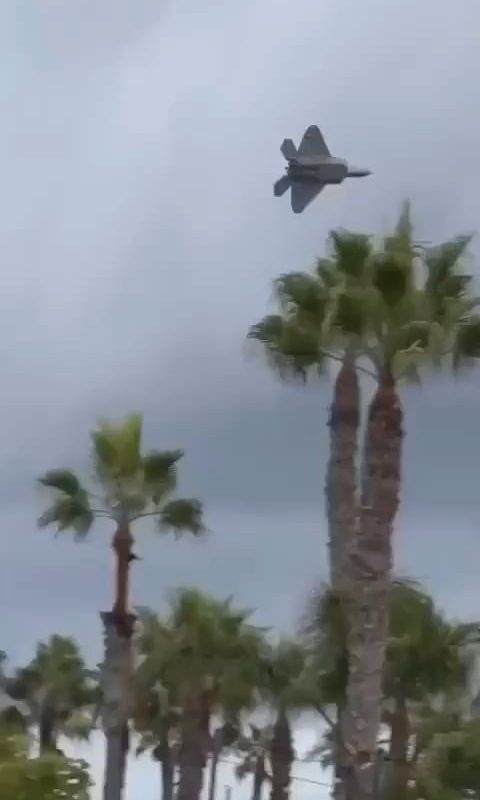
F-22 Raptor Thrust Vectoring
Unlocking Superior Maneuverability: The F-22 Raptor’s Thrust Vectoring Technology
The F-22 Raptor, America’s premier fifth-generation air superiority fighter, remains unmatched in aerial combat capabilities—and a critical feature behind its dominance is its pioneering thrust vectoring system. This cutting-edge technology enables the Raptor to perform jaw-dropping maneuvers unseen in legacy aircraft, granting pilots unprecedented control in high-stakes dogfights. Below, we explore the engineering, advantages, and combat implications of the F-22’s thrust vectoring nozzles.
What Is Thrust Vectoring?
Thrust vectoring allows a fighter jet to redirect engine thrust beyond a straight rearward path. By pivoting its exhaust nozzles, the aircraft can generate pitch or yaw forces without relying solely on control surfaces like rudders or elevators. Think of it like using a garden hose: if you angle the nozzle, the water jet (or thrust) pushes in a new direction. For the F-22, this translates into supernatural agility at both subsonic and supersonic speeds.
How the F-22’s Thrust Vectoring Works
The Raptor employs 2D thrust vectoring nozzles powered by its twin Pratt & Whitney F119-PW-100 turbofan engines. Each nozzle can tilt up or down by ±20 degrees independently, controlled seamlessly by the aircraft’s fly-by-wire system. Here’s a breakdown of its mechanics:
- Hydraulic Actuators: Precision hydraulic motors adjust nozzle angles in real time, responding to pilot inputs within milliseconds.
- Integrated Flight Controls: The F-22’s advanced Flight Control System (FCS) syncs thrust vectoring with traditional aerodynamic surfaces (e.g., flaperons, rudders) for fluid maneuver execution.
- FADEC Coordination: The Full Authority Digital Engine Control (FADEC) optimizes engine performance to support rapid vectoring shifts without stalling.
This synergy allows the F-22 to execute iconic maneuvers like the “Cobra” (rapid deceleration while pitching vertically) or “Herbst maneuver” (post-stall pivoting) that leave adversaries defenseless.
Key Combat Advantages of Thrust Vectoring in the F-22
-
Superior Maneuverability:
The F-22 can sustain 60-degree angles of attack (AoA)—far exceeding fourth-gen fighters—enabling tight turns and aggressive repositioning during beyond-visual-range (BVR) and close-in engagements. -
Enhanced Stealth and Survivability:
By minimizing reliance on large control surfaces, thrust vectoring reduces the Raptor’s radar cross-section (RCS). Fewer abrupt adjustments mean lower infrared (IR) signatures, making the jet harder to track. -
Energy Retention:
Unlike older jets that bleed speed during sharp turns, thrust vectoring lets the F-22 maintain kinetic energy by supplementing aerodynamic forces with vectored thrust. -
Post-Stall Control:
Even in stalled conditions (where wings lose lift), the Raptor’s thrust vectoring provides stabilization, allowing rapid recovery or surprising off-axis attacks.
F-22 vs. Competitors: Why Thrust Vectoring Matters
While Russia’s Su-57 and China’s J-20 feature 3D thrust vectoring (allowing nozzle movement in all directions), the F-22’s simpler 2D system prioritizes reliability, stealth, and aerodynamics. Its rectangular nozzles align with the fuselage’s stealth-optimized geometry, avoiding the radar-scattering complexity of ball-and-socket 3D designs.
Compared to non-vectored rivals like the F-35 Lightning II, the F-22 dominates in dogfighting scenarios, leveraging thrust vectoring to dictate engagement terms—proving why it remains the U.S. Air Force’s undisputed air dominance platform.
Operational Impact: Beyond Aerobatics
Thrust vectoring isn’t just for acrobatics—it’s a combat multiplier:
- First-Look, First-Kill: Rapid nose-pointing allows pilots to lock onto targets before adversaries can react.
- Runway Agility: Enhances takeoff/landing performance on short runways or damaged bases.
- High-Angle Weapons Deployment: Missiles and guns can be aimed at unconventional angles for opportunistic strikes.
Conclusion: The Gold Standard in Aerial Dominance
The F-22 Raptor’s thrust vectoring system embodies the fusion of stealth, speed, and agility—setting the benchmark for fifth-gen air combat. As stealth technology evolves and sixth-gen fighters loom, the Raptor’s vectored-thrust legacy reinforces why it remains unmatched in the skies.
For pilots and engineers, the F-22 isn’t just an aircraft; it’s a masterpiece of aerospace innovation where thrust vectoring remains its crown jewel.
Keywords: F-22 Raptor thrust vectoring, F-22 maneuverability, 2D thrust vectoring nozzles, fighter jet thrust vectoring, F119-PW-100 engine, air superiority fighter, fifth-gen fighter technology, stealth aircraft agility, Pratt & Whitney F119.
Meta Description: Discover how the F-22 Raptor’s thrust vectoring technology revolutionizes aerial combat, enabling unmatched agility, stealth, and dominance in dogfights. Learn about its engineering and tactical advantages here.
FAQ:
- Q: Can the F-22 vector thrust sideways?
A: No—its 2D system only moves vertically (±20°), relying on rudders/yaw thrusters for lateral adjustments. - Q: Does the F-35 have thrust vectoring?
A: No. The F-35 prioritizes stealth and sensor fusion over supermaneuverability. - Q: How does thrust vectoring affect fuel efficiency?
A: While vectoring consumes minimal extra fuel, the F-22’s engines compensate with supercruise capability (supersonic flight without afterburners).