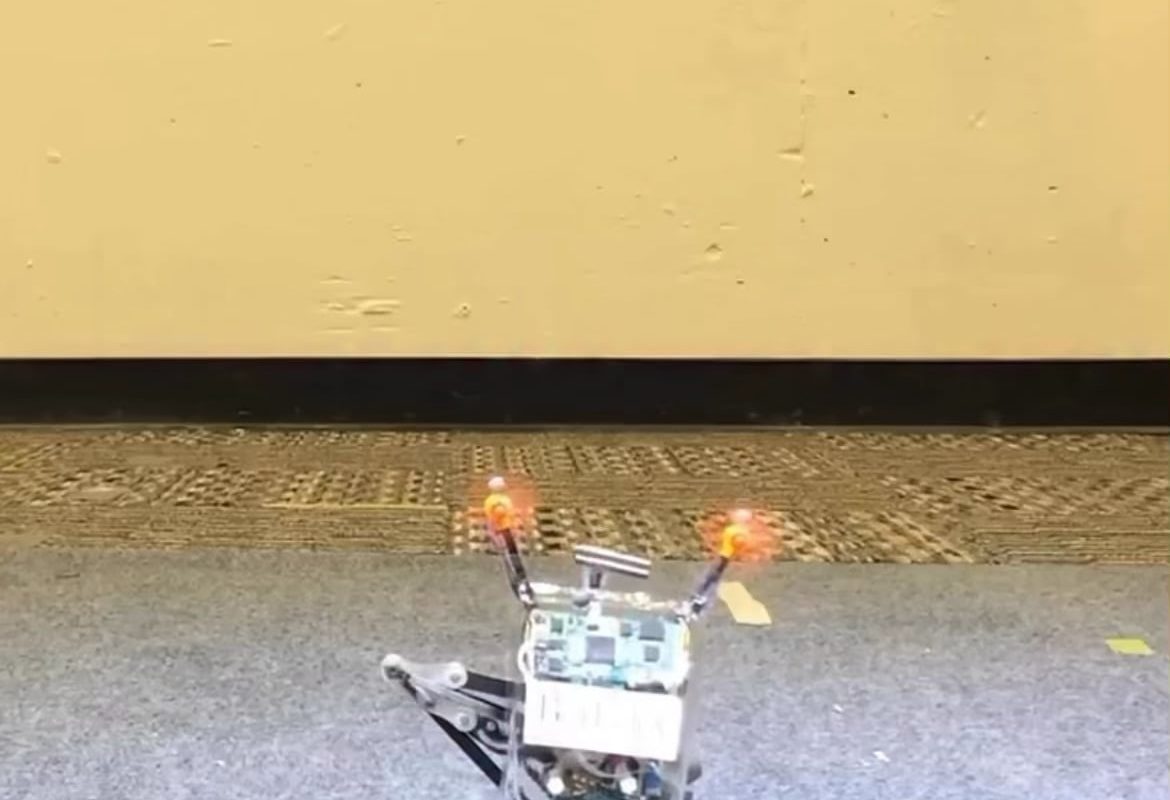
Salto the jumping robot
Salto the Jumping Robot: Nature-Inspired Engineering Revolution
In the dynamic world of robotics, few creations capture the imagination like Salto, the astonishing jumping robot designed to mimic the agility of nature’s most acrobatic creatures. Developed by researchers at the University of California, Berkeley, Salto (short for “Saltatorial Locomotion on Terrain Obstacles”) is pushing the boundaries of mobile robotics, demonstrating unprecedented vertical leaps and nimble maneuvers. Whether navigating disaster zones or scaling urban rubble, Salto is poised to transform industries from search-and-rescue operations to military reconnaissance – and even space exploration.
Inspired by Nature: The Galago’s Superpower
Salto’s genius lies in its bio-inspired design, modeled after the galago (or bush baby), a small primate renowned for its explosive jumping ability. Galagos can leap up to 10 times their body height in seconds and rebound off surfaces like a rubber ball. Similarly, Salto harnesses this biological blueprint to achieve high-frequency vertical jumps, reaching heights of up to 1.75 meters (5.7 feet) per second in agility.
This biomimicry isn’t just aesthetic: it translates to real-world functionality. By studying the galago’s physiology, engineers optimized Salto’s leg mechanics to store and release energy efficiently, allowing it to perform rapid, consecutive jumps that outpace traditional robots.
The Engineering Marvel Behind Salto
How does Salto achieve such extraordinary motion? The answer lies in its lightweight, single-legged design paired with cutting-edge propulsion technology:
- Elastic Energy Storage: A mono-pedal spring mechanism mimics tendons and muscles, using elastomeric bands to store energy during crouching and release it explosively at takeoff.
- Rotational Inertia & Actuators: A motor-powered flywheel controls Salto’s mid-air posture. Combined with series elastic actuators (SEAs), the robot fine-tunes its balance, force, and landing precision for continuous jumps.
- Weight Optimization: Weighing just 100 grams (0.22 lbs), Salto maximizes power-to-weight ratio, enabling leaps 10 times higher than its 26-centimeter frame.
This synergy of mechanics and software allows Salto to navigate debris-filled environments by “bouncing” off walls, maintaining momentum like a parkour athlete.
Unmatched Agility: What Salto Can Do
Salto’s capabilities surpass most terrestrial robots in vertical mobility:
- Vertical Jump Agility Score (VJA): 1.75 m/s (outperforming even bullfrogs!).
- Wall Jumping: It can ricochet between vertical surfaces to gain height, ideal for urban or collapsed structures.
- Adaptive Control Systems: Onboard sensors and algorithms adjust trajectory mid-jump to avoid obstacles.
These features make Salto uniquely suited for environments where wheels, drones, or treads fail – think earthquakes, minefields, or extraterrestrial terrains.
Real-World Applications: Beyond the Lab
Salto’s agility opens doors to life-saving innovations:
- Disaster Response: Navigate rubble to locate survivors without risking human rescue teams.
- Military & Surveillance: Perform stealth reconnaissance in complex or booby-trapped zones.
- Space Exploration: Hop across low-gravity celestial bodies (e.g., asteroids or Mars).
- Infrastructure Inspection: Access hard-to-reach areas like pipes, bridges, or industrial machinery.
Challenges & Future Evolution
While Salto is groundbreaking, its current limitations include battery life and load-bearing capacity. Researchers are already iterating on the design:
- Multi-Legged Versions: Adding legs could enhance stability and payload options.
- AI Integration: Machine learning could improve autonomous navigation in chaotic settings.
- Swarm Robotics: Teams of tiny “Salto-bots” working cooperatively could tackle large-scale missions.
The Jumping Robot Revolution
Salto isn’t just a feat of engineering – it’s a catalyst for rethinking how robots move. By bridging biology and technology, it proves that nature still holds the best playbook for solving complex mobility challenges. As UC Berkeley roboticist Duncan Haldane, Salto’s creator, puts it: “We’re not just building robots; we’re decoding the secrets of movement.”
Conclusion
Salto, the pint-sized robot with superhero jumps, exemplifies the future of agile robotics. From saving lives in disasters to exploring alien worlds, its bio-inspired design is a testament to innovation at the intersection of nature and engineering. As research advances, expect even more nimble robots to leap out of labs and into real-world action. One thing’s certain: robotics will never look at jumping the same way again.
Keywords: Salto robot, jumping robot, bio-inspired robotics, agile robots, UC Berkeley robotics, disaster response robots, vertical jump agility, galago robot, robotic locomotion, search-and-rescue robots.