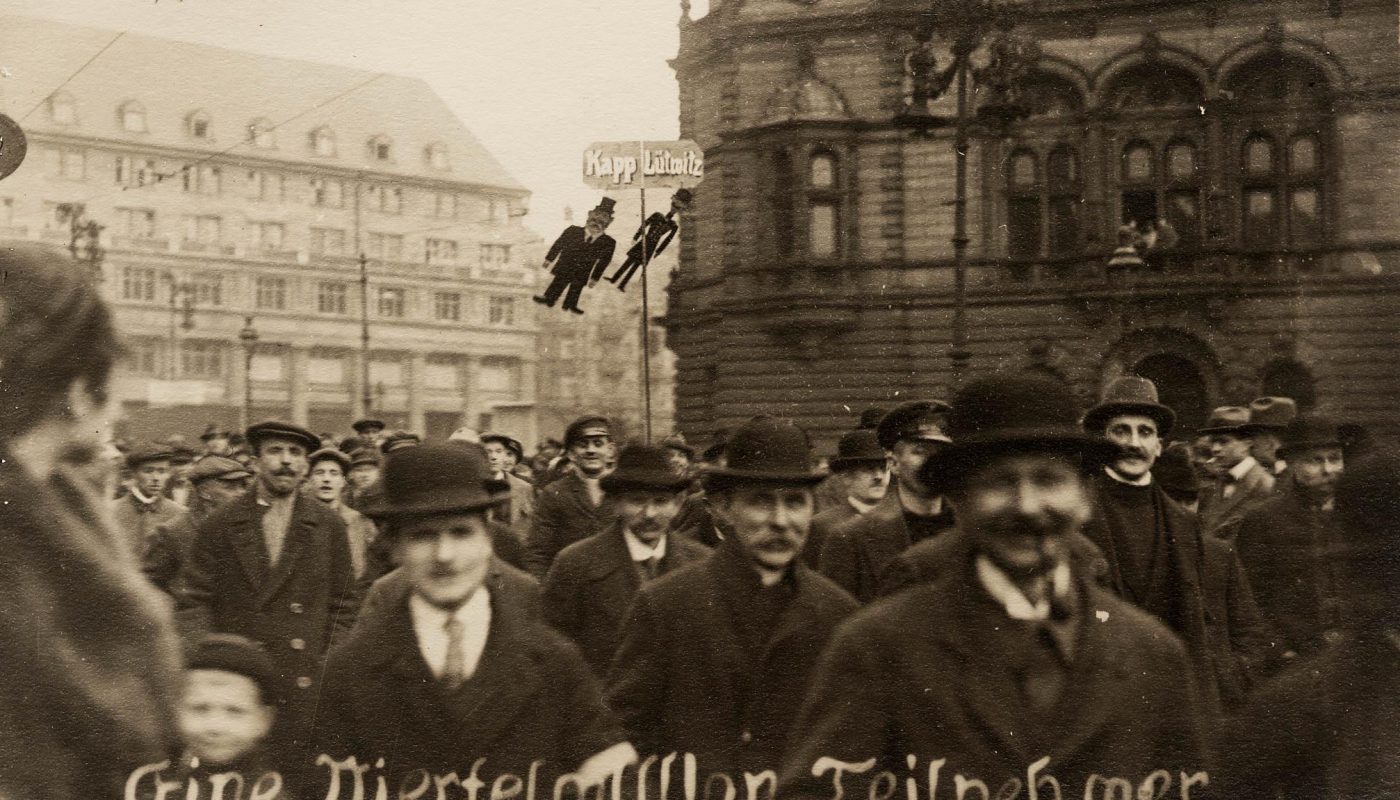
TIL about the failed fascist “Kapp Putsch” coup in 1920s Germany. Although initially successful, the coup was halted and the fascists driven out of power in just 5 days by the German people, who joined the largest workers’ strike in the nation’s history, completely paralyzing the country
The Kapp Putsch: How a 5-Day Fascist Coup Was Crushed by Germany’s Largest Workers’ Strike
Meta Description: Discover the shocking story of the Kapp Putsch, a 1920 fascist coup that briefly seized Berlin—until German workers launched a historic strike that saved democracy in just 5 days.
Introduction: The Weimar Republic’s Brush with Fascism
The Kapp Putsch of March 1920 was one of history’s shortest-lived fascist takeovers. Despite initial success, this far-right coup collapsed in just five days—not due to military action, but because Germany’s working class paralyzed the nation through the largest mass strike in its history. Learn how ordinary citizens united to defeat extremism in a pivotal moment for democracy.
What Was the Kapp Putsch? Key Facts
- When: March 13–17, 1920
- Who: Led by conservative politician Wolfgang Kapp and General Walther von Lüttwitz.
- Why: Anger over the Treaty of Versailles and the Weimar government’s order to disband the Freikorps (right-wing paramilitary groups).
- Goal: Overthrow Germany’s democratic Weimar Republic and install an authoritarian regime.
The Coup’s Initial Success
On March 13, 1920, the Freikorps marched into Berlin unopposed. With military backing, Kapp declared himself chancellor. The legitimate government—led by President Friedrich Ebert—fled to Dresden, then Stuttgart.
Why the Coup Almost Worked:
- Military sympathies with the plotters.
- Weak state control over paramilitary forces.
- Post-WWI discontent created fertile ground for extremism.
Yet within hours, a resistance emerged that would stun the putschists: the German people.
The Strike That Crushed Fascism: Unity Beyond Politics
Just one day after the coup began, German unions and socialist parties called for a general strike. Millions heeded the call:
The Strike in Numbers
- 12+ million workers walked off the job nationwide.
- Factories, railways, water systems, and newspapers ground to a halt.
- No electricity, gas, or transport—Berlin became a ghost city.
Political Unity:
Social Democrats (SPD), Communists (KPD), and even centrist unions united against the coup. Their slogan: “No collaboration with the putschists!”
Why the Putsch Failed: Paralysis vs. Power
By Day 4, Kapp’s regime faced total collapse:
- Economic Freeze: Banks, shops, and infrastructure shut down.
- Bureaucratic Resistance: Civil servants refused to obey orders.
- International Isolation: No foreign government recognized the coup.
On March 17—just 5 days after seizing Berlin—Kapp fled to Sweden. The Weimar government was restored.
The Irony of “Success”
Despite the strike’s victory, the aftermath exposed grim truths:
- Freikorps leaders escaped punishment, fueling future far-right threats (like Hitler’s Beer Hall Putsch in 1923).
- Workers who saved democracy were later repressed during communist uprisings.
Lesson Learned: The Kapp Putsch proved authoritarianism could be defeated through solidarity—but only if institutions root out extremism decisively.
Legacy: A Blueprint for Resisting Fascism
The Kapp Putsch remains a landmark case of grassroots resistance:
- A Warning: Fascism thrives on division; unity is its kryptonite.
- A Precedent: Spain’s 1936 general strike against Franco mirrored this strategy.
- A Modern Lesson: Democratic survival hinges on labor rights, civic trust, and rejecting normalization of extremism.
Conclusion: When the People Stood Guard
The Kapp Putsch wasn’t defeated by politicians or soldiers—it was defeated by waiters, factory workers, train operators, and clerks who shut down a nation to save it. As fascism resurfaces globally today, this 100-year-old story shouts: Collective action can still rewrite history.
Keyword Optimization: Kapp Putsch, failed fascist coup, Weimar Republic, general strike, German workers’ uprising, largest strike in German history, Freikorps, Wolfgang Kapp, workers’ resistance to fascism.
Engagement Prompt: What lessons can modern movements learn from the Kapp Putsch? Share your thoughts below!
Want more hidden histories of people-powered victories? Subscribe for weekly deep dives!