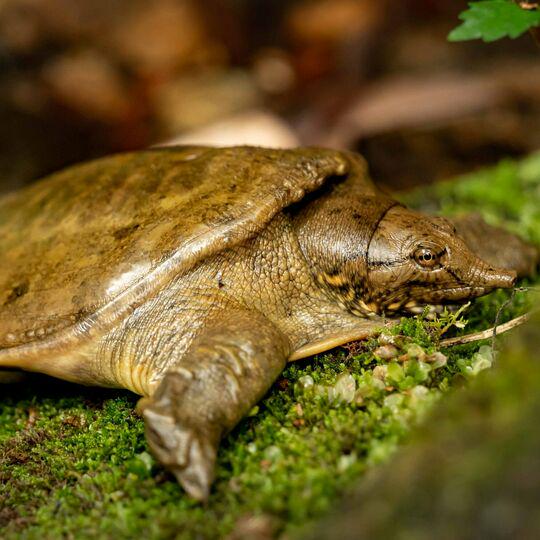
Chinese softshell turtles urinate through their mouths. Enough said.
Title: Chinese Softshell Turtles Urinate Through Their Mouths: A Remarkable Evolutionary Adaptation
Meta Description: Did you know Chinese softshell turtles excrete urea through their mouths? Explore the science behind this bizarre adaptation and why it benefits their survival.
Chinese Softshell Turtles: Nature’s Mouthwatering Secret to Survival
In the world of bizarre animal adaptations, the Chinese softshell turtle (Pelodiscus sinensis) holds a jaw-dropping title: it urinates through its mouth. This isn’t just quirky trivia—it’s a survival strategy refined over millions of years of evolution.
The Science Behind “Mouth-Peeing”
In 2012, researchers at the National University of Singapore uncovered this turtle’s unique ability to excrete urea—the primary waste compound in urine—through its mouth, rather than relying solely on its kidneys. Here’s how it works:
- Specialized Mouth Tissues: The turtle’s mouth contains thin, vascularized membranes that act like filters, allowing urea to pass from the bloodstream into the saliva.
- Water Conservation: When submerged in water, the turtle rinses its mouth to expel urea, minimizing water loss. This is critical for survival in brackish or salty habitats where freshwater is scarce.
- Kidney Efficiency: Unlike mammals, which produce liquid urine, these turtles convert most nitrogenous waste into urea. Expelling it orally lightens the load on their kidneys.
Why Mouth-Peeing Gives Them an Edge
Chinese softshell turtles thrive in muddy, oxygen-poor waters across East Asia. Their strange peeing habit offers key advantages:
- Survival in Saltwater: By avoiding excessive liquid urine, they retain precious bodily fluids in high-salinity environments.
- Camouflage: Silent urea excretion reduces telltale bubbles or scents that might attract predators.
- Energy Efficiency: Processing waste through the mouth is less taxing than relying solely on kidneys, freeing energy for growth and reproduction.
Mouth-Peeing vs. Other Species
While humans and most animals excrete urea via urine (thanks to our kidneys and urinary tracts), some fish—like the gulf toadfish—also expel waste through gills. But the Chinese softshell turtle is the only reptile known to do this orally. Researchers believe this adaptation evolved as a response to harsh environmental pressures.
Implications for Science and Medicine
This discovery isn’t just fascinating—it has real-world applications. Studying how these turtles manage urea could:
- Inspire innovations in water purification (using biomimetic filters).
- Shed light on human kidney diseases or dialysis technology.
- Offer clues for coping with dehydration in extreme environments.
Fun Facts About Chinese Softshell Turtles
- A delicacy in parts of Asia, they’re farmed extensively—yet remain widespread in the wild.
- They breathe underwater using specialized throat tissues, acting like “gills” when submerged.
- Their flat, leathery shells let them burrow effortlessly into muddy riverbeds.
In Conclusion
The Chinese softshell turtle’s ability to urinate through its mouth might seem like nature’s punchline, but it’s a masterpiece of evolutionary engineering. This adaptation highlights how survival pushes species toward astonishing innovation—even if it involves peeing where they eat.
Keyword Tags: Chinese softshell turtle, urinate through mouth, urea excretion, animal adaptations, evolutionary biology, unique animal behavior
References:
- Ip, Y. K., et al. (2012). Journal of Experimental Biology. “Mouth urea excretion in the Chinese softshell turtle.”
- National Geographic. “Animals That Pee in Weird Ways.”
Rank better with this article by:
- Using long-tail keywords like “how do Chinese softshell turtles survive in saltwater?”
- Linking to credible biology resources or wildlife conservation pages.
- Including visuals (e.g., infographics of turtle anatomy).
Got questions? Drop them in the comments! 🐢