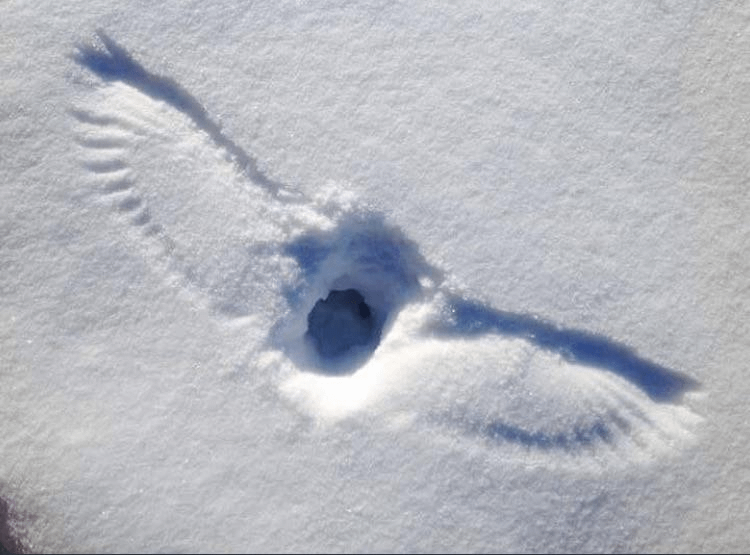
An owl finding something to eat in the snow
Meta Description: Discover how owls survive harsh winters by mastering the art of hunting in snow-covered landscapes. Learn about their stealthy techniques, sensory adaptations, and vital ecological role!
Title: Silent Snow Stalkers: The Secret World of Owls Hunting in Winter
Introduction: A Ghostly Hunter in the Frozen Wild
In the quiet stillness of a snow-blanketed forest, an owl perches motionless on a branch, its piercing eyes scanning the white expanse below. Beneath the snow lies life—and dinner. For owls, winter is a test of survival, demanding extraordinary adaptations to locate and capture prey hidden under layers of ice and powder. This is the story of how these nocturnal predators defy the odds to find food in one of Earth’s most unforgiving environments.
Masters of Winter Hunting: Why Snow Is No Match for Owls
Snow might seem like an insurmountable barrier, but owls have evolved over millennia to thrive in winter conditions. Species like the Great Gray Owl, Snowy Owl, and Boreal Owl are specially equipped for cold climates. Their success hinges on three key adaptations:
- Silent Flight: Specialized feathers muffle sound, allowing owls to swoop undetected.
- Keen Sensory Tools: Hyper-acute hearing and vision penetrate the snow’s surface.
- Powerful Talons: Razor-sharp claws smash through ice to seize burrowing rodents.
The Pounce and Plunge: How Owls Strike Under the Snow
When an owl detects subtle movements beneath the snow—a vole tunneling or a shrew scurrying—it executes a lightning-fast “snow plunge”:
- Pinpoint Accuracy: Using asymmetrical ear openings, the owl triangulates the exact location of its prey, even under 12 inches of snow.
- Stealth Descent: Wings spread wide, it glides silently toward the target.
- Snow-Busting Grab: At the last second, the owl thrusts its talons through the snow, grabbing the prey with astonishing force.
Fun Fact: Great Gray Owls can detect prey moving under snow using only sound, striking with a success rate of over 75%!
Sensory Superpowers: Seeing and Hearing the Unseen
Hearing:
Owls’ funnel-shaped facial discs capture and amplify faint sounds—like a mouse’s heartbeat or rustling—under the snow. Their ears are offset vertically (one higher than the other), enabling precise vertical and horizontal tracking.
Vision:
While snow reflects light and blinds many predators, owls’ tubular eyes maximize light intake. They spot subtle disturbances in the snow’s surface, such as slight mounds or tiny vibrations, that betray hidden prey.
Challenges and Risks: The High-Stakes Game of Winter Survival
Hunting in snow isn’t without dangers:
- Deep snow exhaustion: Plunging into thick powder drains energy.
- Hunger gaps: Heavy snowfall buries prey, forcing owls to expand their territory.
- Human threats: Habitat loss and climate change reduce hunting grounds.
Species like the Snowy Owl migrate south when Arctic winters grow too harsh, while others, like the Great Horned Owl, rely on cached food.
Winter Diet Shifts: What’s on the Menu?
To adapt, owls diversify their diets:
- Primary Targets: Voles, mice, and shrews (under-snow specialists).
- Secondary Prey: Rabbits, birds, and even fish in thawing streams.
- Scavenging: Rarely, owls will eat carrion to survive lean periods.
Ecological Impact: Owls as Winter’s Pest Control
By controlling rodent populations, owls prevent overgrazing of vegetation and reduce disease spread. In snowy ecosystems, they’re keystone predators—without them, rodent numbers would explode, destabilizing the food web.
Conservation: Protecting Owls in a Changing Climate
As winters grow unpredictable, safeguarding owl habitats is critical:
- Preserve old-growth forests for nesting.
- Limit rodenticides that poison owls indirectly.
- Support reforestation and wetland conservation efforts.
Conclusion: Witnessing Nature’s Winter Wizardry
Next time you walk through a snowy woodland, pause and listen—you might hear the silent swoop of an owl, nature’s ghostly engineer turning frozen barriers into hunting grounds. Their survival is a testament to evolution’s brilliance and a reminder to protect these awe-inspiring birds.
Call to Action: 🦉 Share this article to spread owl awareness! Follow #WinterOwls on social media for stunning wildlife photography.
Alt Text for Imagery (SEO Bonus):
- Image 1: “Great Gray Owl in mid-snow plunge, talons outstretched toward hidden prey.”
- Image 2: “Snowy Owl perched on frost-covered branch scanning Arctic tundra.”
- Image 3: “Close-up of owl facial disc highlighting asymmetrical ear openings.”
Optimize your niche site by linking to related content: “How Do Animals Survive Extreme Cold?” or “Top 5 Birds Adapted to Snowy Climates“. For SEO, target long-tail keywords like “how owls hunt rodents under snow” or “best places to see snow owls in winter.”