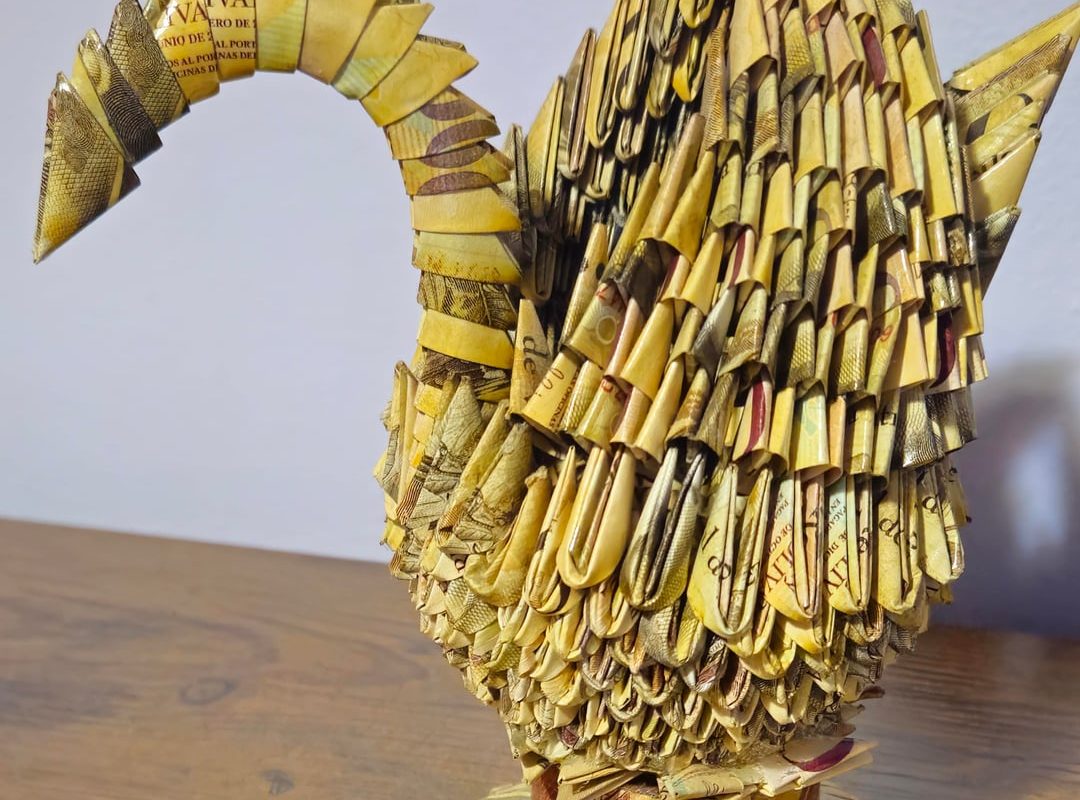
The Venezuelan currency is so worthless, that people find other uses for it, instead of spending it. This Swan Sculpture is made of the Venezuelan Bolivar.
Title: From Currency to Art: Venezuelan Bolivar Transformed into Stunning Swan Sculpture Amid Hyperinflation Crisis
In the face of one of the world’s most extreme hyperinflation crises, the Venezuelan bolivar (VES) has become so devalued that its primary function as money has all but vanished. With prices soaring by the hour and banknotes rendered virtually worthless, Venezuelans have resorted to ingenious—and often heartbreakingly creative—alternatives for their currency. Among the most striking examples? A breathtaking swan sculpture meticulously crafted from discarded Venezuelan bolivars, symbolizing both the collapse of the economy and the resilience of its people.
The Collapse of the Bolivar: A Currency in Freefall
Venezuela’s economic unraveling began with political instability, mismanagement, and falling oil revenues, culminating in hyperinflation surpassing 1,000,000% annually by 2018. The bolivar, once a stable currency, became synonymous with worthlessness. At the height of the crisis:
- A single U.S. dollar could cost millions of bolivars.
- A cup of coffee cost more in bolivars than the paper used to print the bills.
- Citizens required backpacks full of cash for basic groceries—only to find prices doubled by the time they reached the counter.
By 2021, the government slashed six zeros off the currency in a redenomination effort, but inflation persisted. Today, many Venezuelans rely on U.S. dollars for transactions, while the bolivar gathers dust in drawers or litters streets.
When Money Becomes Material: The Rise of Bolivar Art
With bolivar bills too worthless to spend, Venezuelan artists, entrepreneurs, and everyday citizens began repurposing them. The currency’s colorful designs and durable paper made it ideal for crafting:
- Handmade jewelry (earrings, bracelets).
- Decorative items (wallets, handbags, piñatas).
- Stunning artworks, like the viral swan sculpture—a symbol of transforming despair into beauty.
The swan, painstakingly folded and glued from thousands of bolivar notes, represents more than just creativity. It underscores the tragic absurdity of hyperinflation: money so useless that its only value lies in its aesthetics.
The Swan Sculpture: A Symbol of Resistance
The bolivar swan, widely shared on social media, embodies the duality of Venezuela’s crisis:
- Irony: A currency intended to facilitate trade now serves as craft fodder.
- Resilience: Artists turn economic ruin into a medium for expression and income.
Similar projects have emerged worldwide—from Germany’s post-WWI inflation art to Zimbabwe’s trillion-dollar note souvenirs—but the Venezuelan example stands out for its rawness and scale. For many artists, selling bolivar crafts in foreign markets provides a lifeline in a country where the monthly minimum wage remains under $5.
The Human Cost Behind the Art
While the sculptures are visually captivating, their existence reflects a dire reality:
- Barter economies: Remote communities trade food and services directly.
- Dollarization: 70% of transactions now use USD or cryptocurrencies.
- Humanitarian crisis: 5 million Venezuelans have fled since 2015, seeking stability elsewhere.
For locals, turning bolivars into art is both a coping mechanism and a protest. As one Caracas-based sculptor lamented, “We’re not artists by choice; we’re artists by necessity. This money can’t feed families—but folding it into something beautiful helps us survive.”
Conclusion: A Currency Beyond Redemption?
The bolivar swan sculpture is a poignant metaphor for Venezuela’s shattered economy: fragile, repurposed, yet hauntingly resilient. As hyperinflation continues to erase the bolivar’s monetary value, its cultural significance grows—transforming from a symbol of national pride to one of ingenuity amid despair.
For the world, this crisis serves as a stark lesson in economic fragility. For Venezuelans, it’s a daily reality—and a catalyst for extraordinary creativity in the face of unimaginable hardship.
Keywords: Venezuelan currency, hyperinflation, Bolivar art, Bolivar sculpture, worthless money, Venezuelan economy, currency crafts, Bolivar swan, Venezuela crisis, repurposed money.
Meta Description: Discover how hyperinflation turned Venezuela’s bolivar into worthless paper—now repurposed into stunning art like the viral swan sculpture. Explore the crisis behind the creativity.
Optimization Tips:
- Use high-quality images of the bolivar swan for engagement.
- Link to reliable sources (IMF reports, Venezuelan economic studies).
- Update with recent inflation data (current as of 2023).
- Target keywords: “Venezuela money art,” “uses for Bolivar currency,” “hyperinflation crafts.”
This article blends human interest with economic analysis, making it shareable and informative for audiences interested in global affairs, art, and economics.