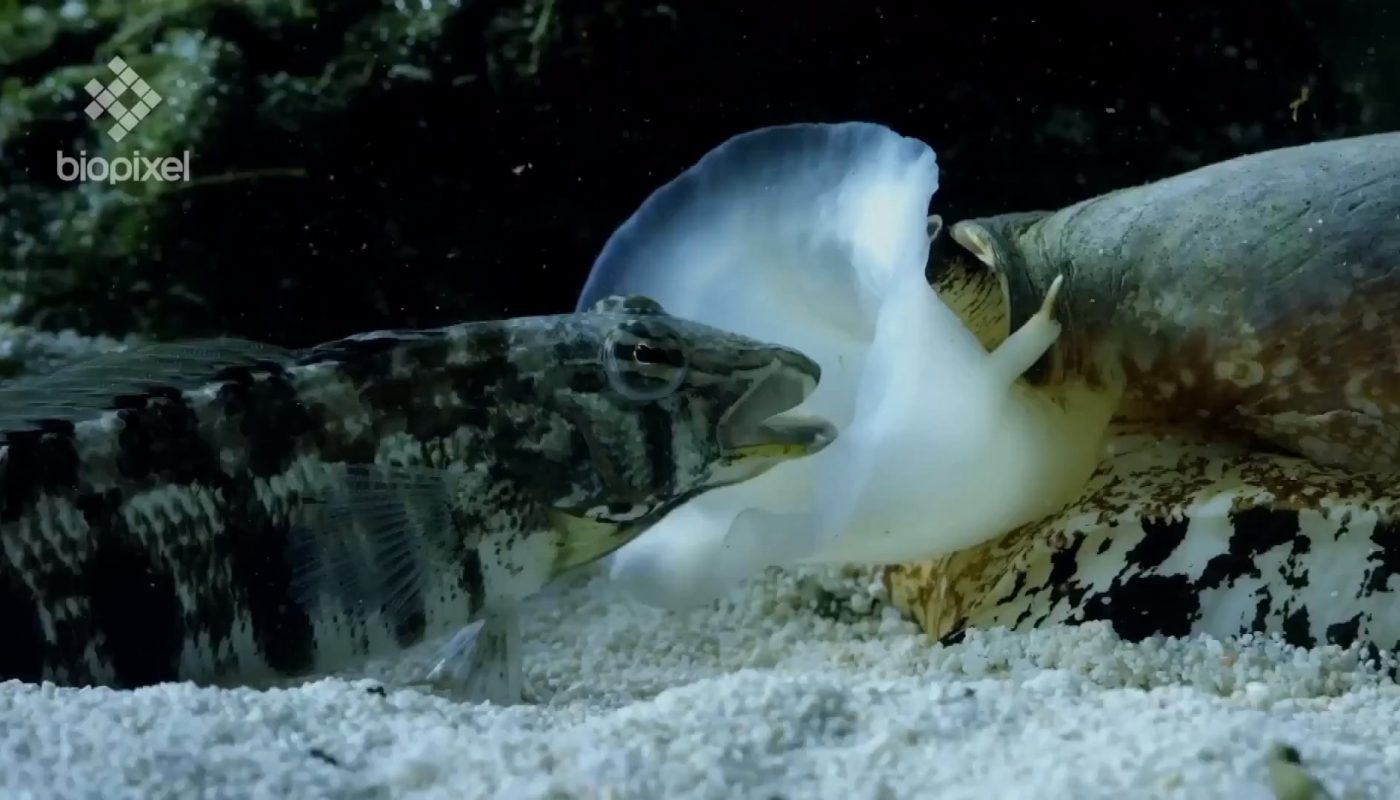
The geographic cone snail releases insulin into the water to stun its prey, then moves in to engulf and harpoon the fish with deadly neurotoxins
Title: The Geographic Cone Snail’s Insulin Ambush: Nature’s Most Sophisticated Fish Trap
Meta Description: Discover how the geographic cone snail deploys insulin as a biological weapon to stun fish prey before finishing them off with lethal neurotoxins—a mesmerizing glimpse into marine predation.
Introduction: The Ocean’s Stealth Assassin
The geographic cone snail (Conus geographus) is one of the ocean’s deadliest predators, armed with a venomous harpoon and a hunting strategy that reads like science fiction. Found in warm Indo-Pacific reefs, this unassuming mollusk has evolved an extraordinary trick: it releases clouds of weaponized insulin into the water to send fish into hypoglycemic shock. Once its prey is immobilized, the snail strikes with lightning speed, delivering a lethal neurotoxic cocktail that stops the victim’s heartbeat in seconds.
This article dives into the biology, behavior, and biomedical marvel of the cone snail’s insulin-driven hunting technique—and why scientists are studying its venom to develop life-saving drugs.
The Geographic Cone Snail’s Hunting Strategy: Insulin as a Weapon
Step 1: The Insulin Bombardment
Before deploying its infamous harpoon, the cone snail uses a biochemical “smokescreen” to incapacitate prey. Researchers discovered that the snail releases a specialized form of insulin—dubbed “weaponized insulin”—directly into the surrounding water.
- How It Works: This insulin mimics the hormone found in fish, flooding their bloodstream via the gills. Within moments, the fish’s blood sugar plummets, causing severe hypoglycemia (low blood sugar).
- The Effect: Disoriented and paralyzed, the fish enters a diabetic-like coma, making it incapable of fleeing or defending itself.
Step 2: The Strike
Once the prey is stunned, the cone snail extends its flexible proboscis (a tube-like mouthpart) like a fishing line. At its tip lies a modified tooth called a radular tooth, which functions as a disposable harpoon.
- Neurotoxic Venom Delivery: The tooth injects a complex cocktail of over 100 neurotoxins known as conotoxins. These toxins disrupt nerve signaling, paralyzing the fish’s muscles and stopping its heart within 1–2 seconds.
- Swallowing Whole: Unable to chew, the snail engulfs the immobilized fish whole.
Step 3: Evolutionary Ingenuity
This two-phase attack (insulin ambush + neurotoxic strike) is unique to Conus geographus and exemplifies evolutionary innovation. For slow-moving snails, this strategy maximizes success in fast-moving reef environments.
Scientific Significance: Why Researchers Care
1. Insulin’s Evolutionary Role
The geographic cone snail’s insulin is structurally simpler than human insulin but hyper-specialized for rapid action. By studying it, scientists gain insights into:
- How hormones evolve to serve predatory functions.
- Potential applications in diabetes treatment, as cone snail insulin acts faster than synthetic human insulin.
2. Medical Potential of Conotoxins
Conotoxins target specific nerve receptors with astonishing precision. This has inspired breakthroughs in:
- Pain Management: Drugs like Prialt® (ziconotide), derived from cone snail venom, treat chronic pain without opioid addiction risks.
- Neurological Research: Toxins are used to study diseases like Parkinson’s and Alzheimer’s by isolating neuronal pathways.
Human Implications: Danger and Discovery
While Conus geographus is a marvel of nature, it’s also one of the most venomous creatures on Earth. Humans who handle live snails risk a harpoon sting, which can cause paralysis, respiratory failure, and death in extreme cases.
- Safety Note: Always avoid handling cone snails in the wild.
- Conservation Status: Coral reef destruction threatens these snails, making research and preservation critical.
Conclusion: Nature’s Biochemical Genius
The geographic cone snail’s insulin ambush redefines our understanding of predation—proving that even the simplest organisms can wield biochemical weapons with surgical precision. Beyond its deadly beauty, this snail offers invaluable lessons for medicine, reminding us that Earth’s biodiversity is a wellspring of solutions to human challenges.
As marine biologist Mandë Holford aptly states: “These snails are master chemists. We’re just decoding their recipe book.”
FAQs
1. Are all cone snails venomous?
Yes, but only a few (like Conus geographus) pose a lethal threat to humans.
2. How fast does cone snail venom work?
Neurotoxins act in seconds, but the snail’s insulin tactic slows prey down first.
3. Can cone snail insulin be used for diabetes?
Research is ongoing, but its rapid action shows promise for future therapies.
4. How do scientists study cone snail venom?
They “milk” snails in labs to extract venom safely, then analyze its components.
5. Where are geographic cone snails found?
Primarily in the Indo-Pacific coral reefs, from Australia to East Africa.
Optimized Keywords: geographic cone snail, insulin hunting, marine predators, conotoxins, neurotoxins, Conus geographus, venomous snails, hypoglycemic shock, conotoxin drugs, marine biology.
Internal Links Suggestion: Link to articles on coral reef ecosystems, conotoxin medical research, or venomous marine life.
By blending deadly precision with biochemical artistry, the geographic cone snail continues to captivate scientists—and terrify fish—in equal measure. Share this article to spread wonder for nature’s hidden genius! 🌊🐚